
Vegetables
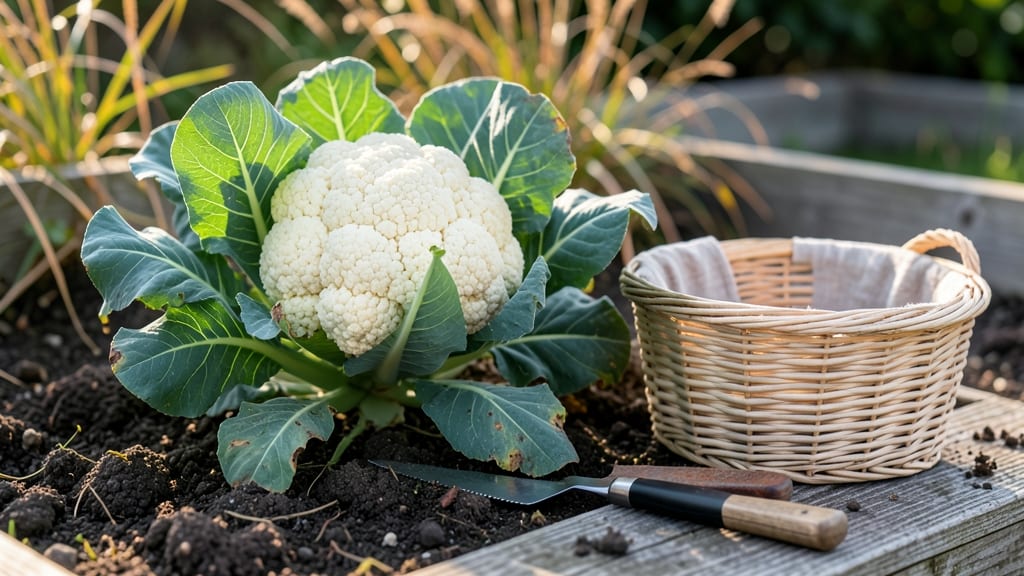
Cauliflower is harvested at 75 days on average, when its head reaches 6-8 inches and feels firm to the touch 🥬 — but timing it perfectly means the difference between a tender, flavorful crop and one that’s tough or bitter.
Picture this: you’ve nurtured your cauliflower for months, only to pull it too early and end up with a small, loose head, or wait too long and watch it turn yellow and woody.
The key is catching it at that sweet spot when the leaves tighten around the head and the color is vibrant, not fading.
This isn’t just about days on the calendar—it’s about reading your plant. Regional climates, soil conditions, and even variety type (early, mid-season, or late) shift the window. In Zone 6a, for example, spring-planted cauliflower is ready by June-July, while fall crops hit their prime in October-November.
Below, I’ll walk you through the exact visual cues to look for, how to adjust for your local growing season, and the simple tricks to keep your harvest at its best once you’ve pulled it.
Cauliflower harvest timeline: days to maturity by variety
Knowing when to harvest cauliflower depends entirely on the variety you’re growing. Early varieties like 'Snowball Y Improved' mature in as few as 55-65 days, while late-season types such as 'Purple of Sicily' can take up to 100 days or more.
Understanding these timelines helps you plan your garden layout and succession plantings for a continuous harvest. Each variety also responds differently to climate and soil conditions, which can shift maturity by 1-2 weeks in either direction.
Cauliflower growth follows distinct stages: seedling, leaf development, head formation, and maturity. The head formation phase is critical—this is when the plant shifts energy from leaves to the curd.
If temperatures spike above 85°F (29°C) during this phase, heads may bolt prematurely or develop poorly. Conversely, cooler temperatures (60-70°F or 15-21°C) promote steady growth and tighter curds.
Soil fertility plays a surprising role in maturity timing. Nitrogen-heavy soils can delay head formation as the plant prioritizes leaf growth, while balanced NPK (10-10-10) encourages faster curd development.
I’ve found that amending soil with compost and aged manure before planting cuts 5-7 days off maturity time by improving nutrient availability. Always aim for a pH between 6.0 and 7.0—outside this range, and you’ll see stunted growth or poor head formation.
| Variety | Days to Maturity | Head Size | Best Climate | Harvest Window |
|---|---|---|---|---|
| Snowball Y Improved | 55-65 days | 6-8 inches | Cool (60-70°F) | Spring/Fall |
| Purple of Sicily | 90-100 days | 8-10 inches | Moderate (55-75°F) | Fall |
| Romanesco | td style="padding: 10px; border-bottom: 1px solid #ffcc00;">70-80 days4-6 inches | Cool to Warm (50-80°F) | Spring/Fall | |
| Cheddar | 60-70 days | 5-7 inches | Cool (60-75°F) | Spring/Fall |
| Graffiti | 70-80 days | 6-8 inches | Warm (65-80°F) | Summer |
If you’re growing cauliflower in hot climates, opt for heat-tolerant varieties like 'Graffiti' or 'Veronica', which can handle up to 85°F (29°C) without bolting. In these regions, I’ve seen maturity times shorten by 10 days when paired with shade cloth during peak afternoon heat.
For cool climates, varieties like 'Snowball' thrive with longer daylight hours, often maturing 5-10 days faster than in shorter-day southern latitudes.
Succession planting is a game-changer for extending your harvest season. By staggering plantings every 2-3 weeks, you can enjoy fresh cauliflower from late spring through early fall.
For example, in Zone 5, I start my first batch in early April and my last in mid-July, ensuring a harvest every 6-8 weeks. Always space plantings based on the variety’s days to maturity—early types need closer spacing, while late-season varieties can handle slightly more room.
One common mistake gardeners make is assuming all cauliflower varieties mature at the same rate. 'Romanesco', for instance
How to identify perfectly ripe cauliflower before harvest
Timing your cauliflower harvest is an art that blends science and observation. The perfectly ripe head delivers that signature crisp texture and mild flavor, but miss the window by even a few days, and you risk woody florets or bitter leaves.
I’ve learned that checking three key factors—head firmness, leaf condition, and color consistency—is the secret to nailing the harvest.
First, focus on the head’s size and shape. A ripe cauliflower typically measures 6-8 inches in diameter and feels solid to the touch, like a dense snowball. If you press gently and the head gives slightly, it’s not ready yet.
Overripe heads, on the other hand, start to loosen and may even split open, revealing yellow or brown florets—clear signs you’ve waited too long.
✅ Key Cues for Perfect Ripeness
- 🥬 Head Size: 6–8 inches in diameter
- 🌿 Leaf Wrap: Curly leaves tightly hug the head
- 🟢 Color: Bright, even hue (white, purple, or green)
- ✂️ Firmness: Solid, not spongy or hollow
⚠️ Avoid These Mistakes:
- 🔴 Harvesting when leaves yellow or wilt
- 🟡 Ignoring uneven color (sign of stress)
- ⏳ Waiting until the head starts to open
Don’t overlook the outer leaves—they’re your early warning system. Healthy, tightly curled leaves that wrap snugly around the head indicate ripeness. If the leaves are loose or yellowing, the plant is either under stress or past its prime.
I once missed a harvest because I focused only on the head and didn’t notice the leaves had turned brown from drought stress—a costly lesson!
The color of your cauliflower also holds clues. A ripe head should be uniform in color, whether it’s pure white, pale green, or deep purple. Fading or uneven patches signal the head is aging.
Pro tip: Orange or yellow florets mean it’s overripe—time to harvest or compost before the bitterness sets in.
To test firmness, give the head a gentle squeeze. It should feel dense and unyielding, like a firm ball of cotton. If it feels spongy or hollow, it’s underripe.
Overripe heads, meanwhile, may crumble slightly when pressed. I’ve found that harvesting in the morning (when temps are cooler) preserves this firmness longer, even after cutting.
Finally, trust your gut instinct. If the head looks plump and proud, with leaves standing at attention, it’s likely ready. Remember, smaller varieties (like ‘Snowball Y Improved’) mature faster than large ‘Romanesco’ types, so adjust your timing accordingly.
With practice, you’ll develop an eye for spotting the sweet spot—where flavor and texture peak.