
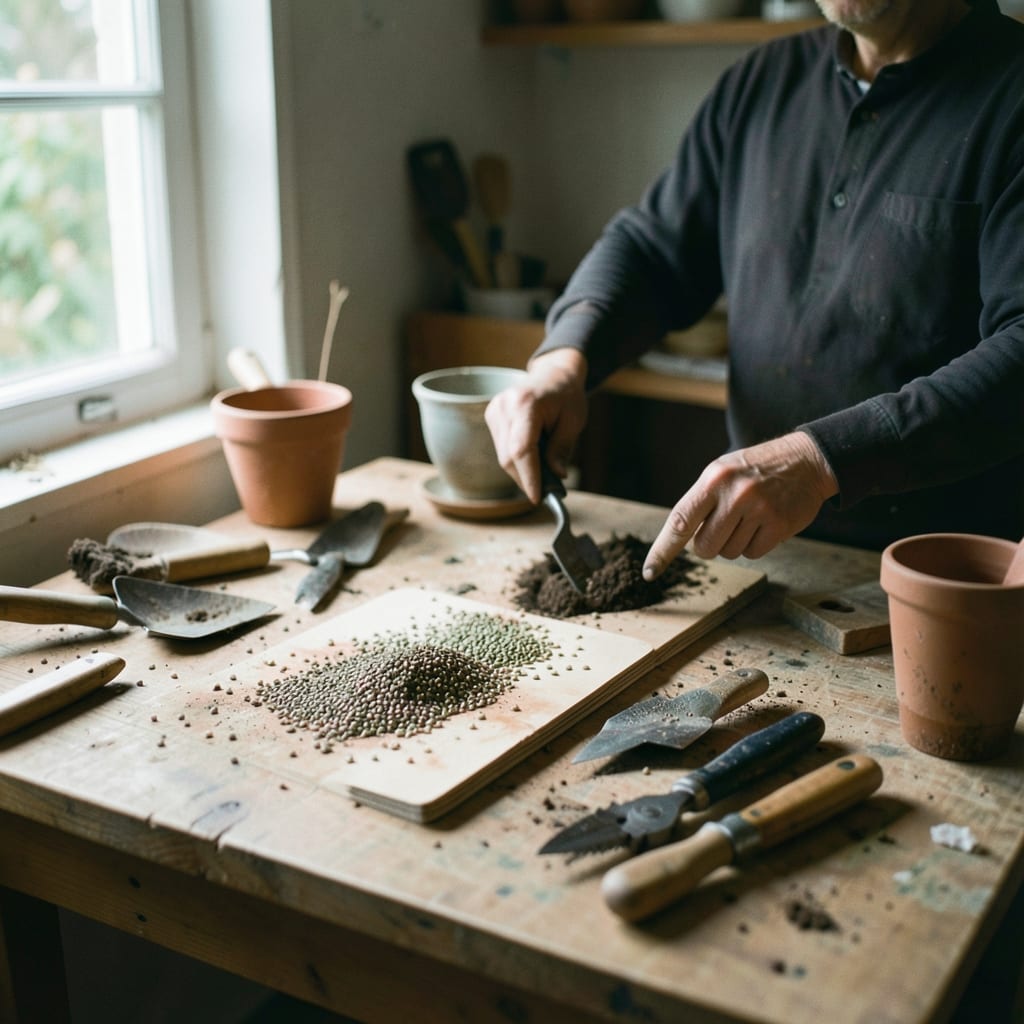
It started with one plant that kept failing
It was a basil plant, bought in a small pot at the end of May, the first real warmth of the season still new to the city. The leaves were glossy, the stems thick—everything looked right.
But by the third week, the edges of the leaves turned yellow, then brown, and no matter how much I watered it, the soil stayed dry at the bottom.
I’d read that basil needed sunlight, so I moved it to the brightest windowsill I had. Then I read that it needed more space, so I repotted it into a larger container. Then I read that it needed less water, so I let the soil dry out completely. Nothing worked.
The plant just kept wilting, no matter what I did.
It wasn’t until I finally checked the drainage hole—plugged with old soil—that I realised the real problem. By then, the basil was beyond saving.
But that failure stuck with me, not because of the plant itself, but because of how many times I’d second-guessed what I’d seen with my own eyes.
Nine tries before it worked
The first replanting was a disaster: I used the same pot, same soil, same spot. The second time, I added sand for drainage, but the roots still rotted. The third attempt, I moved it outside—but the afternoon sun scorched the leaves within days.
By the fifth try, I’d given up on windowsills entirely and buried it in the garden bed, where it thrived for exactly two days before a slug feast turned it into skeleton stems.
The turning point came on the seventh attempt. I dug up a pot of potting mix, added perlite, and placed it in a shallow tray to catch any excess water.
Most importantly, I stopped overcomplicating it: I left it where it was happy—part sun, part shade—and watered it only when the top inch of soil felt dry. For the first time, the leaves stayed green.
But even then, it wasn’t perfect. The eighth planting had me obsessed with fertiliser, and I overdid it, burning the roots. The ninth time, I went back to basics: fresh soil, a clean pot, and no extra additives. That’s when it finally took hold—lush, fragrant, and alive.
It took nine tries to get it right.
The mind behind these pages

Quentin Ingalls is the one who kept replanting that basil. Now, he’s the one who writes about the mistakes—and the small victories—that come after. As the founder and editor of *Flower Vase*, his job is to turn gardening from a guessing game into something you can actually trust.
He’s the kind of person who notices the difference between a soil that drains too fast and one that holds water like a sponge.
He’s the one who still remembers the exact day he planted that first sunflower seed, and how it felt when the shoot finally broke through the dirt. His habit of trying again—even when it seems hopeless—started with a childhood garden and never left.
These days, you’ll find him debugging irrigation systems or debating the best way to prune a lavender bush. He doesn’t grow food; he grows plants that teach. And if there’s one thing he’s learned, it’s that the best lessons come from the things that almost die before they live.
That basil? It’s still growing on his windowsill. He replanted it three more times after the ninth try—just to see.
Everything here is written the way that plant was
This site doesn’t tell you what to do. It tells you what *actually* happens—because we’ve tried it, failed at it, and tried again. Every guide, every tip, every ‘how-to’ starts as a real attempt, not a theory. The soil mix? Tested. The watering schedule? Adjusted after three dead zones.
The pruning advice? Learned the hard way when a hedge turned into a stump.
We don’t wait for perfection. A page about propagating succulents might get rewritten after a batch of cuttings rotted. A post on companion planting could change after a tomato plant wilts next to a basil that *should* have saved it.
The notes in the margins—the ones that say *‘don’t do this’*—are the most important part.
And if you find a page that’s been here for months? It’s still being edited. Gardening changes with the seasons, and so do the answers. What worked in June might fail in September. We update the details because the dirt doesn’t lie—and neither do we.
What that means for you
You’ll find no vague advice here. No ‘plant in full sun’ without explaining what that *really* looks like in your yard. No ‘water when dry’ without telling you how to check.
Every piece of advice is tied to a real attempt—sometimes successful, sometimes not—and we’ll tell you which one it was.
What you *won’t* find are perfect photos or impossible promises. This isn’t a catalog of showstopper gardens. It’s a record of what happens when you dig in, make mistakes, and keep going. The failures are in the footnotes. The lessons are in the soil.
We’d love to hear about it. Send us your story—the good, the bad, and the ‘what did I just do?’ moments—and we’ll turn it into a lesson. The best submissions get featured, and every one helps someone else avoid the same mistake.
The guides are grouped by category: Advice, Aphids, Blooming, Companion Plants, Container Gardens and Diseases.