
Flowers
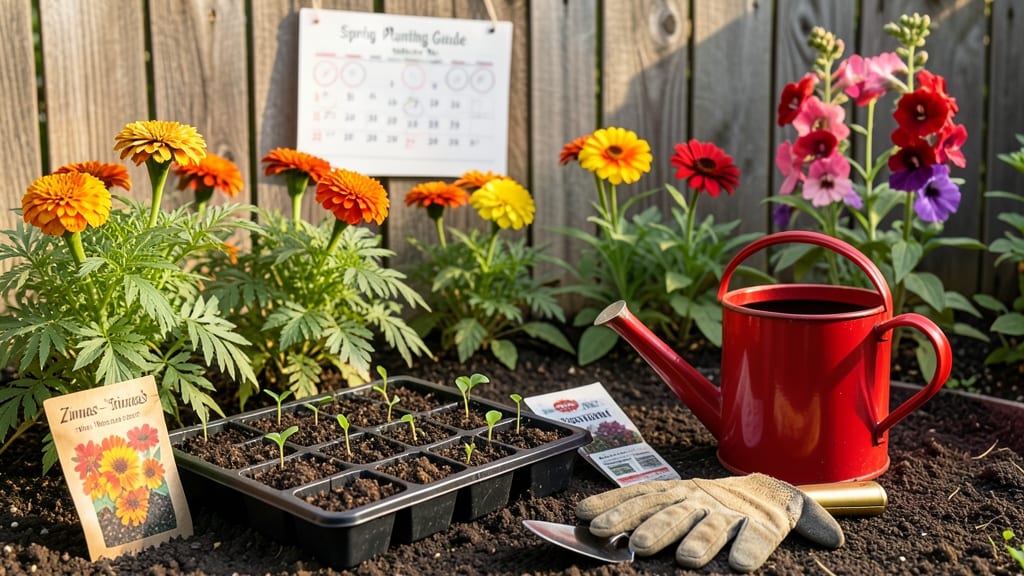
USDA Zone planting calendar: exact weeks before last frost for flower success
Timing your flower planting isn't just about checking a calendar—it's about understanding your USDA hardiness zone and the heat tolerance of each variety.
In Zone 3, pansies thrive when planted 6 weeks before the last frost, while Zone 9 zinnias can handle direct sowing 2 weeks after frost danger passes. These differences mean the gap between success and failure can be just a few weeks.
To simplify, I’ve broken down the critical planting windows for cool-season flowers (like snapdragons) versus warm-season flowers (like marigolds), plus heat-tolerant exceptions that defy zone norms.
Whether you're in a northern climate with late frosts or a southern zone where summer heat arrives early, this guide keeps your blooms on track.
📌 Pro Tip: Always check your local frost dates—they can vary by 1–2 weeks even within the same zone. Use the National Weather Service or a frost calendar app for precise timing.
For perennials, timing shifts based on root establishment. Dahlias, for example, need 60–90 days of warm soil to bloom fully, so in Zone 5, start them indoors 8 weeks before the last frost.
Meanwhile, bulbs like tulips should go in 6–8 weeks before the ground freezes—earlier in colder zones.
Microclimates throw another wrench into the equation. A south-facing wall can create a Zone 8 microclimate in Zone 5, while a shady garden nook might mimic Zone 4 conditions. Adjust your planting by 1–3 weeks based on these factors.
For instance, if your garden sits in a heat island, delay warm-season flowers until 2 weeks after the official frost date.
🌱 Zone-Specific Math: To calculate your exact planting window, subtract 4–6 weeks from your last frost date for cool-season flowers. For warm-season varieties, wait until a soil thermometer reads 60°F+—use a clear plastic mulch to speed this up in cooler zones.
Don’t overlook succession planting, either. In Zones 3–6**, sow fast-growing
Heat-sensitive flowers: how to stretch planting seasons without risking wilting
Heat-sensitive flowers like dahlias and hydrangeas can wilt dramatically when planted outside their ideal window. The key to success lies in understanding how to manipulate your microclimate—whether by delaying cool-season planting or advancing warm-season starts.
In Zones 8–11, where heat lingers longer, these adjustments can mean the difference between a thriving garden and a sad, drooping one.
For dahlias, which thrive in cooler temperatures, extending the planting season by even a few weeks requires strategic planning. Similarly, hydrangeas need careful timing to avoid heat stress during their critical root-establishment phase. The solutions? Shade cloth, mulch, and soil amendments that create a buffer against extreme temperatures.
My top recommendation is to use 30% shade cloth over newly planted dahlias—this can lower soil temperatures by 10–15°F, giving them a fighting chance in hotter zones. Pair this with straw mulch to retain moisture and delay bolting, a common issue when heat-sensitive flowers face sudden temperature spikes.
Extending Cool-Season Planting (e.g., Dahlias)
✅ Pros
- Use 30% shade cloth to lower soil temps by 10–15°F
- Mulch with straw to retain moisture and delay bolting
- Choose heat-tolerant cultivars (e.g., ‘Kaori’ dahlias)
❌ Cons
- Requires daily monitoring for pests (slugs, aphids thrive in damp conditions)
- Risk of fungal diseases if humidity exceeds 70% for >48 hours
- Limited to 2–3 week extension beyond zone norms
Advancing Warm-Season Planting (e.g., Hydrangeas)
✅ Pros
- Start seeds indoors 8–10 weeks before last frost
- Use black plastic mulch to warm soil 2–3 weeks faster
- Transplant hardened-off seedlings after nighttime temps stay above 55°F
❌ Cons
- Seedlings may outgrow containers if rushed
- Transplant shock can set back blooming by 3–4 weeks
- Requires consistent watering (drip irrigation recommended)
Another game-changer is soil amendments like compost or vermiculite, which improve drainage and insulate roots. For hydrangeas, I’ve found that black plastic mulch can warm the soil 2–3 weeks faster than organic options, giving seedlings a head start in cooler zones.
However, this method demands drip irrigation to prevent moisture loss, as plastic mulch accelerates evaporation.
In Zones 9–11, where heat is relentless, even the hardiest flowers need help. For example, zinnias can handle direct sun, but pairing them with afternoon shade cloth during peak summer months prevents premature wilting.
Always monitor humidity levels—if they creep above 70%, fungal diseases like powdery mildew become a real threat, especially for moisture-loving plants like impatiens.
Remember, the goal isn’t to defy nature entirely—it’s about working with it. Use these strategies to nudge your planting window just enough to avoid the worst heat spikes. With the right tools and a little patience, even the most heat-sensitive flowers can thrive well beyond their usual limits.