
Planting
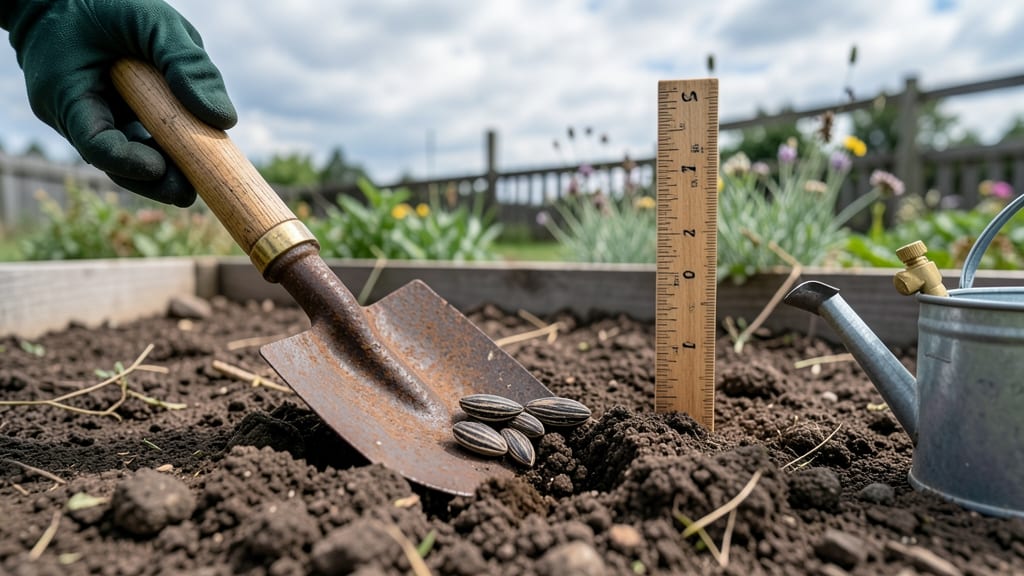
To plant sunflower seeds at the right depth—about 1 to 2 inches—is the first step to towering, vibrant blooms that brighten any garden 🌻.
Sunflowers bring joy to any garden—but planting them too deep or too shallow can stunt their growth or even kill them before they bloom. Get the exact planting depth for sunflower seeds to ensure strong, vibrant plants that reach their full potential.
Most gardeners assume deeper means better, but sunflower seeds need just enough soil to coax roots without suffocating. The key lies in soil type: sandy soil drains faster, while clay holds moisture longer, both requiring slight adjustments to the classic 1-inch rule.
Below, I’ll walk you through the exact measurements, soil prep, and spacing tricks that guarantee 90%+ germination—no guesswork, just reliable results for every gardener, from beginners to pros.
The optimal planting depth for sunflower seeds (with soil type variations)
Sunflower seeds are surprisingly delicate when it comes to planting depth. Too shallow, and they’ll dry out before sprouting. Too deep, and they may struggle to reach the surface.
The ideal planting depth for sunflower seeds is 1 to 2 inches below the soil surface, but this can vary slightly based on your soil type and local climate conditions.
Most gardeners swear by the 1-inch rule for sunflower seeds, especially in well-draining soil. This depth ensures moisture retention while allowing young shoots to break through easily.
However, if your soil is heavy clay, you might need to plant slightly deeper—up to 2 inches—to prevent waterlogging, which can suffocate seeds.
In sandy soil, which drains quickly, planting sunflower seeds at just 1 inch deep is ideal. The loose texture allows roots to establish faster, but you’ll need to water more frequently to prevent the soil from drying out.
I’ve seen seeds planted too deep in sandy soil fail to emerge entirely because they couldn’t push through the compacted layer above.
For clay-heavy soil, the opposite is true. Planting seeds at 1.5 to 2 inches helps prevent them from sitting in waterlogged conditions, which can lead to rot. If your soil is compacted, consider loosening it with a garden fork before planting to improve root penetration and airflow.
A common mistake many gardeners make is over-planting seeds too close together, which can lead to competition for nutrients and stunted growth. While depth is critical, spacing is just as important.
Aim for 6 inches apart in rows that are 18 to 24 inches apart to give each plant room to thrive.
If you’re planting in cooler climates, you might need to adjust your depth slightly. Seeds planted too shallow in cold soil can freeze before germinating. In these cases, planting 1.5 inches deep provides a bit of insulation while still allowing the seed to sprout when conditions warm up.
Always test your soil’s moisture level before planting. Stick your finger about 1 inch into the soil—if it feels dry, water the area thoroughly before planting. Sunflower seeds need consistent moisture to germinate, but they’ll rot if the soil stays soggy. Aim for evenly moist soil, not waterlogged.
After planting, gently press the soil around the seeds to ensure good contact. This helps prevent air pockets that could delay germination.
Once the seeds are in the ground, place a light mulch layer (like straw) over the top to retain moisture and regulate soil temperature—especially in hot climates where evaporation is a concern.
If you notice seeds taking longer than expected to sprout, check the soil temperature. Sunflower seeds germinate best in soil that’s at least 60°F (15°C). If your soil is cooler, consider using a seedling heat mat or planting in a protected microclimate, like near a south-facing wall.
Remember, every garden is unique. Experiment with slight variations in depth if you’re unsure—just document your results! With the right depth and soil prep, your sunflowers will reward you with vibrant blooms and strong stems ready for harvest. 🌻
How to adjust planting depth for different sunflower varieties and climates
Not all sunflowers are created equal—your giant sunflowers need deeper roots to support their towering height, while dwarf varieties thrive with shallower planting. Climate also plays a role: drought-prone regions require deeper planting to access moisture, while high-rainfall areas can handle slightly shallower depths.
Let’s break down the adjustments you’ll need for your garden’s unique conditions.
For giant sunflower varieties like 'Russian Giant' or 'Mammoth', aim for a 1.5-inch planting depth to encourage strong root development. These varieties can grow 10-14 feet tall, so deeper roots help anchor them against wind.
In contrast, dwarf sunflowers like 'Teddy Bear' or 'Sunspot' only need 1-inch depth—their smaller stature means less root mass is required.
Climate matters just as much as variety. In drought-prone regions, plant seeds 1.5-2 inches deep to help roots reach moisture. If you’re in an area with high rainfall, you can plant slightly shallower (1-1.5 inches) since excess water won’t be an issue. Always loosen the soil first to prevent compaction around the roots.
| Variety Type | Recommended Depth | Climate Adjustment | Root Depth Goal |
|---|---|---|---|
| Giant Sunflowers (e.g., 'Russian Giant') | 1.5 inches | Drought: +0.5 inch Rainy: -0.25 inch |
24-36 inches deep |
| Standard Sunflowers (e.g., 'Autumn Beauty') | 1.25 inches | Drought: +0.25 inch Rainy: -0.25 inch |
18-24 inches deep |
| Dwarf Sunflowers (e.g., 'Teddy Bear') | 1 inch | Drought: +0.25 inch Rainy: none |
12-18 inches deep |
If you’re in a hot, dry climate, consider pre-soaking seeds for 4-6 hours before planting to jumpstart germination. In cooler regions, wait until soil temperatures reach at least 55°F—cold soil can delay sprouting. Always plant after the last frost date in your area to avoid stunted growth.
After planting, water deeply but gently to avoid displacing seeds. Use a fine mist setting on your hose or a watering can to keep soil moist but not soggy. Mulch around the base with straw or shredded leaves to retain moisture and regulate soil temperature, especially in high-heat climates.
Remember, consistency is key. Whether you’re growing tall giants or compact dwarfs, adjusting planting depth based on variety and climate ensures your sunflowers thrive from the very first sprout. With the right depth, you’ll be rewarded with vibrant blooms and maybe even edible seeds by late summer! 🌻