
Flowers
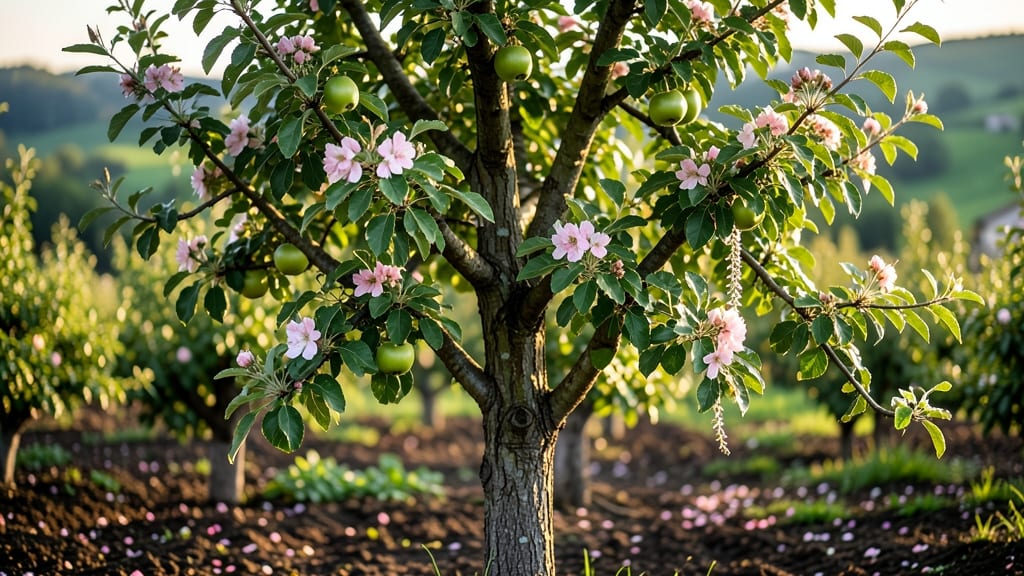
Turning apple tree flowers into fruit isn’t just luck—it’s a science you can master to double your harvest 🍎.
Did you know only 5-10% of those delicate blossoms actually become fruit? That’s right: most gardeners miss the hidden triggers that turn pollination into a bountiful harvest.
But here’s the good news: with the right timing, tree health, and a few smart strategies, you can tip the odds in your favor.
From the moment those pink buds appear in spring to the first blush of fruit, every stage depends on factors you might be overlooking—like bee activity, temperature swings, and even how you prune.
Below, I’ll walk you through the critical steps that separate a sparse harvest from a tree heavy with apples.
Ready to transform your orchard? Let’s break down what’s really happening behind the scenes and how to optimize every stage for maximum fruit set.
The science behind apple tree flower pollination: key triggers for fruit set
Every spring, your apple tree bursts into blossoming glory, but did you know only 5-10% of those flowers will develop into fruit? The magic happens during pollination, a delicate biological process where pollen must transfer from flower to flower.
Understanding the science behind this process can double your harvest by ensuring optimal fruit set.
The journey from apple blossom to fruit begins when pollen from one flower's anther lands on another flower's stigma. This transfer triggers fertilization, where sperm cells unite with egg cells inside the ovary.
But here's the catch: temperature, humidity, and pollinator activity must align perfectly within a 7-14 day window after blooming for success.
Apple trees are self-unfruitful in most cases, meaning they need cross-pollination from another compatible variety. Even if you have just one tree, wind or bees must carry pollen between blossoms. Without this cross-pollination, your tree may produce tiny, misshapen fruit or none at all.
The good news? With the right conditions, you can maximize fruit set and enjoy a bountiful harvest.
Let's break down the critical triggers that turn apple blossoms into fruit. First, temperature plays a starring role. Apple flowers thrive when daytime temperatures hover between 60-85°F (15-29°C).
Below 50°F (10°C), bees become sluggish, and pollen germination slows. Conversely, temperatures above 90°F (32°C) can cause pollen to degrade before it reaches the stigma.
Next, humidity levels must be just right. Ideal humidity for pollination falls between 40-70%. When humidity exceeds 80%, pollen grains clump together, making it difficult for them to transfer.
On the flip side, dry conditions below 30% humidity can dry out the stigma, the flower's receptive surface, reducing its ability to capture pollen.
Bees are the unsung heroes of apple pollination, responsible for 80% of successful transfers. They're most active between 9 AM and 3 PM on warm, sunny days. Cloudy or rainy weather can halve pollination rates, as bees stay indoors to protect themselves.
To support them, plant bee-friendly flowers like lavender or clover near your orchard to attract more pollinators.
Timing is everything when it comes to fruit set. Pollination must occur within a 7-14 day window after the tree blooms. If pollination happens too late, the resulting fruit may be small, deformed, or fail to develop properly.
This is why monitoring your tree's bloom stage and weather conditions is crucial for planning any manual pollination assistance you might need.
Once pollination succeeds, the fertilization process begins. The pollen tube grows down the style of the flower, carrying sperm cells to the ovary where they fertilize the ovules. This union triggers the ovary to swell and develop into an apple.
However, not all fertilized flowers will produce fruit—some may drop due to thinning, a natural process where the tree prioritizes fewer, larger fruit over many small ones.
To maximize your chances of success, monitor your tree's health and growing conditions. A well-nourished tree with balanced fertilizer and adequate water produces more robust blossoms.
Additionally, pruning in late winter improves air circulation, reducing humidity around the flowers and lowering the risk of fungal diseases like bloom rot, which can devastate your crop.
If you notice poor pollination despite ideal conditions, don't panic. You can hand-pollinate your apple tree using a small brush to transfer pollen between flowers. This method works especially well on cloudy or rainy days when bees aren't active.
Simply dip the brush in pollen from one flower and gently stroke the stigma of another to ensure cross
5 Practical ways to boost pollination in your apple orchard
Transforming those delicate apple tree flowers into a bountiful harvest starts with smart pollination strategies. Even if you have healthy trees, poor pollination can leave you with sparse fruit. The good news? With these five actionable methods, you can dramatically improve your orchard's success rate this season.
First, focus on attracting pollinators like bees and butterflies—they're the unsung heroes of fruit production. But what if your orchard isn't buzzing enough? We'll cover manual pollination techniques and tree health optimizations that work even in low-pollinator areas. Let's turn those blossoms into bushels!
Add clover, lavender, or dill near trees to attract pollinators. Place them 10-15 feet from tree bases for maximum impact.
Use a soft brush to transfer pollen between flowers when bees are less active. Do this in early morning for best results.
Remove 25% of small flowers to ensure remaining blooms get proper nutrients. Focus on cluster centers first.
Ensure 15-20 feet between trees for proper airflow and pollinator access. Overcrowding reduces both fruit set and tree health.
Apply balanced fertilizer (10-10-10) in early spring. Avoid high-nitrogen formulas—they promote leaves over flower production.
Let's start with method #1: planting companion flowers. I've found that adding native wildflowers like black-eyed Susans or bee balm creates a pollinator highway right to your apple trees. These flowers provide early-season nectar when apple blossoms first open, giving bees the energy they need to work efficiently.
For method #2: manual pollination, grab a small paintbrush or cotton swab on days when bees aren't active. Gently transfer pollen from one flower to another, focusing on open blossoms with visible stamens. This technique works best during cool, cloudy mornings when humidity is high—ideal conditions for pollen transfer.
Don't overlook tree health as your secret weapon. Healthy trees produce more vigorous flowers with higher pollen counts. I recommend a soil test to check pH levels—apple trees thrive in slightly acidic soil (6.0-6.5). If your soil is off, amend it with sulfur or lime before bloom season begins.
Pro tip: Water deeply during the two weeks before blooming to encourage strong root development. This gives your trees the energy they need to produce abundant, high-quality flowers that attract pollinators and respond better to manual assistance.