
Light Requirements
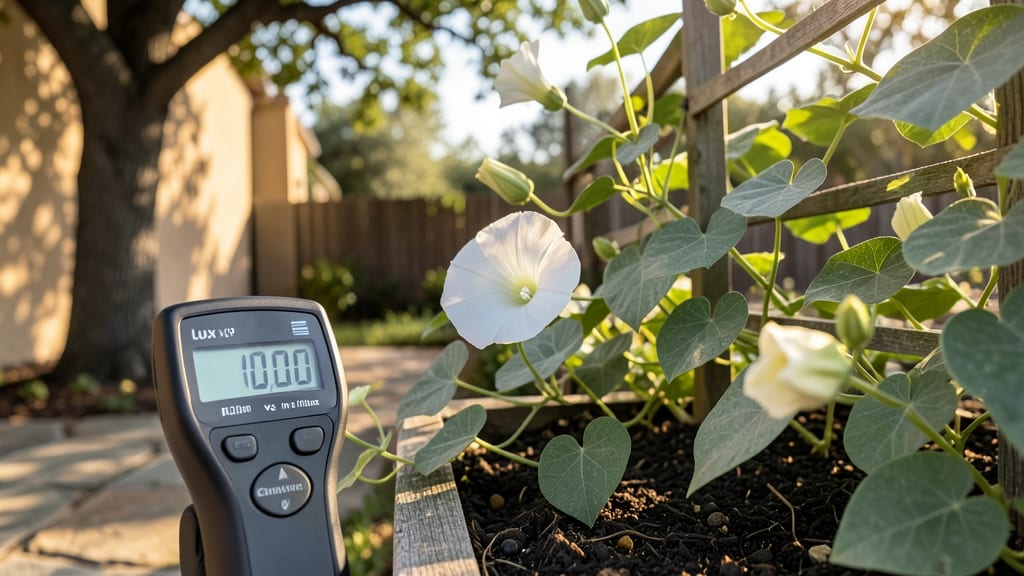
Moonflowers do need full sun to thrive at their best, though they can adapt to partial shade, making them a versatile choice for gardeners with varying light conditions.
Picture this: your garden bursting with silvery-white blooms that only open at night, revealing their ethereal beauty under the moonlight. 🌙 While they love basking in bright sunlight, these vines can still flourish in partial shade, offering a surprising twist for those with less-than-sunny spots.
You might think full sun is a must for vibrant blooms, but the truth is more nuanced. Moonflowers can handle 4-6 hours of sunlight daily, especially in cooler climates like USDA Zone 6a, where intense afternoon heat can stress them.
Understanding their adaptability is the key to maximizing those magical nighttime displays.
In this guide, I’ll break down exactly how much sun moonflowers need, how to spot signs of light stress, and practical tips for growing them in both full sun and partial shade—so you can enjoy their enchanting blooms no matter where you garden.

Moonflower sun requirements: full sun vs. partial shade breakdown
Moonflowers (Ipomoea alba) are famous for their magical nighttime blooms, but their sunlight needs often get misunderstood. While they prefer full sun exposure, they can adapt to partial shade—though with some trade-offs.
Understanding these requirements helps you grow thriving vines with abundant flowers. Let’s break down how much sun moonflowers truly need and what happens when they get too much or too little light.
The key to growing moonflowers lies in their native tropical origins. In their natural habitat, they thrive under bright, indirect light with occasional direct sun. This adaptability makes them a great choice for gardeners with mixed-light conditions.
However, their flowering and vine growth will differ dramatically based on sunlight exposure. For example, moonflowers grown in full sun produce more abundant blooms, while those in partial shade may focus energy on leafy growth instead.
Here’s the critical comparison you need to know before planting:
Moonflowers in full sun (6+ hours of direct light) will reward you with vibrant, frequent blooms and robust vines that climb eagerly up trellises. This is their ideal condition, especially in USDA Zones 9-11, where they can thrive year-round.
However, in hotter climates, afternoon shade helps prevent leaf scorch, a common issue when vines receive intense midday sun without relief.
In partial shade (3-6 hours of direct light), moonflowers will still grow but may produce smaller flowers and focus more on leafy growth. This setup works well for containers on patios or gardens with dappled sunlight.
If you notice your moonflowers developing long, weak stems with few blooms, they’re likely not getting enough light. A simple fix is to move them to a sunnier spot or supplement with a grow light during shorter days.
Watch for signs of sun stress like yellowing leaves, brown edges, or wilting—these indicate your moonflowers are getting too much direct sun, especially in afternoon heat. On the flip side, pale, sparse foliage and no flowers signal insufficient light.
Balancing these cues ensures your moonflowers stay healthy and productive, whether in full sun or partial shade.
For gardeners in cooler climates (Zones 6-8), moonflowers benefit from morning sun and afternoon shade. This setup mimics their natural tropical environment while protecting them from late-day heat.
If you’re growing moonflowers in containers, rotate them occasionally to ensure even light exposure, as vines may lean toward the sun, creating uneven growth.
One common misconception is that moonflowers must have full sun to bloom at night. While they prefer bright light, their nocturnal flowers actually close during the day to conserve moisture—a trait that helps them thrive in partial shade as well.
The key is providing enough light to support healthy vine growth while allowing the plant to focus energy on nighttime blooms rather than excessive foliage.
To maximize your moonflowers’ potential, start with well-draining soil and a support structure like a trellis or fence. In full sun, water deeply every 3-5 days to prevent stress, while in partial shade, reduce watering slightly since the soil retains moisture longer.
With the right light balance, you’ll enjoy stunning nighttime displays from these enchanting vines all summer long.
Remember, moonflowers are annuals in most climates, so focus on giving them the best possible conditions in their single growing season. Whether you have a sun-drenched garden or a shadier patio, these adaptable vines will reward your efforts with their ethereal beauty under the moonlight.
How to grow moonflowers in shade: proven tips for nighttime blooms
Growing moonflowers in shade doesn't mean sacrificing those magical nighttime blooms. While they prefer 6+ hours of sunlight, these vines can thrive in partial shade with the right adjustments. The key lies in optimizing soil, water, and companion plants to compensate for lower light conditions.
Moonflowers in shade will produce fewer flowers but can still create a romantic garden atmosphere. Their large, silvery-white blooms open after sunset, making them perfect for evening ambiance even in less sunny spots. The trick is to mimic their natural sunlight needs through thoughtful garden design.
Moonflowers don't strictly need full sun but perform best with 4-6 hours of direct light. In partial shade, expect smaller vines and fewer blooms—but they'll still thrive with these adjustments:
- Add compost-rich soil for nutrients
- Use reflective mulch to bounce light
- Choose shade-tolerant varieties like 'White Moonflower'
Start by amending your soil with organic matter like compost or aged manure. Moonflowers in shade need extra nutrients to compensate for reduced photosynthesis. Aim for well-draining soil with a pH between 6.0-7.0, as this supports root development and flower production.
Companion planting can work wonders for shade-grown moonflowers. Pair them with tall sun-loving plants like sunflowers or hollyhocks to create a natural trellis effect. These companions will cast dappled shade while allowing some light to reach your moonflowers. Avoid planting near dense evergreens that block all sunlight.
Seasonal light management is crucial. In spring and fall when sunlight is less intense, provide temporary shade cloth with 30-50% coverage to protect young vines. During summer, gradually remove shade cloth as the sun strengthens. This gradual approach helps moonflowers adapt without shock.
For container gardening in shade, choose large pots with at least 12-inch depth to accommodate sprawling roots. Use a lightweight potting mix with perlite to improve drainage. Place containers near south-facing walls or use reflective surfaces like white gravel to increase light exposure by up to 20%.
Remember that even in shade, moonflowers need consistent evening watering. Water deeply after sunset to keep soil moist but not waterlogged. Mulch with straw to retain moisture and regulate soil temperature—critical for shade-grown vines that may struggle with temperature fluctuations.