
Trees
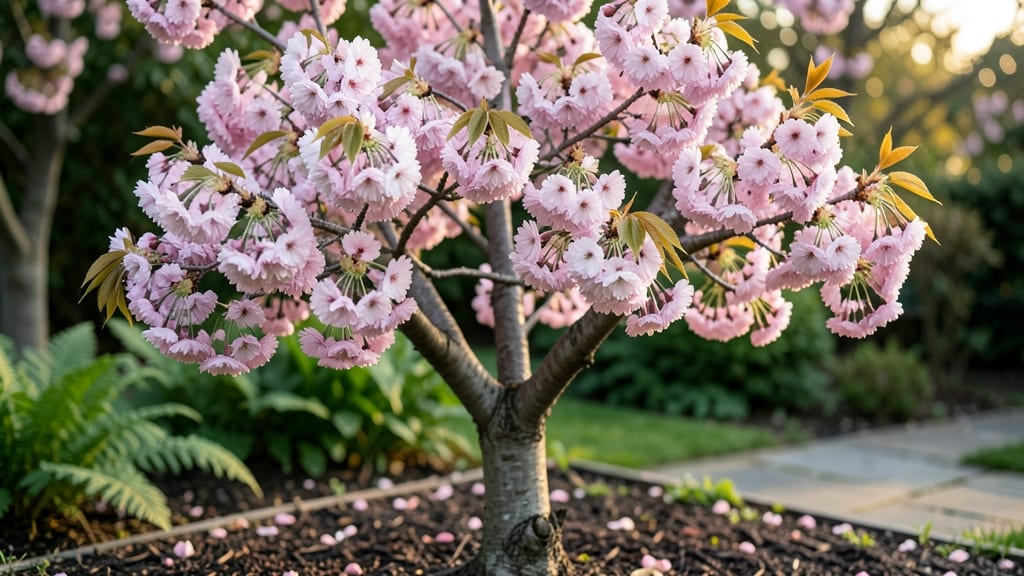
A flowering cherry tree’s growth rate depends on the variety you choose, with some varieties shooting up 3-5 feet in their first year alone.
Wondering how fast your flowering cherry tree will grow? Understanding its yearly growth rate helps you plan spacing, pruning, and landscape expectations—so you can enjoy those stunning blossoms sooner rather than later.
From the delicate pink blooms of Yoshino cherries to the deep magenta of Kwanzan varieties, each type has its own timeline. Some mature in as little as 10 years, while others take twice that long to reach their full height.
Below, I break down what to expect each year, the factors that speed up or slow down growth, and how to give your tree the best start for faster, healthier blooms.


Flowering cherry tree growth rates by variety (yearly height increases)
Planning your landscape with a flowering cherry tree? Growth rates vary dramatically between varieties, and knowing these differences helps you choose the perfect fit for your space. Some varieties like Yoshino cherry shoot up quickly, while others like Autumn Brilliance grow more slowly but offer stunning fall colors.
Let’s break down what to expect year by year for the most popular types.
Understanding yearly height increases is key to spacing, pruning, and long-term planning. A Kwanzan cherry, for example, might reach 20 feet in just 5 years, while a dwarf variety like Snow Fountain stays compact at 15-20 feet at maturity.
These differences impact everything from root competition to seasonal pruning schedules.
Here’s a detailed comparison of flowering cherry growth rates by variety, including average annual height gains and maturity timelines. Use this data to estimate when your tree will reach its full height and when you can expect those breathtaking spring blooms.
If you’re planting a Yoshino cherry, expect rapid growth—it can reach 15 feet in just 3 years! This variety is perfect for gardeners eager to enjoy early blooms but requires careful spacing to avoid overcrowding nearby plants.
The Kwanzan cherry, while slightly slower, offers double blooms in spring and fall, making it a favorite for extended seasonal interest.
For smaller spaces, Autumn Brilliance is an excellent choice. Its slower growth rate (10-15 feet in 3 years) and vibrant fall foliage make it ideal for yards where height is a concern.
Meanwhile, dwarf varieties like Snow Fountain are perfect for container gardening or urban landscapes, staying under 20 feet at maturity.
When planning your flowering cherry tree’s location, consider not just its mature height but also its spread. Most varieties develop a canopy width of 20-30 feet, so ensure you plant it at least 15 feet away from structures, fences, or other trees.
This spacing prevents root competition and makes future pruning easier.
Pruning plays a crucial role in managing growth rates. Young trees benefit from structural pruning in their first few years to encourage a strong framework. For faster-growing varieties like Yoshino, light pruning in late winter helps control height and improves air circulation, reducing disease risk.
Always use sterilized tools and prune just above a bud to promote healthy regrowth.
Soil quality and sunlight exposure directly impact growth rates. Flowering cherries thrive in well-draining soil
Factors that speed up or slow down flowering cherry growth
Your flowering cherry tree’s growth rate isn’t just about time—it’s a delicate balance of environmental conditions and care practices. While some varieties naturally grow faster, others respond dramatically to your gardening efforts.
For example, a Yoshino cherry might grow 12-18 inches per year in ideal conditions, but poor soil or shade can cut that in half. Understanding these factors helps you create the perfect growing environment for faster blooms and healthier branches.
From sunlight exposure to pruning techniques, every detail matters. Even something as simple as watering frequency can shift your tree’s growth trajectory by 30% or more.
Let’s explore the key elements that either accelerate or stall your flowering cherry’s development, so you can enjoy those pink and white blossoms sooner rather than later.
- 🌞 Sunlight (6+ hours daily): Full sun boosts growth by 50%—shade slows it down. Place your tree in the southern exposure for maximum blooms.
- 💧 Watering (deep soaks weekly): Overwatering causes root rot; underwatering stresses the tree. Aim for 1-2 inches of water per week during dry spells.
- 🌱 Soil drainage (well-aerated): Heavy clay soil stunts growth. Amend with compost or sand to improve drainage and nutrient uptake.
- ✂️ Pruning (late winter): Remove dead or crossing branches to redirect energy. Avoid heavy pruning during bloom season.
- 🌡️ Temperature (USDA Zones 5-8): Cold snaps below 10°F can damage young trees. Mulch heavily in winter for protection.
Let’s start with sunlight, the most critical factor for flowering cherries. These trees thrive in full sun (6+ hours daily), but even partial shade can reduce growth by 20-30%.
If your yard lacks direct sunlight, consider a south-facing location or a container with reflective surfaces to maximize light exposure. Without enough sun, your tree may produce fewer blossoms and grow more slowly, leaving you waiting years longer for that spring spectacle.
Next, watering habits play a surprising role in growth speed. While flowering cherries are drought-tolerant once established, young trees need consistent moisture. Overwatering is just as harmful as underwatering—it leads to root rot and stunted growth.
I recommend deep watering 1-2 times per week during the first year, then tapering to bi-weekly once roots spread. A drip irrigation system keeps moisture consistent without soggy soil.
Don’t overlook the power of soil quality. Flowering cherries prefer well-draining, slightly acidic soil (pH 6.0-7.0). If your garden soil is heavy clay, mix in organic matter like compost or peat moss to improve aeration.
Poor soil drainage can slow growth by 40% or more, as roots struggle to access oxygen and nutrients. A quick soil test reveals pH levels—adjust with lime (to raise pH) or sulfur (to lower pH) if needed.
Finally, pruning techniques directly impact growth rate and blooming potential. Prune in late winter (before buds swell) to remove dead, diseased, or crossing branches. Avoid heavy pruning during the growing season, as it stresses the tree.
For faster growth, focus on opening the canopy to allow sunlight to reach inner branches—this encourages more vigorous new growth and heavier blooms the following spring.