
Shrubs
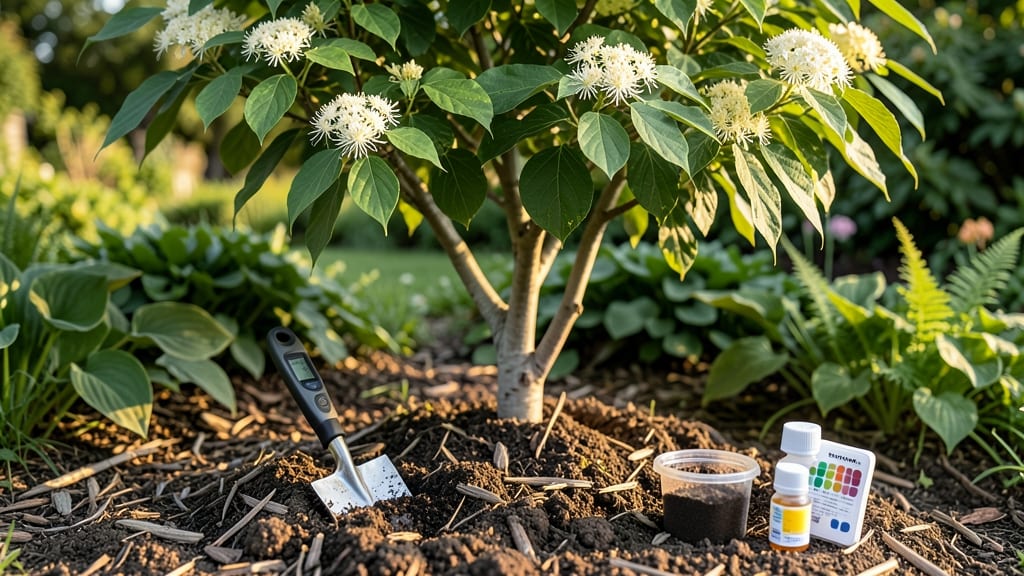
The flowering dogwood soil requirements are all about acidic, well-draining loam—getting the mix right is key to vibrant blooms and strong roots.
Picture this: You’ve just planted your new dogwood, excited for those show-stopping spring flowers, only to watch it struggle with yellowing leaves and weak growth. The culprit?
Soil that’s too alkaline, compacted, or lacking organic matter. Getting the soil right isn’t just about survival—it’s about unlocking the full beauty of your tree.
Dogwoods crave a soil pH between 4.5 and 6.0, rich in organic material like compost or peat moss, and with a texture that drains well but holds moisture. Too sandy? Roots dry out.
Too clay-heavy? Water pools and rots them. The ideal balance is a loamy mix—think of it as the Goldilocks of soil: not too heavy, not too light, just right.
In this guide, I’ll walk you through how to test your soil, amend it for peak dogwood health, and avoid common mistakes that steal their potential. By the end, your tree will be on its way to becoming the star of your landscape.
Ideal soil pH and composition for flowering dogwood trees
Flowering dogwoods (Cornus florida) thrive when planted in acidic, well-draining soil with a specific composition that supports their delicate root systems. The right mix ensures vibrant blooms, healthy foliage, and long-term tree vitality.
Without proper soil conditions, your dogwood may struggle with chlorosis (yellowing leaves), poor flowering, or even decline.
Dogwoods prefer a soil pH range of 4.5 to 6.0, mimicking their natural forest understory habitat. This acidic environment prevents nutrient deficiencies, particularly iron and manganese uptake, which are critical for foliage and flower production.
Testing your soil’s pH before planting is the first step to creating an optimal growing environment.
Here’s what your dogwood’s soil should include for peak performance:
The texture of your dogwood soil plays a crucial role in root health.
A sandy-loam mix (40% sand, 40% silt, 20% clay) is ideal because it drains excess water while retaining enough moisture for roots. Clay-heavy soils should be amended with coarse sand or perlite to prevent compaction, while sandy soils benefit from peat moss or compost to improve nutrient retention.
Organic matter is the backbone of dogwood soil. Aim for 5–10% organic content, achieved through compost, leaf mold, or well-rotted manure. This boosts microbial activity, which breaks down nutrients into forms the tree can absorb.
Without enough organic matter, your dogwood may exhibit stunted growth or pale leaves due to poor nutrient availability.
If your soil is too alkaline (pH > 7.0), your dogwood will struggle to access essential nutrients like iron and zinc. To lower pH, incorporate sulfur or pine needles into the soil.
Conversely, if your soil is too acidic (pH < 4.5), a light application of lime (calcium carbonate) can help raise the pH slightly without harming the tree.
One common mistake is assuming all garden soil is suitable for dogwoods. Heavy clay soils can suffocate roots, while sandy soils may not hold enough nutrients. Conduct a simple jar test to assess your soil’s texture: Fill a jar with soil, water, and shake—let it settle.
The layers should show 25% sand, 50% silt, and 25% clay for ideal loam.
For container-grown dogwoods, use a custom potting mix with 50% peat moss, 30% perlite, and 20% compost. This lightweight blend ensures proper drainage while providing the acidic environment dogwoods crave. Always include a slow-release fertilizer to support growth without overwhelming the roots.
Mulching is another key practice. Apply 2–4 inches of wood chips or pine straw around the base of your dogwood, keeping it 3–6 inches away from the trunk.
Mulch conserves moisture, regulates soil temperature, and slowly decomposes to enrich the soil with organic matter—all critical for vibrant blooms and robust growth.
By focusing on these soil pH and composition guidelines, you’ll create the perfect environment for your flowering dogwood to thrive. Regularly monitor soil health, especially after heavy rains or droughts, to keep your tree’s roots happy and blooms abundant. 🌸
How to amend garden soil for dogwoods: step-by-step mixing guide
Flowering dogwoods (Cornus florida) thrive in acidic, well-draining soil with a loamy texture. If your garden soil is heavy clay or sandy, don’t worry—simple amendments can create the perfect mix.
Start by testing your soil’s pH level (ideal: 4.5–6.0). If it’s too alkaline, your dogwood’s roots will struggle to absorb nutrients, leading to poor blooms or yellowing leaves.
For clay-heavy soils, focus on improving drainage and aeration. Sandy soils, on the other hand, need help retaining moisture and nutrients. Both can be fixed with organic matter and targeted amendments. The key is balancing texture, pH, and organic content to mimic the dogwood’s natural woodland habitat.
Step-by-Step Soil Amendment Guide
- 1 Test Your Soil: Use a pH test kit or send a sample to your local extension office. Aim for 4.5–6.0. If pH is above 6.5, add elemental sulfur (1 lb per 100 sq ft) to lower it gradually.
- 2 Amend Heavy Clay: Mix in 3–4 inches of compost and 1–2 inches of coarse sand (like horticultural sand) to improve drainage. For extreme clay, consider a raised bed filled with a 50/50 mix of native soil and compost.
- 3 Fix Sandy Soil: Blend in 2–3 inches of peat moss or coconut coir to retain moisture, plus well-rotted compost (50% of the mix) to add nutrients. Avoid fresh manure, which can burn roots.
- 4 Adjust pH Organically: For alkaline soil, add sulfur (sprinkle and water in). For acidic soil, mix in pine bark fines or sphagnum peat moss. Re-test pH after 2–3 months and re-amend if needed.
- 5 Create a Raised Bed (Optional): For poor native soil, build a 3-foot-wide raised bed using 60% native soil, 30% compost, and 10% perlite. This ensures perfect drainage and aeration while protecting roots from compaction.
- 6 Mulch for Long-Term Health: Apply 3–4 inches of wood chips or shredded leaves around the base (keep mulch 6 inches away from the trunk). This locks in moisture, regulates temperature, and slowly adds organic matter.
Once your soil is amended, plant your dogwood in early spring or fall when temperatures are cool. Water deeply after planting to settle the soil around roots, and avoid fertilizing for the first 6–8 weeks to prevent root burn.
Over time, your amended soil will support vibrant blooms and strong growth, making your dogwood the star of your landscape.
Remember, dogwoods are low-maintenance once established, but getting the soil right from the start sets them up for decades of beauty.
If you’re unsure about your soil type, dig a hole, fill it with water, and observe how quickly it drains—slow drainage = clay; fast drainage = sand. Adjust accordingly!
🌿