
Container Gardens
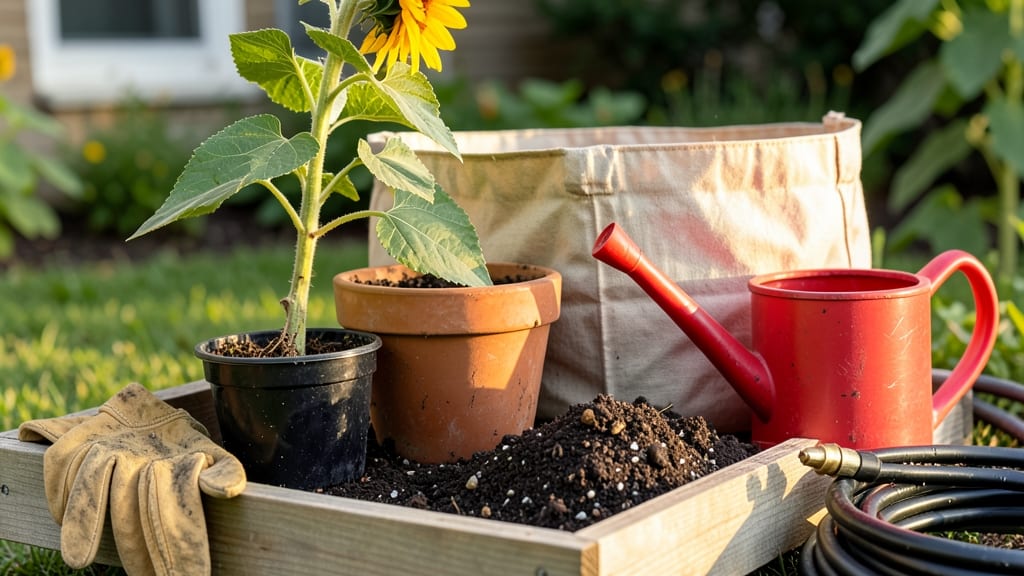
To grow sunflowers in containers, you’ll need a pot at least 12 inches deep and 12 inches wide for standard varieties — but the right size depends on your plant’s height and root space needs.
Picture this: your 🌻 sunflower seedlings sprout with promise, only to lean wildly or wilt by midsummer because their roots are cramped. That’s a classic sign of a pot that’s too small, and it happens more often than you’d think.
Sunflowers vary wildly in size — dwarf varieties like ‘Teddy Bear’ need just 5-gallon pots, while giants like ‘Mammoth’ demand 20+ gallons to support their towering stems. The key is matching pot depth to root growth, not just diameter.
Below, I break down the exact pot sizes by sunflower height, plus how to spot root-bound issues early and fix them without losing your blooms.
Minimum pot sizes for sunflowers by height: expert guidelines
Sunflowers thrive in containers when given the right amount of space to grow, but choosing the wrong pot size can lead to stunted growth or even root-bound stress. The key is matching your sunflower variety’s mature height to the pot’s diameter and depth.
Dwarf varieties need minimal space, while giant sunflowers require deep, wide containers to support their towering stems. Let’s break down the exact pot sizes you need for each type to ensure your sunflowers reach their full potential.
Sunflowers develop deep taproots, which means they need adequate soil depth to anchor properly. A pot that’s too shallow will restrict root growth, leading to leaning stems or weak plants. Additionally, the pot’s diameter affects stability—wider pots provide better balance for taller varieties.
Always prioritize drainage holes to prevent waterlogging, which can rot roots and stunt growth. Without proper drainage, even the largest pot becomes useless.
Here’s a quick reference for pot sizes based on sunflower height:
| Sunflower Variety | Mature Height | Minimum Pot Diameter | Minimum Pot Depth | Best Pot Type |
|---|---|---|---|---|
| Dwarf Varieties (e.g., 'Teddy Bear', 'Moulin Rouge') | 1–3 ft | 10–12 inches | 10–12 inches | Medium-sized planter or window box |
| Medium Varieties (e.g., 'Moulin Rouge', 'Autumn Beauty') | 3–6 ft | 14–16 inches | 14–16 inches | Large container or half whiskey barrel |
| Standard Varieties (e.g., 'Mammoth', 'Russian Giant') | 8–12 ft | 18–24 inches | 20–24 inches | Large fabric grow bag or deep container |
| Giant Varieties (e.g., 'Russian Giant', 'Mammoth') | 12–14 ft | 24+ inches | 24+ inches | Extra-large container or raised bed |
*All pots must have drainage holes to prevent root rot.
For dwarf sunflowers, a 10–12 inch pot is perfect because their roots won’t grow too deep. These varieties are ideal for balconies or small patios. Medium sunflowers need a bit more room—14–16 inch pots give them enough stability and root space to grow upright.
If you’re growing standard or giant sunflowers, invest in a 20–24 inch pot or larger, as their roots can extend 3–4 feet deep.
Undersized pots are a common mistake that leads to root-bound stress. When roots circle the pot’s bottom, they compete for nutrients and water, causing yellowing leaves and poor growth.
To avoid this, always choose a pot that’s at least 2–3 inches larger in diameter than the sunflower’s mature stem width. For example, a 6-foot sunflower needs a pot with a 14-inch diameter to support its stem without toppling over.
Material matters too. Terracotta pots wick away moisture, which helps prevent root rot, but they dry out faster. Plastic pots retain moisture longer, making them better for hot climates.
If you’re growing sunflowers in fabric grow bags, they’re a great choice because they allow roots to breathe while providing excellent drainage. Always use a high-quality potting mix with perlite or vermiculite to improve aeration and drainage.
Another pro tip: Add a support stake or cage to your container setup for taller varieties. This prevents leaning and gives your sunflower extra stability, especially in windy conditions. Place the stake in the pot when you transplant the seedling, so it grows around it naturally.
For giant sunflowers, consider using a 5-gallon bucket or larger—these provide the depth and stability needed for their massive root systems.
If you’re unsure about your sunflower’s mature height, check the seed packet or plant tag. Most varieties list their expected height, which helps you determine the right pot size.
For example, if your sunflower is labeled as 8–10 feet tall, opt for a 20-inch diameter pot with 20-inch depth. This ensures your plant has enough room to grow strong and healthy without becoming root-bound.
Finally, don’t forget to fertilize regularly when growing sunflowers in containers. Since they’re confined to a limited space, nutrients deplete faster than in garden beds. Use a balanced fertilizer every 4–6 weeks during the growing season to keep your sunflowers thriving.
With the right pot size and care, you’ll enjoy vibrant blooms and maybe even harvest seeds for next year!
How to choose the right pot material and type for sunflowers
Sunflowers thrive in containers, but not all pots are created equal. The material and type you choose directly impact root health, water retention, and even overheating risks. Terracotta pots, for example, wick moisture away quickly, while plastic holds water longer—both have pros and cons for sunflowers.
Let’s break down the best options to keep your sunflowers happy and healthy all season long.
For dwarf varieties (1-3 ft tall), even a 5-gallon pot (12-14 inches deep) works, but standard sunflowers (6-10 ft) need at least 10-15 gallons of space. Raised beds offer more room but require deeper soil prep, while window boxes are best for miniature varieties only.
Self-watering containers are a game-changer for busy gardeners.
- ✅ Breathable – Prevents root rot
- ✅ Natural drainage – Ideal for sunflowers
- ✅ Heat-resistant – Won’t warp in sun
- ❌ Dries out fast – Needs frequent watering
- ❌ Heavy when wet – Hard to move
- ✅ Lightweight – Easy to relocate
- ✅ Retains moisture – Reduces watering
- ✅ Budget-friendly – Affordable options
- ❌ Poor drainage – Risk of root rot
- ❌ Overheats – Can scorch roots
- ✅ Consistent moisture – Less maintenance
- ✅ Great for travel – Won’t dry out
- ❌ Expensive – Higher upfront cost
- ❌ Bulky design – Takes up space
- ✅ Deep root space – Supports tall varieties
- ✅ Better drainage – Prevents waterlogging
- ❌ Limited mobility – Can’t move easily
- ❌ Requires prep – Needs soil amendments
If you’re growing giant sunflowers (10+ ft tall), opt for fabric grow bags—they’re breathable, lightweight, and prevent root circling. For small spaces, use stackable containers or vertical planters to maximize root space without sacrificing aesthetics.
Always add drainage holes and a layer of gravel at the bottom to avoid waterlogged soil.
Sunflowers in containers need extra attention during heatwaves. Terracotta pots dry out faster, so place them in shaded spots during peak sun (12-3 PM). Plastic pots, meanwhile, can trap heat—bury them halfway in the ground or use light-colored pots to reflect sunlight.
Mulch the soil surface to retain moisture and keep roots cool.
For urban gardeners, window boxes work for dwarf varieties but require weekly watering. Pair them with a self-watering reservoir to reduce effort. Remember: bigger isn’t always better—just appropriate.
A pot that’s too deep without drainage can suffocate roots, while one that’s too shallow will stunt growth. Balance is key!
My top recommendation? Start with 10-15 gallon terracotta pots for standard sunflowers, or 5-gallon plastic pots for dwarfs. Add a slow-release fertilizer at planting time, and you’ll have sturdy stems and vibrant blooms all season. Happy planting! 🌻