
Planting
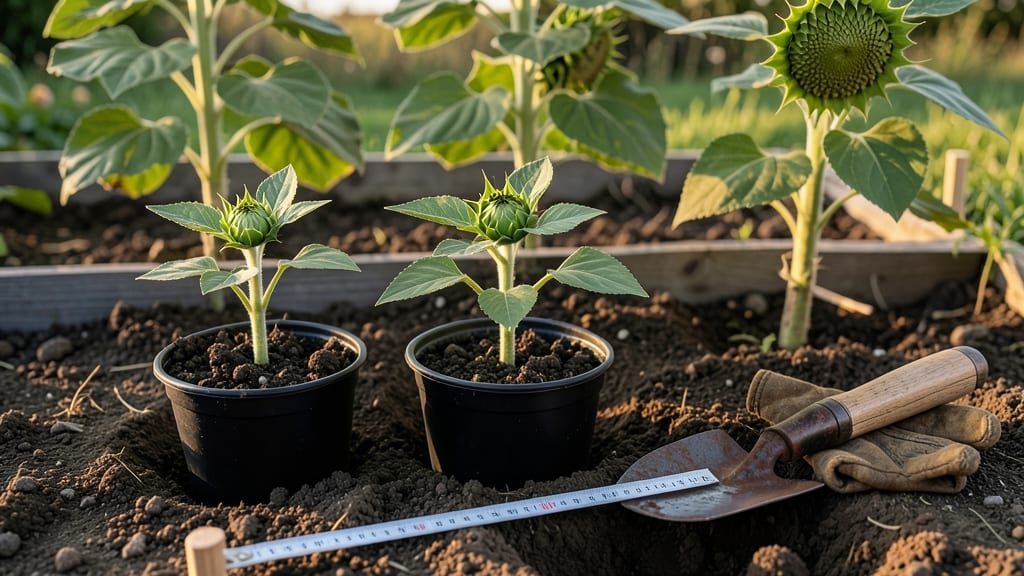
Planting sunflowers too close will leave you with weak stems and missed harvests—these giants need 12 to 24 inches of elbow room to reach their full potential.
Sunflowers are nature’s skyscrapers—towering, vibrant, and capable of reaching 12 feet or more—but their success depends on one critical factor: spacing. Plant them too close, and you’ll end up with weak stems, disease risks, and stunted growth.
Whether you’re growing dwarf varieties in containers or giant sunflowers in open fields, proper spacing ensures strong roots, better airflow, and the energy to fuel those iconic blooms.
In this guide, I’ll break down the exact spacing rules by variety, share common mistakes to avoid, and even show you how to grow sunflowers in small spaces—so you can enjoy healthy, towering 🌻 plants without the crowding.
Optimal sunflower spacing by variety: dwarf to giant types explained
Sunflowers come in stunning diversity, from dwarf varieties perfect for containers to giant types that reach skyscraper heights. But their spacing needs vary dramatically—get this wrong, and you’ll sacrifice sunlight exposure, stem strength, or even seed production.
The key is matching root depth and mature size to your garden layout.
Dwarf sunflowers (1-3 feet tall) thrive in tight clusters, while giant varieties (10+ feet) need wide spacing to prevent shading. Even medium-height types (3-6 feet) benefit from thoughtful placement.
Below, I’ll break down exact spacing guidelines by variety, plus soil depth and root growth tips to ensure your sunflowers grow strong and straight.
Pro Tip: Always check your seed packet instructions—some hybrid varieties have unique spacing needs. For example, Moulin Rouge (a dwarf) can handle 6-inch spacing, while Russian Giant needs 24+ inches to avoid flopping stems.
| Variety Type | Mature Height | Spacing (inches) | Row Spacing | Soil Depth (inches) | Notes |
|---|---|---|---|---|---|
| Dwarf | 1–3 ft | 6–12" | 12–18" | 1" | Ideal for containers, borders, or mass planting. |
| Medium | 3–6 ft | 12–18" | 24–30" | 1–1.5" | Best for cut flowers; stake if windy. |
| Giant | 10–16+ ft | 24–36" | 36–48" | 1.5–2" | Requires deep, loose soil; use stakes or cages. |
For dwarf sunflowers, like Teddy Bear or Moulin Rouge, 6-inch spacing works perfectly in containers or borders. Their shallow root systems (12–18 inches deep) mean they don’t compete much for nutrients.
In contrast, giant varieties like Russian Giant or Mammoth need 24+ inches apart to support their deep taproots (2–3 feet deep) and top-heavy blooms.
Medium-height sunflowers, such as Autumn Beauty or ProCut, strike a balance with 12–18 inches apart. These varieties are ideal for cut flowers and benefit from 24-inch row spacing to prevent stem rubbing, which weakens them.
Always thin seedlings to avoid overcrowding—even if it’s tough to part with those adorable baby plants!
Another critical factor is soil depth. Giant sunflowers need loose, deep soil (18+ inches) to anchor their massive roots. Amend your soil with compost or sand if it’s clay-heavy, as compacted soil restricts root growth and leads to floppy stems. For d
Common sunflower planting mistakes that stunt growth (and how to fix them)
Even the most enthusiastic gardeners can accidentally sabotage their sunflowers by making simple spacing mistakes. I’ve seen weak stems and yellowing leaves from overcrowding, and it’s heartbreaking to watch a sunflower struggle when it could be thriving.
The good news? Most of these issues are easy to fix with a few adjustments to your planting strategy.
Sunflowers need room to stretch their towering stems and develop strong roots. When planted too closely, they compete for nutrients, sunlight, and water, leading to stunted growth or even disease. Let’s dive into the most common mistakes and how to correct them before it’s too late.
One of the biggest errors is ignoring seed packet instructions. Many gardeners assume "close enough" means cramming seeds together to save space. But sunflowers—especially tall varieties—need room to grow. Always follow the recommended spacing guidelines for your specific variety.
Another frequent mistake is planting sunflowers in straight rows instead of clusters. While rows might look neat, they create a wind tunnel effect that weakens stems. Instead, plant them in small groups of 3-5 plants to provide natural support and reduce swaying in strong winds.
Here’s where things get tricky: compacting the soil around sunflower seedlings. Whether it’s from walking on fresh beds or using heavy tools, compacted soil restricts root growth. Always work gently around young plants and avoid stepping near them until they’re established.
⚠️ How Close to Plant Sunflowers?
Dwarf varieties: 6-12 inches apart
Medium varieties: 12-18 inches apart
Tall varieties: 18-24 inches apart
Giant varieties: 24-36 inches apart
Rows should be: 2-3 feet apart for airflow
Pro Tip: Use a string line for straight rows
Let’s talk about companion planting, a clever trick to maximize space while improving growth. Pair sunflowers with bush beans or lettuce, which thrive in their shade.
This not only optimizes your garden layout but also deters pests naturally. Avoid planting them near potatoes, though—they compete for the same nutrients.
Finally, don’t forget to thin seedlings once they’re 3-4 inches tall. Overcrowded seedlings waste energy competing for resources. Use sharp scissors to snip unwanted plants at soil level, leaving the strongest stems. This might seem harsh, but it ensures your remaining sunflowers grow strong and healthy.
With these fixes, your sunflowers will have the space they need to reach their full potential—turning your garden into a vibrant, sunlit skyline. Happy planting! 🌻