
Flowers
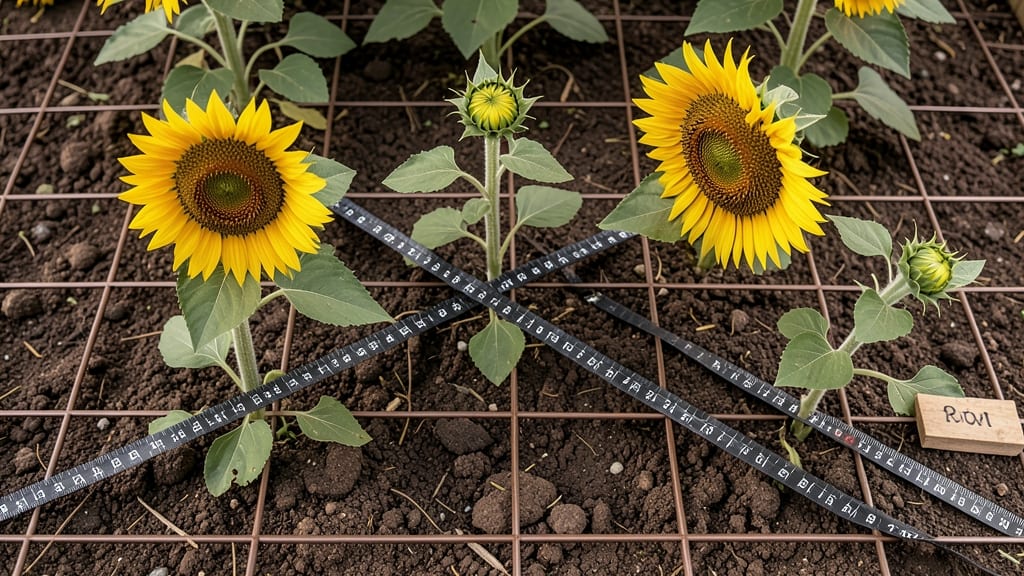
To grow sunflowers 🌻 that reach their full towering height, spacing them at 1 to 4 per square foot makes all the difference between stunted stems and showstopping blooms.
Picture this: You’ve spent weeks nurturing your seedlings, only to watch them lean awkwardly or fail to bloom because they’re crammed too close together. The right spacing isn’t just about fitting more plants—it’s about giving each one room to thrive, soak up sunlight, and stand proud in your garden.
Sunflowers come in all sizes, from dwarf varieties that stay under 3 feet to giants that can dwarf a two-story house. That means their spacing needs vary wildly, and getting it wrong can mean wasted space or weak stems that snap in the wind.
In this guide, I’ll break down the exact spacing you need for each type, how to adjust for your garden’s conditions, and the simple fixes for when things go wrong—so you end up with a border of sunflowers that’s as stunning as it is sturdy.
Optimal sunflower spacing by variety: dwarf, medium, and giant types explained
Sunflowers aren't one-size-fits-all plants—each variety demands different spacing to thrive. Dwarf varieties like 'Teddy Bear' (1-3 ft tall) need room to spread, while giant varieties like 'Mammoth' (12-18 ft) require wide spacing to prevent toppling.
Proper spacing ensures stronger stems, larger blooms, and better air circulation to reduce disease. Let's break down the exact numbers for each type to maximize your sunflower's potential.
When planning your sunflower garden, think vertically and horizontally. Tall varieties need both width to prevent shading and depth to support their weight. Medium-height sunflowers (3-6 ft) strike a balance, while dwarf types can handle closer spacing but still need airflow.
The key is matching spacing to the plant's mature size—crowding leads to weak stems and poor blooms, while over-spreading wastes garden space.
Here's the golden rule: measure your sunflower's mature height, then multiply by 0.1 to get the minimum spacing in feet. For example, a 10-foot sunflower needs at least 1 foot of space from its neighbors.
This simple math prevents overcrowding while allowing each plant to reach its full glory. Proper spacing also improves disease resistance by reducing humidity around leaves.
For dwarf sunflowers, you can fit 4-6 plants per square foot, making them perfect for containers or small gardens. Their compact size allows for creative arrangements like border plantings or pollinator-friendly clusters.
Just ensure they get at least 12 inches of space to prevent leaf diseases from spreading. My 'Teddy Bear' variety thrives in 12-inch pots with 3 plants per container—ideal for balconies!
Medium-height sunflowers (3-6 ft) strike the perfect balance, allowing 1-2 plants per square foot. This spacing works well for cut flower gardens or when mixing sunflowers with shorter perennials. The extra room helps stems develop thicker cell walls, making them more resistant to wind damage.
I've seen 'Moulin Rouge' sunflowers in my garden reach 6 feet with just 2 feet of spacing—proof that proper spacing pays off in height!
Standard sunflowers (6-10 ft) need more elbow room—aim for 1 plant per square foot with 3-4 feet of spacing. This prevents stems from rubbing together, which can cause mechanical damage and invite fungal infections.
In my experience, 'Autumn Beauty' sunflowers with proper spacing produce blooms twice as large as crowded plants. The trade-off? Fewer plants per square foot, but each one becomes a showstopper.
Giant sunflowers (10-18 ft) are the divas of the garden—they demand space! With 4-6 feet of spacing, you'll fit only 0.5-1 plant per square foot, but the payoff is monumental blooms and sturdy stems.
These varieties need staking or trellising in windy areas. My 'Russian Giant' sunflowers reach 14 feet with 5 feet of spacing—each one becomes a garden landmark that draws crowds.
Spacing isn't just about numbers—it's about creating an ecosystem. Proper airflow reduces powdery mildew risk, while adequate root space ensures nutrient uptake for vibrant blooms. I've noticed that sunflowers with correct spacing also flower 2-3 weeks earlier than crowded plants.
The secret? Less competition for resources means faster, healthier growth from seed to bloom.
How to adjust sunflower spacing for different garden conditions
Your sunflower spacing needs can change dramatically depending on where you live and how you're growing them. In fertile soil with plenty of sunlight, you might fit more plants per square foot, but in poor soil or windy climates, you'll need to spread them out.
The key is adjusting your spacing to match your garden's unique conditions while still giving each plant room to thrive.
For example, if you're growing sunflowers in containers or raised beds, the space is limited, so you'll need to choose dwarf varieties and space them closer together. On the other hand, in open-field gardens with rich soil, you can plant taller varieties with more space between them.
Let's explore how to make these adjustments for your specific situation.
🌱 Sunflower Spacing Cheat Sheet
| Condition | Spacing Adjustment | Plants per Square Foot |
|---|---|---|
| Rich, fertile soil | Tighter spacing (18-24" apart) | 2-3 plants |
| Poor or rocky soil | Wider spacing (30-36" apart) | 1 plant |
| High-wind areas | Staggered rows, 24-30" apart | 1-2 plants |
| Containers (5-gallon pots) | 1 plant per pot, 12-18" spacing | 1 plant |
| Companion planting (e.g., with beans) | Standard spacing (18-24" apart) | 2 plants |
Adjust spacing based on your local climate and sunflower variety for best results.
If your garden has poor soil quality, increase the spacing between sunflowers to give them more room to access nutrients. A good rule of thumb is to add an extra 6-12 inches of space for every inch your soil lacks in fertility.
For example, if your soil is average but not rich, space your sunflowers 24-30 inches apart instead of the standard 18 inches.
In high-wind areas, closer spacing can actually help stabilize taller sunflower varieties. Plant them in staggered rows with 24-30 inches between plants and rows. This creates a natural windbreak, reducing the risk of stem breakage and keeping your sunflowers upright.
If you're growing giant varieties like 'Mammoth Russian,' consider adding stakes or cages for extra support.
For container gardening, sunflowers are a fantastic choice, but you'll need to choose dwarf or semi-dwarf varieties like 'Teddy Bear' or 'Sunspot.' In a 5-gallon pot, plant just one sunflower per container, spacing them 12-18 inches apart if you're using larger pots.
Remember, containers dry out faster, so you'll need to water more frequently to keep the soil moist.
When practicing companion planting, you can sometimes get away with slightly tighter spacing, especially if you're pairing sunflowers with low-growing companions like beans or lettuce. Sunflowers provide shade for delicate plants while their deep roots help break up compacted soil.
Just be mindful not to overcrowd—aim for 18-24 inches between sunflowers when companion planting to avoid competition for nutrients.
Finally, always consider your local climate when adjusting spacing. In hot, dry climates, wider spacing helps reduce competition for water, while in cooler, wetter regions, you can space them a bit closer.
Pay attention to how your sunflowers grow in their first few weeks—if they look crowded or stressed, it's time to thin them out for healthier, happier plants. 🌻