
Flowers
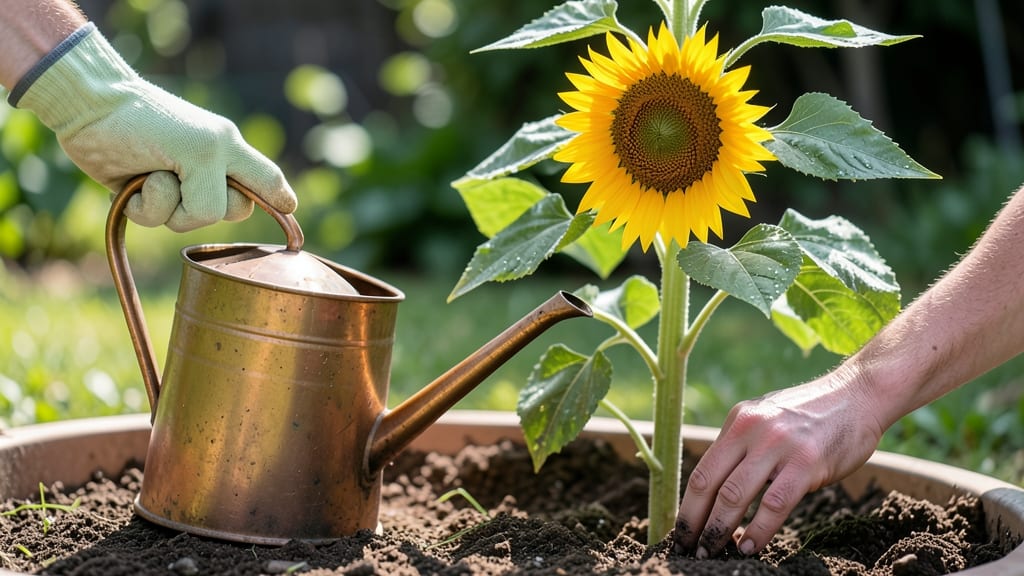
Sunflowers need about 1 to 1.5 inches of water per week once established, but the real secret is how you give it—deep, infrequent soaks beat shallow sprinkles every day.
Picture this: you’ve spent weeks watching those 🌻 seedlings push through the soil, only for them to flop over in a heatwave because you assumed "watering" meant a quick spray. That’s the difference between a towering beauty and a sad, wilted stem.
Here’s the good news: sunflowers are tough once their roots dig in. The challenge is getting them there without drowning them early on or letting drought stress set in during their critical flowering stage.
In this guide, I’ll break down exactly how often to water at each growth phase—from moist seedlings to drought-resistant blooms—plus how to adjust for containers, clay soil, and those sweltering summer afternoons.


Sunflower watering schedule by growth stage: from seedlings to blooms
Sunflowers are surprisingly resilient once established, but their water needs shift dramatically from seedlings to mature plants. Overwatering young plants causes rot, while underwatering mature ones stunts growth. The key is adapting your schedule to each growth stage—especially in drought-prone areas where soil dries quickly.
Young sunflowers need consistent moisture to develop strong roots, but as they grow taller, their deep taproots make them more drought-tolerant. I’ve broken down the ideal watering routine for each phase, including adjustments for container-grown plants and extreme heat conditions.
🌱 Seedlings (Weeks 1-4): Keep soil evenly moist—never soggy. Water gently at the base to avoid disturbing delicate stems. In containers, check soil moisture daily, as pots dry out faster than in-ground soil.
🌿 Vegetative Growth (Weeks 5-8): Increase watering frequency as plants grow taller. Aim for 1-1.5 inches of water per week, delivered deeply to encourage root development. Mulch around the base to retain moisture and suppress weeds.
🌻 Flowering Stage (Weeks 9-12): Reduce frequency but increase depth. Water every 5-7 days unless in extreme heat, where daily deep watering may be needed. Focus on the root zone to prevent fungal issues on blooms.
🌾 Seed Development (Weeks 13+): Cut back to weekly watering unless harvesting seeds. Overwatering at this stage can lead to cracked seed heads. Let the soil dry slightly between waterings to harden seeds for storage.
For drought-resistant varieties like 'Little Becka' or 'Autumn Beauty,' you can reduce watering by 20-30% once established. These cultivars thrive with weekly deep watering even in arid climates, making them perfect for low-maintenance gardens.
If you’re growing sunflowers in containers, monitor soil moisture daily during heatwaves. Pots lack the thermal mass of garden soil and dry out 3x faster. Use self-watering containers or bury pots partially in the ground to stabilize moisture levels.
One common mistake is watering leafy foliage instead of the root zone. Wet leaves create ideal conditions for powdery mildew, a fungal disease that disfigures blooms. Always water at the base using a soaker hose or drip irrigation for precision.
In rainy seasons, reduce watering by half to prevent root rot. Sunflowers can handle brief periods of overcast weather, but waterlogged soil suffocates roots. Amend heavy clay soils with compost or perlite to improve drainage.
By tailoring your watering schedule to each growth stage, you’ll encourage strong stems, vibrant blooms, and plump seeds. My tall 'Russian Giant' sunflowers hit 12 feet last summer by following this exact routine—
Signs of overwatering vs underdrying sunflowers: what to watch for
Sunflowers are surprisingly resilient, but their water needs can be tricky to balance. Too little water causes wilting, while overwatering leads to root rot and yellowing leaves. The key is observing subtle visual cues before problems escalate.
Start by checking the soil moisture—stick your finger 2 inches deep. If it feels dry, it's time to water. If it's soggy, you're overdoing it. Sunflowers hate wet feet, so well-draining soil is non-negotiable.
Overwatering
- Yellowing leaves
- Mushy stems
- Slow growth
- Foul-smelling soil
Underdrying
- Drooping leaves
- Crispy leaf edges
- Stunted growth
- Flower buds drying out
For overwatered sunflowers, focus on air circulation and reducing moisture. Remove any mulch temporarily and avoid watering until the top 4-6 inches of soil are dry. A fan can help speed up drying.
When sunflowers show underwatering signs, prioritize deep watering—aim for 1-2 inches of water per week during dry spells. Container-grown sunflowers dry out faster, so check soil moisture daily in extreme heat.
Use a simple soil moisture test to avoid guesswork. Push a wooden skewer into the soil—if it comes out clean, water immediately. If it's damp, wait another day. Adjust your schedule based on weather; summer heat demands more frequent watering.
Remember, sunflowers are drought-tolerant once established. The first 4-6 weeks are critical for root development, so keep soil consistently moist. After that, let nature guide you—your sunflowers will tell you what they need through their leaves and stems.