
Watering
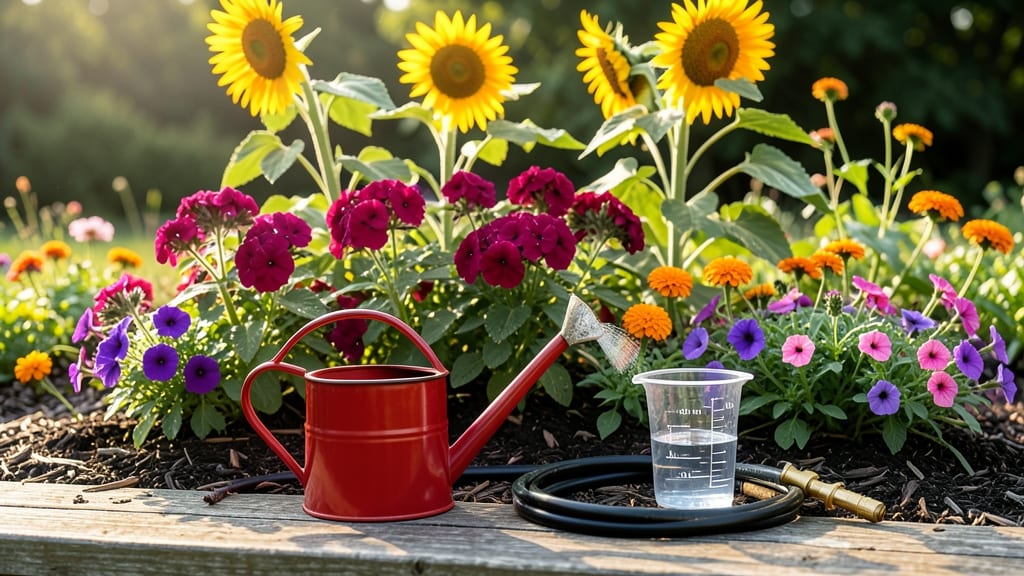
Watering your outdoor flowers the right way means knowing how often to water them outside without drowning their roots or leaving them thirsty.
Overwatering or underwatering your outdoor flowers can turn vibrant blooms into wilted disappointments—yet most gardeners get the timing wrong. The key isn’t just how much to water, but when to adjust your schedule for each plant type and season.
In USDA Zone 6a, where spring blooms like 🌸 pop up after April’s last frost, watering needs shift dramatically from month to month. A deep soak once a week in May might turn into daily checks by July, depending on whether your flowers crave sun or shade.
Below, I’ll break down the exact schedule by plant type, seasonal tweaks, and the simple tricks to tell if your flowers are begging for water—or drowning in it.
Seasonal watering schedule for outdoor flowers: month-by-month guide
Watering your outdoor flowers isn’t a one-size-fits-all task—it changes with the season, soil type, and even your local rainfall patterns. In spring, your flowers wake up from dormancy and need consistent moisture, while summer’s heat demands deeper, more frequent watering.
Meanwhile, fall and winter slow things down, requiring adjustments to avoid overwatering or stressing your plants.
First, check your soil type: sandy soil drains quickly, while clay holds moisture longer. Drought-tolerant flowers like lavender thrive with less water, while tropical varieties need steady hydration. Always water in the early morning to reduce evaporation and fungal risks. Let’s break down the perfect schedule for each season.
💧 Pro Tip: Stick your finger 1-2 inches into the soil—if it feels dry, it’s time to water. If it’s damp, wait a day or two. This simple check saves flowers from both thirst and rot.
In spring, your flowers are revving up for growth, so aim for 3-4 days between waterings. Focus on annuals like marigolds and petunias, which need consistent moisture to establish roots.
For perennials, like daylilies, reduce slightly as their roots strengthen. Always water at the base to avoid fungal diseases on leaves.
Summer is the most critical season—heat stress can wilt flowers in hours. Water deeply in the morning to encourage roots to grow downward. Drought-tolerant flowers, such as lavender and yarrow, handle weekly deep watering, while tropical flowers like hibiscus may need daily attention.
Mulch around plants to retain moisture and keep roots cool.
As fall arrives, reduce watering to every 5-7 days for most flowers. This helps perennials harden off before winter. Annuals, however, should still receive regular water until the first frost. Watch for wilting leaves—a sign they need hydration before dormancy sets in.
Winter watering is minimal, but not zero. Potted flowers dry out faster in cold weather, so check soil moisture every 2 weeks. For in-ground perennials, a light drink in freezing temps prevents root desiccation. If snow covers your garden, skip watering entirely—snow provides natural hydration.
Adjust your schedule based on rainfall and soil type. Clay soil stays moist longer, while sandy soil drains quickly. Use a rain gauge to track precipitation—if you’ve had 1 inch of rain, skip a watering day.
For container plants, water more frequently since pots dry out faster than garden beds.
Watch your flowers for signs of stress. Drooping leaves or crispy edges mean underwatering, while yellowing leaves or mold suggest overwatering. Mulching with 2-3 inches of organic material (like straw or shredded leaves) helps regulate soil moisture and temperature year-round.
With this seasonal guide, your outdoor flowers will thrive without guesswork. Start by checking your soil moisture daily, adjust for your local climate, and soon you’ll have a blooming garden that’s the envy of the neighborhood! 🌸
How to determine your flowers’ exact water needs by plant type
Not all flowers share the same thirst—some crave frequent sips while others thrive on deep, infrequent drinks. Understanding your plants’ watering categories transforms guesswork into a science. For example, succulents and cacti store water in their leaves, while tropical flowers like hibiscus demand constant moisture.
The key is matching your watering schedule to each type’s natural habitat and growth habits.
Start by grouping your flowers into four broad categories: succulents/cacti, annuals, perennials, and tropical varieties. Each group has distinct needs based on their root depth, growth speed, and native climate.
For instance, a lavender bush (perennial) might need watering once a week, while impatiens (annual) require daily attention during summer heat. Let’s break down the exact intervals for each type.
| Plant Type | Watering Frequency | Key Signs of Need | Best Time to Water |
|---|---|---|---|
| Succulents/Cacti (e.g., aloe, echeveria) | Every 2-4 weeks (deep soak) | Shriveled leaves, dry soil 2" down | Morning (avoid evening moisture) |
| Annuals (e.g., marigolds, impatiens) | Daily to every other day (summer) | Wilting leaves, dry topsoil | Early morning or late evening |
| Perennials (e.g., lavender, coneflowers) | Weekly (spring/fall), biweekly (summer) | Dry soil 3" down, drooping stems | Morning (deep watering) |
| Tropical Flowers (e.g., hibiscus, orchids) | Daily (high humidity), every other day (low humidity) | Yellowing leaves, crispy edges | Morning (mimic natural rainfall) |
For succulents and cacti, the rule is simple: water deeply but infrequently. These plants store moisture in their thick stems and leaves, so frequent shallow watering encourages rot. Instead, soak the soil until water drains from the bottom of the pot or runs out of the ground.
Wait until the top 2 inches of soil are completely dry before watering again—this could mean every 2-4 weeks depending on your climate.
Annuals, like petunias or geraniums, have high moisture demands because they grow quickly and produce abundant blooms. During summer, they may need watering daily or every other day, especially in hot, dry regions. Check the soil surface daily—if it feels dry to the touch, it’s time to water. For potted annuals, expect to water even more frequently since containers dry out faster than garden beds.
Perennials like black-eyed Susans or daylilies strike a balance between annuals and succulents. Their water needs shift with the seasons: weekly in spring and fall, but biweekly in summer once established. The key is to water deeply at the base, encouraging roots to grow downward.
Over time, perennials develop deeper root systems that make them more drought-tolerant, but young plants still need consistent moisture.
Tropical flowers, such as hibiscus or canna lilies, mimic the humid conditions of their native environments. They thrive with daily watering in hot, dry climates or every other day in cooler, humid areas.
Unlike other flowers, tropicals often show stress through yellowing leaves or crispy edges—signs of underwatering. Mulching around the base helps retain moisture and mimics their natural habitat.
Pro tip: Always water at the base of the plant (not the leaves) to prevent fungal diseases. For container-grown flowers, use a moisture meter or the "finger test"—stick your finger 1-2 inches into the soil.
If it feels dry, it’s time to water. Adjust your schedule based on weather patterns, soil type, and your local climate to keep your flowers thriving all season long. 💧