
Watering
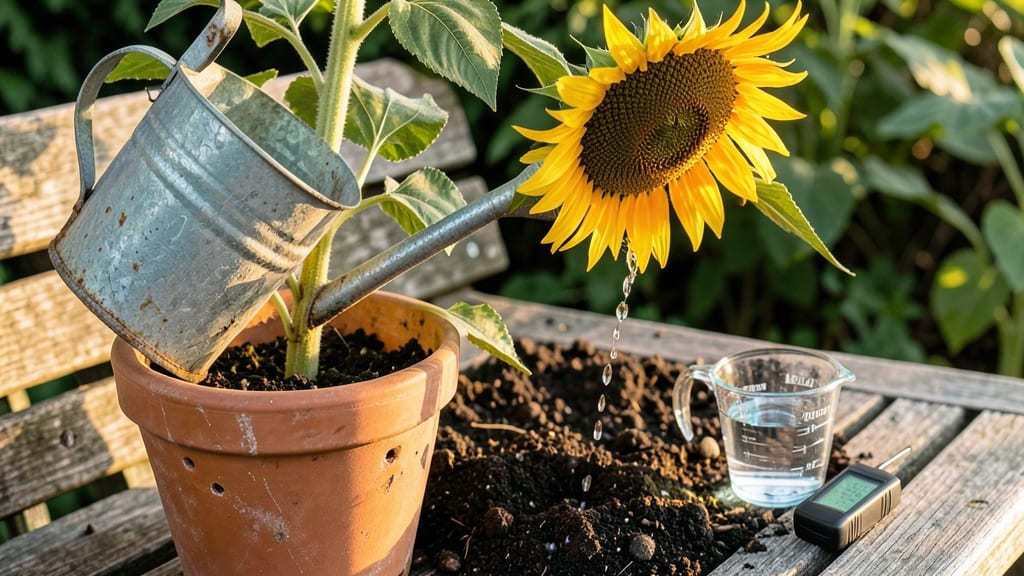
To water sunflowers in pots the right way, you’ll need to check soil moisture every 2-3 days—but the key is deeper watering that reaches their roots, not just a quick splash on top.
Picture this: your 🌻 sunflower seedlings are thriving, but then summer hits, and the soil dries out faster than you can keep up. Before you know it, those towering stems wilt or—even worse—the roots rot from sitting in soggy soil.
The difference between a vibrant, blooming giant and a sad, stunted plant often comes down to how often (and how well) you water.
Sunflowers in containers need consistent moisture, but they hate soggy feet. The secret? A simple soil-dry test—stick your finger an inch deep, and if it’s bone-dry, it’s time to water.
Adjust for heat waves, pot size, and even your local climate, because what works in Zone 6a in spring won’t cut it during a July scorcher.
In this guide, I’ll walk you through the exact watering schedule for your sunflower’s pot size, how to spot over- or underwatering before it’s too late, and the one trick that keeps your plants happy from April through September—no guesswork required.
The soil-dry test: the best way to water sunflowers in pots
Sunflowers in containers need a different approach than their in-ground cousins because their deep taproots struggle to access moisture in limited soil. Unlike shallow-rooted plants, sunflowers demand consistent moisture without sitting in soggy soil.
The soil-dry test is my go-to method to strike that perfect balance—it’s simple, accurate, and saves you from overwatering or underwatering disasters.
Most gardeners make the mistake of watering sunflowers on a strict schedule, but pots dry out faster than garden beds. Instead, focus on the soil's actual moisture level. This method works for all pot sizes and climates, from 5-gallon containers to 20-gallon grow bags.
The key is checking the soil 1-2 inches below the surface, where the roots actively grow.
How to Perform the Soil-Dry Test
- Step 1: Stick your finger 1-2 inches into the soil. If it feels dry and crumbly, it’s time to water.
- Step 2: Lift the pot—dry soil weighs less. A noticeable weight loss means the roots need hydration.
- Step 3: Use a moisture meter for precision. Aim for 40-60% moisture in the root zone.
- Step 4: Water until it drains freely from the bottom. Empty the saucer afterward to prevent root rot.
- Step 5: Adjust frequency by season: water daily in summer, every 3-4 days in spring/fall, and bi-weekly in winter.
💧 Pro Tip: Morning watering prevents fungal growth and mimics natural rainfall patterns.
Sunflowers in pots need deep watering to encourage their roots to grow downward. A quick spritz won’t cut it—aim for 1-2 gallons per watering, depending on pot size. For example, a 5-gallon pot might need 1 gallon, while a 20-gallon container could handle 2 gallons.
Always water until you see moisture draining from the bottom—this ensures the roots get hydrated.
Summer is the most critical season for sunflower watering. With high temperatures and intense sunlight, pots can dry out in as little as 24 hours. I check my sunflowers twice daily during heatwaves: once in the early morning and again in the late afternoon.
If the soil feels bone-dry by midday, it’s time to water immediately. Mulching with straw or shredded bark helps retain moisture and keeps roots cool.
Winter watering is far less frequent because sunflowers enter dormancy. In USDA Zone 6a, I reduce watering to once every 10-14 days unless we have unseasonably warm spells. Overwatering in winter can lead to root rot, especially in clay or plastic pots that retain moisture.
Always let the top 3 inches of soil dry out before watering again during cooler months.
If you’re using a moisture meter, set it to 40-60% moisture for sunflowers. Anything below 40% signals thirsty roots, while above 60% risks suffocating the plant. I love digital meters because they’re consistent and foolproof, especially for beginners.
For a low-tech option, the finger test works just as well—just be sure to check the same spot every time for accuracy.
Watch for visual cues that your sunflowers are thirsty or overwatered. Wilting leaves, yellowing foliage, or cracked soil all mean it’s time to water. On the flip side, mushy stems, moldy soil, or drooping despite wet soil are signs of overwatering.
Adjust your routine based on these clues—your sunflowers will thank you with healthier stems and bigger blooms.
Containers made of terracotta dry out faster than plastic or fabric pots, so terracotta sunflowers may need watering a day earlier than their plastic counterparts. Dark-colored pots absorb more heat, which can evaporate moisture quicker.
If you’re growing sunflowers in black or dark gray pots, monitor soil moisture more closely during peak summer months. Light-colored pots, like white or beige, help retain moisture longer.
Remember, consistency is key with sunflower watering. Skipping a day here or there won’t harm them, but inconsistent moisture levels can stress the plant and stunt its growth.
Stick to your soil-dry test routine, and your sunflowers will reward you with taller stems and brighter blooms all season long. Happy gardening!
Sunflower watering schedule by pot size and climate Zone
Sunflowers in containers need a customized watering approach—their deep roots demand moisture, but overwatering suffocates them. In 5-gallon pots, soil dries 3x faster than in 20-gallon containers, while hot climates like Arizona require daily checks versus every-other-day watering in the Pacific Northwest's humidity.
Let's break down the perfect schedule for your sunflower's pot and location.
Your sunflower's pot size and climate zone determine its watering frequency. A 5-gallon pot in Zone 9b (Arizona) may need watering every 1-2 days, while the same pot in Zone 8a (Pacific Northwest) might only require every 3-4 days.
The key is monitoring soil moisture rather than sticking to rigid schedules. Below, compare ideal watering signs versus overwatering red flags to keep your sunflowers thriving.
In hot, dry regions, sunflowers in 5-gallon pots lose moisture rapidly—check soil daily and water deeply in the morning to prevent evaporation. Use well-draining soil with perlite to avoid soggy roots.
For 20-gallon containers, water every 2-3 days but monitor the weight of the pot—a lighter pot signals it's time to water.
Humid climates like the Pacific Northwest slow evaporation, so 5-gallon pots may only need watering every 2-3 days. Focus on drainage holes—without them, roots suffocate.
In 20-gallon containers, extend watering intervals to every 3-4 days, but always verify with your finger test: Insert your finger 2 inches deep; if dry, water thoroughly.
Adjust your schedule seasonally: In summer, increase frequency by 30-50%, while in fall, reduce to every 4-5 days. Mulch with straw or pine needles to retain moisture and protect roots from temperature swings. Remember, consistency is key—sunflowers hate moisture fluctuations.
Pro tip: Use a moisture meter for 5-gallon pots in extreme heat—it’s the most accurate way to track root-zone moisture. For 20-gallon containers, group pots together and water all at once to maintain uniformity.
With this schedule, your sunflowers will grow taller and healthier—just like the pros! 🌻