
Flowers
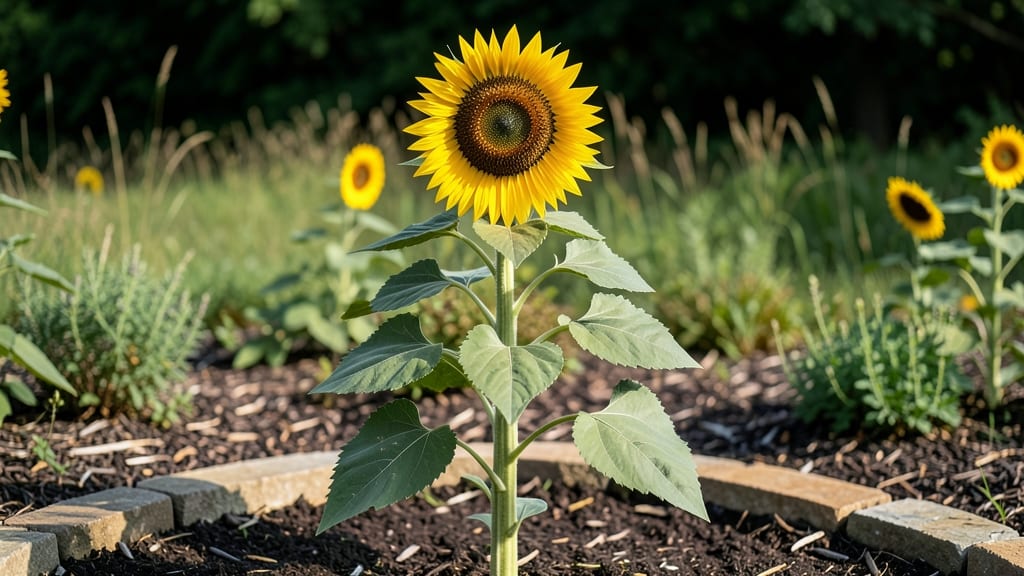
Mammoth sunflowers 🌻 can grow up to 16 feet tall — think basketball hoops, porch roofs, and even taller if you’re lucky, with the right variety and care.
Picture this: a towering giant that turns heads in your garden, its golden blooms reaching higher than anything else around. But here’s the catch — not all Mammoth sunflowers hit that maximum height, and some need a little extra help to stand strong.
In this guide, we’ll cover the exact height ranges for popular varieties like 'Russian Giant' and 'Autumn Beauty,' plus the key factors that make the difference between a 12-foot beauty and a 16-foot showstopper.
You’ll also learn how to support these towering plants without them toppling over, so you can enjoy their full potential without the worry. Let’s get growing!


Mammoth sunflower height ranges by popular variety (with exact measurements)
Mammoth sunflowers are the superstars of the garden, capable of reaching heights that will make your neighbors green with envy. These towering beauties aren’t just for show—their impressive stature makes them perfect for creating natural privacy screens or dramatic focal points.
But not all Mammoth varieties grow to the same height, and some can shatter your expectations of what’s possible in your backyard.
The tallest Mammoth sunflowers can soar to 14–16 feet under ideal conditions, while others stay in the 8–12 foot range. The difference often comes down to genetics, growing conditions, and a little extra care.
Let’s explore the exact height ranges of the most popular varieties and what you can expect from each.
Russian Giant is the undisputed heavyweight champion of sunflowers, with average heights of 12–14 feet and recorded maximums exceeding 16 feet. This variety is a favorite among gardeners who want to make a statement. Meanwhile, Mammoth Russian typically reaches 10–12 feet, offering a slightly more manageable (but still impressive) height.
Autumn Beauty is another standout, known for its striking bicolor blooms and heights of 8–12 feet. While not quite as tall as Russian Giant, it’s a crowd-pleaser for its vibrant colors and long-lasting flowers. For those with limited space, American Giant offers a more compact option at 8–10 feet, though it still packs a punch.
Here’s a detailed comparison of the most popular Mammoth sunflower varieties and their height ranges:
If you’re growing Mammoth sunflowers for the first time, Russian Giant is the variety that will give you the most "wow factor." However, its sheer size means you’ll need to plan for staking and support to prevent the stems from snapping under their own weight.
Even the 8-foot American Giant can benefit from a little extra care to ensure it reaches its full potential.
One common misconception is that all Mammoth sunflowers will reach their maximum height without intervention. In reality, soil quality, sunlight exposure, and watering habits play a huge role in determining how tall your sunflowers will grow.
For example, plants grown in poor soil or with inconsistent watering may only reach half their expected height. Conversely, with the right conditions, you might even see a Russian Giant exceed 16 feet!
For gardeners in cooler climates (USDA Zones 3–6), Mammoth sunflowers thrive when planted in well-draining soil with full sun exposure. In warmer zones (7–10), you’ll need to provide afternoon shade to prevent the plants from bolting too quickly.
The key is to mimic their natural growing conditions, which typically include open fields with rich, fertile soil.
To visualize the growth stages, imagine a Russian Giant starting as a small seedling in early spring. By mid-summer, it will shoot up rapidly, adding 2–3 feet per week during peak growth. By late
Factors that determine how tall your Mammoth sunflowers will grow
Growing mammoth sunflowers to their maximum height of 12-16 feet isn't just luck—it's science. The soil quality you start with sets the foundation, while sunlight exposure fuels their rapid growth.
I've learned that even the hardiest varieties need optimal conditions to reach their genetic potential, and neglecting just one factor can leave you with a shorter-than-expected giant.
Your local climate zone plays a surprisingly big role too. Sunflowers in USDA Zone 8+ often grow taller because they have more growing days to mature. Meanwhile, gardeners in cooler zones might see heights capped at 8-10 feet unless they use row covers or extend the season.
The watering schedule also matters—consistent moisture prevents stem weakness that could limit height.
🌱 Key Factors for Maximum Height
- 🌿 Soil: Well-draining, nutrient-rich (pH 6.0-7.5)
- ☀️ Sunlight: 8+ hours daily for optimal growth
- 💧 Water: 1-2 inches/week (deep watering)
- 🌡️ Climate: Zones 4-10 (cooler zones need season extension)
- 🪴 Support: Staking for winds >15 mph
I've noticed that soil fertility directly impacts height—adding compost or a balanced fertilizer (like 10-10-10) at planting can boost growth by 20%. The key is avoiding over-fertilizing with nitrogen, which makes stems weak and prone to snapping.
For maximum height, I recommend testing your soil first and amending it with organic matter to improve drainage while retaining moisture.
Sunlight is non-negotiable—these sunflowers need full sun exposure (6+ hours daily) to reach their peak. In my garden, I've seen Russian Giant varieties grow 3 feet taller when moved to a south-facing location versus a partially shaded spot.
Even partial shade can reduce height by 2-3 feet, and morning sun is better than afternoon heat, which can stress the plants.
Watering techniques make a surprising difference too. I've found that deep watering (1-2 inches per week) encourages stronger root systems that support taller growth. Shallow watering leads to weak stems that can't handle the weight of large flower heads.
In windy areas, I always stake my mammoth sunflowers at 3 feet tall using bamboo stakes or tomato cages to prevent bending.
Finally, plant spacing affects height—crowded plants compete for nutrients and grow shorter. I space mine 18-24 inches apart to give each plant room to reach its full potential.
In container growing, use large pots (12+ inches deep) and choose dwarf mammoth varieties like 'Giant Moonglow' that max out at 10 feet but still make a statement.