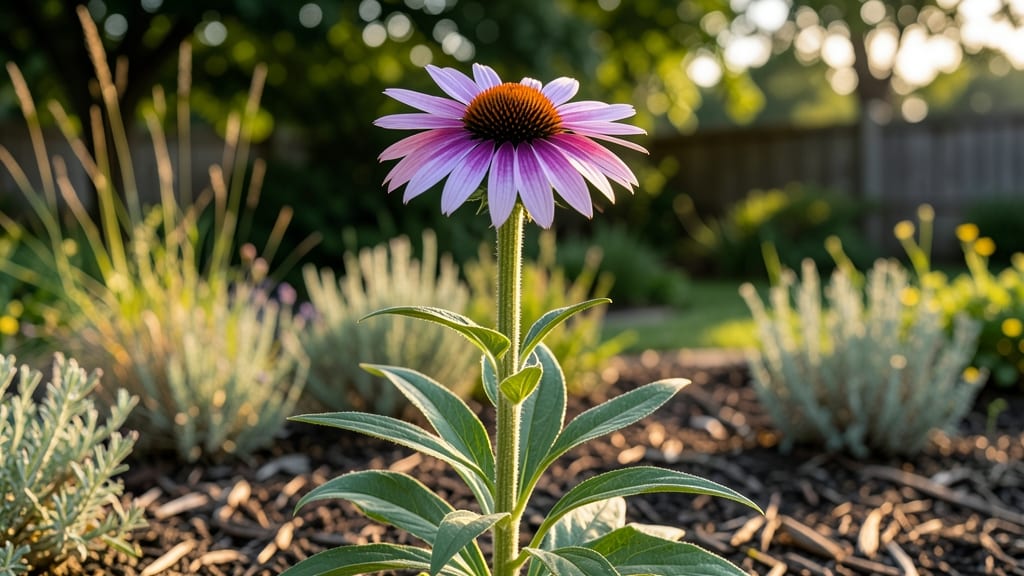
How tall do coneflowers grow? These hardy perennials typically reach heights of 1 to 4 feet, depending on the variety and growing conditions—making them perfect for borders, pollinator gardens, or even as dramatic back-of-the-bed focal points.
If you’re planning your garden layout, knowing how tall coneflowers grow is key—these hardy perennials can range from compact accents to towering statement plants, depending on the variety.
For example, Echinacea purpurea typically reaches 2 to 3 feet, while Echinacea paradoxa can stretch up to 4 feet when given ideal sunlight and soil. Sun exposure, soil quality, and even pruning habits all play a role in their mature height.
In this guide, I’ll break down the height differences between popular varieties, share spacing tips for your garden beds, and explain how to encourage healthy growth year after year.
Dwarf
1-2 ft
Container friendly
Semi-Dwarf
2-3 ft
Most popular
Standard
3-4 ft
Full orchard size
Coneflower height guide: tallest vs shortest varieties explained
When I first started gardening, I was surprised to learn that coneflowers (Echinacea) come in such a wide range of heights—from petite dwarf varieties that fit perfectly in container gardens to tall cultivars that reach waist height.
Understanding these differences helps me design gardens that balance visual impact with practical spacing. The purple coneflower (Echinacea purpurea), for example, is one of the most popular varieties, but its mature height can vary significantly depending on growing conditions and specific cultivars.
If you're planning a pollinator-friendly garden, knowing how tall each variety grows is crucial. Tall coneflowers create stunning backdrop plants for borders, while shorter varieties work beautifully in foreground plantings or mixed containers.
For instance, Echinacea paradoxa (yellow coneflower) typically stays shorter than its purple cousins, making it ideal for front-of-bed plantings or rock gardens. Let’s explore the height ranges of the most popular coneflower varieties so you can make informed decisions for your garden layout.
🌼 Height is influenced by several factors: sunlight exposure, soil fertility, water availability, and even pruning habits. In full sun with well-draining soil, most coneflowers will reach their maximum height potential. However, in partial shade or nutrient-poor soil, they may stay shorter. I’ve found that over-fertilizing can actually reduce flowering and sometimes stunt growth, so a balanced approach works best. Let’s dive into the specifics of each variety’s typical mature height.
| Variety |
Common Name |
Mature Height |
Spread |
Best For |
| Echinacea purpurea |
Purple Coneflower |
2-4 ft |
1-2 ft |
Back of borders, meadow gardens |
| Echinacea purpurea 'Magnus' |
Magnus Purple Coneflower |
3-5 ft |
1.5-2.5 ft |
Tall borders, cut flowers |
| Echinacea purpurea 'White Swan' |
White Swan Coneflower |
3-4 ft |
1.5-2 ft |
Pollinator gardens, cottage style |
| Echinacea purpurea 'Green Envy' |
td style="padding: 10px; border-bottom: 1px solid #ffcc00;">Green Envy Coneflower
1.5-2.5 ft |
1-1.5 ft |
Front of borders, containers |
| Echinacea paradoxa |
Yellow Coneflower |
1.5-2.5 ft |
1-2 ft |
Rock gardens, pollinator patches |
| Echinacea atrorubens |
Brown Coneflower |
2-3 ft |
1-1.5 ft |
Prairie-style gardens, wildflower meadows |
| Echinacea purpurea 'Hot Papaya' |
Hot Papaya Coneflower |
2-3 ft |
1.5-2 ft |
Cut flower arrangements, pollinator gardens
How to choose coneflower height for your garden layout
When designing your garden, selecting the right coneflower height can transform your space from chaotic to curated. These perennials offer dramatic variety—from dwarf varieties perfect for borders to tall coneflowers that anchor mixed borders.
The key is matching their mature size to your garden's sun exposure, companion plants, and available space.
I’ve learned that sunlight exposure directly impacts height—full sun varieties like Echinacea purpurea reach their maximum potential, while partial shade may stunt growth. For example, 'White Swan' stays compact at 2-3 feet even in full sun, while 'Magnus' can soar to 4-5 feet with proper care.
Let’s explore how to choose wisely.
-
🌱 Dwarf Varieties (1-2 ft)
Ideal for: Front borders, containers, pollinator gardens
-
🌿 Semi-Dwarf (2-3 ft)
Ideal for: Mixed borders, cottage gardens, mid-height accents
-
🌳 Standard Tall (3-4 ft)
Ideal for: Back borders, focal points, tall perennial beds
-
✂️ Pruning Tip
Cut back 1/3 of stems after blooming to encourage bushier growth next year
Spacing is another critical factor. Dwarf coneflowers need 12-18 inches between plants, while tall varieties require 24-36 inches to prevent overcrowding. I always space mine according to their mature height—this ensures they won’t compete for sunlight or nutrients as they grow.
For example, planting 'Green Envy' (2 ft) in a container garden with black-eyed Susans creates a stunning layered effect.
Consider your garden’s light conditions too. In partial shade, coneflowers may grow 1-2 feet shorter than their full-sun counterparts.
If your space gets only 4-6 hours of sunlight, opt for shade-tolerant varieties like 'White Swan' or 'Sombrero', which thrive with less light while still maintaining 2-3 feet of height.
For maximum impact, pair tall coneflowers with shorter perennials like salvia or coreopsis. This creates visual interest while keeping your garden from looking flat.
I love using Echinacea 'Hot Papaya' (3-4 ft) as a backdrop for purple coneflower in the foreground—it’s a pollinator magnet that draws bees and butterflies all season long.
Remember, height isn’t set in stone. With proper pruning and fertilization, you can encourage your coneflowers to grow taller or stay compact. Start with the variety that fits your vision, then adjust as they mature. Your garden will thank you!
★★★★★4.6(8 reviews)
|