
How To
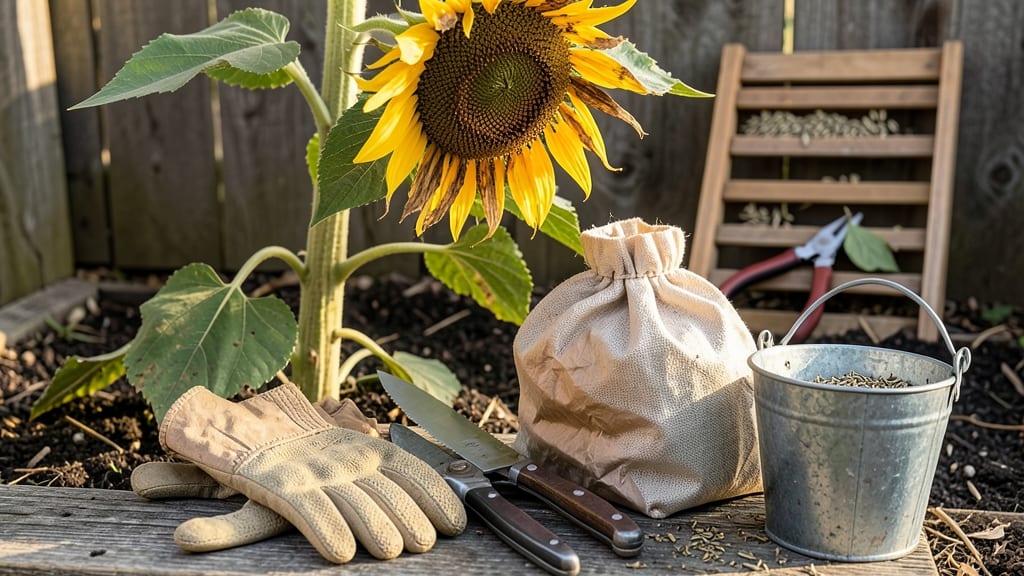
Knowing when to harvest sunflower seeds is all about watching for three simple but critical signs in your 🌻 plants.
You’ve spent months nurturing your sunflowers, only to wonder: Is it too early? Too late? One wrong move, and you’ll end up with seeds that won’t store well—or worse, none at all.
The key is catching them at the exact moment when the back of the flower head turns golden and the petals start to droop.
This guide breaks down the visual cues you’ve been missing—like the telltale rattle of mature seeds or the shift from green to dry—and how to test them like a pro. No more guessing whether your seeds are ready or still need time.
By the end, you’ll confidently pick seeds at their peak, dry them properly, and even save them for next year’s garden. Let’s get started.

3 Key visual clues to identify sunflower seed harvest readiness
Harvesting sunflower seeds at the right moment transforms your garden into a nutrient-rich treasure trove. But how do you spot the perfect time? The answer lies in three unmistakable visual cues that signal seed maturity.
Ignore these signs, and you might end up with underdeveloped seeds or even bird-snacked blooms. Let’s break down what to watch for in your sunflower varieties, from towering giants to compact dwarf types.
First, focus on the flower petals. When they begin to droop downward or fall off entirely, it’s your first clear sign. This natural wilting indicates the plant is redirecting energy toward seed development.
For standard varieties, this usually happens 80-90 days after planting, while dwarf varieties may show signs slightly earlier, around 60-70 days. Pay close attention to the back of the seed head, where the real magic happens.
Visual Element: Here’s what to look for in action—three foolproof clues to confirm your sunflowers are ready for harvest:
The bright yellow petals will curl inward or detach completely. This signals the plant is shifting energy to seed development.
The back of the head (where seeds form) should dry to a papery yellow-brown. Press gently—it should feel dry and crisp, not moist.
Gently shake the seed head. If seeds rattle loudly, they’re fully mature. No rattle? Wait 3-5 more days—especially for large varieties like 'Mammoth'.
Don’t overlook the leaf condition—healthy, green leaves with a slight waxy coating are another green light. Yellowing or wilting leaves can mean the plant is stressed or overripe. For tall varieties like 'Russian Giant', keep an eye on the stem strength.
If it sways too much in the wind, it may need support to prevent snapping before harvest.
Timing matters, especially in hot climates. If your area experiences early frosts (like USDA Zone 5), harvest seeds before the first frost—even if they’re not fully dry.
Use a dehydrator or paper bags to finish drying indoors. For dwarf varieties like 'Teddy Bear', the process happens faster, so check daily once the petals start drooping.
Pro tip: Mark your calendar when you plant sunflowers. Most varieties take 80-120 days to mature, but dwarf types can be ready in as few as 60 days. If you’re growing multiple varieties, label each plant to avoid confusion.
For example, 'Autumn Beauty' (a multi-colored variety) might show readiness 10 days earlier than 'ProCut' (a cut-flower hybrid).
Watch for pests like squirrels or birds, which can strip seeds before you’re ready. If you notice holes in the seed head, cover it with lightweight mesh or harvest immediately.
Even if seeds aren’t fully mature, you can dry and store them for later use—just expect slightly smaller yields. The key is balance: harvest too early, and seeds won’t be fully developed; wait too long, and they’ll scatter or spoil.
Once you spot these three visual cues, act quickly. Use a sharp pruner or knife to cut the seed head and 1-2 inches of stem. Hang the heads upside down in a dry, well-ventilated space (like a garage or shed) for 2-3 weeks to fully dry.
Avoid direct sunlight, which can overheat and crack the seeds. With these clues, you’ll never miss the perfect harvest window again!
🌻
How to test sunflower seed maturity: the squeeze and tap method
Once your sunflower petals start drooping, it’s time to get hands-on with maturity testing. The squeeze test and tap method are my go-to techniques for confirming seed readiness.
These simple tricks help you avoid the two biggest mistakes: harvesting too early (underdeveloped seeds) or too late (birds and mold take over). Let’s break down how to use them like a pro.
Start with the squeeze test. Gently press your thumb and forefinger against the back of the seed head. If it feels hard and dry—almost like a small football—your seeds are likely mature.
A soft or spongy head means they need more time. This test checks for shell hardness, which correlates directly with seed development.
Next, perform the tap test. Hold the seed head over a bucket or paper bag and give it a firm tap with your knuckles. If the seeds inside rattle loudly, they’re ready.
A dull thud or silence means they’re not quite there yet. This method works because mature seeds detach easily from the seed head when shaken.
⚠️ callout-warning ⚠️
- Premature harvesting: Seeds won’t store well if picked too soon (look for green seed heads).
- Overripe seeds: Wait until the back splits open—birds will snatch them first!
- Wet conditions: Never harvest after rain; mold risks skyrocket.
Pro tip: Harvest on a dry, sunny morning to maximize seed quality.
Don’t overlook the seed color check. Mature sunflower seeds turn a creamy white or tan. If they’re still dark or greenish, they’re not ready. This is especially critical for oilseed varieties, which need full maturity for optimal flavor and nutrition.
Compare seeds against a white background for the best accuracy.
For giant sunflower varieties (like ‘Mammoth’ or ‘Russian Giant’), combine all three tests. Their thick seed heads can fool you if you rely on just one method. Always cut the seed head with a clean pruner—never pull it—so you don’t damage the stem or leave gaps for pests.
Timing matters too. Harvest seeds in the late morning when humidity is low. Lay the heads on a dry towel in a well-ventilated spot for 1–2 weeks to dry completely.
Once fully dry, gently rub the seeds free from the head. Store them in a paper bag in a cool, dark place for up to a year.
With these methods, you’ll never second-guess your sunflower seed harvest again. The key is patience—waiting for that perfect rattle, squeeze, and color combo ensures seeds that are plump, flavorful, and ready for planting or snacking. Happy harvesting! 🌻