
Flowers
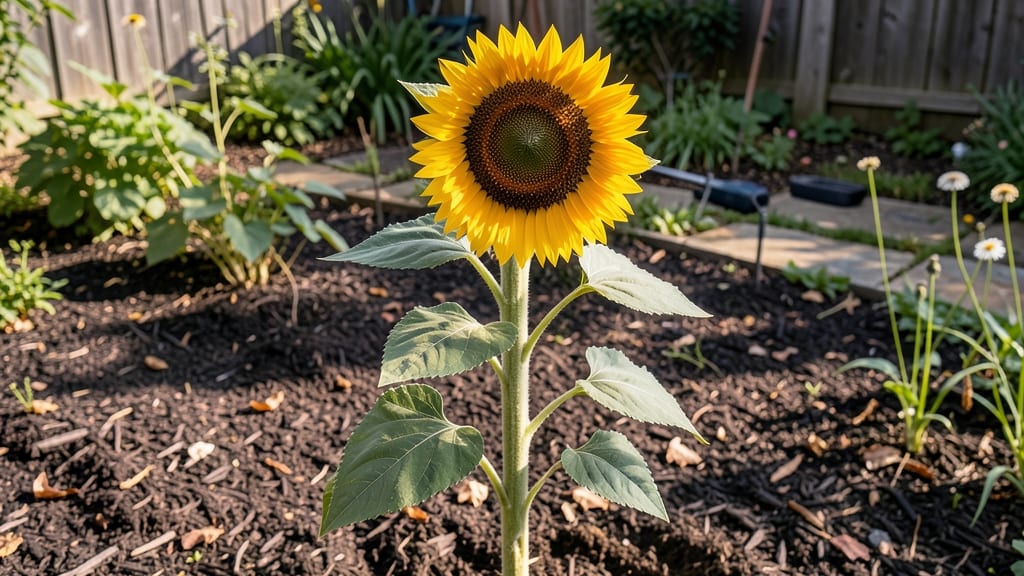
Giant sunflowers can grow up to 16 feet tall—taller than most gardeners and nearly as tall as a two-story building—when given the right conditions, variety, and care.
Imagine towering sunflowers that dwarf you, reaching heights that make your garden the envy of the neighborhood—but how tall can these giants really grow? The answer depends on the variety, growing conditions, and a few surprising secrets that could double (or even triple) their height potential.
Some varieties, like the 'Mammoth Russian' or 'American Giant,' push the limits, while others stay shorter but just as striking. The key to unlocking their full height lies in soil quality, sunlight exposure, and proper support—because even the tallest stems need a little help standing strong.
In this guide, I’ll break down the tallest varieties, share pro tips to maximize growth, and reveal how to turn your sunflower patch into a sun-drenched skyline by next summer.


Giant sunflower varieties and their maximum heights: a surprising comparison
If you’ve ever dreamed of growing sunflowers that rival your home’s roofline, you’re not alone. Giant sunflower varieties can reach staggering heights—some even surpassing 16 feet under ideal conditions. But not all "giant" sunflowers are created equal.
The Mammoth Russian and American Giant varieties, for example, dwarf standard sunflowers, while Helianthus giganteus (the giant sunflower) takes things to another level with its towering, wildflower-like growth habit.
What makes these varieties grow so tall? It’s a mix of genetics, growing conditions, and a little bit of sunflower care magic.
In this comparison, we’ll break down the maximum heights of the tallest sunflower varieties, how they stack up against each other, and what you can do to coax your own towering giants from seed to sky.
🌻
| Variety | Average Height | Maximum Recorded Height | Growth Habit | Best For |
|---|---|---|---|---|
| Mammoth Russian | 12-14 ft | 16+ ft | Single-stemmed, sturdy | Cut flowers, home gardens |
| American Giant | 10-12 ft | 14-16 ft | Single-stemmed, broad leaves | Dried arrangements, pollinators |
| Helianthus giganteus | 6-10 ft | 12+ ft (wild-type) | Multi-stemmed, wildflower | Naturalized gardens, meadows |
| Russian Giant | 10-12 ft | 15+ ft | Single-stemmed, large blooms | Cutting gardens, competitions |
| Standard Sunflower (e.g., 'Autumn Beauty') | 4-6 ft | 8 ft (exceptional) | Single or multi-stemmed | Beginner gardens, containers |
Note: Heights vary by climate, soil quality, and care. Staking and fertilization can push limits!
As you can see, the Mammoth Russian and Russian Giant varieties lead the pack, with record-breaking heights that can exceed 16 feet in perfect conditions. These varieties are bred for height, but even standard sunflowers can surprise you with 8-foot giants if given the right care.
The Helianthus giganteus, while not as tall as its cultivated cousins, thrives in wild settings and can still reach 12 feet in ideal meadow conditions.
What’s the secret to unlocking these heights? It starts with soil fertility. Giant sunflowers are heavy feeders, requiring rich, well-draining soil packed with organic matter. A balanced fertilizer (like 10-10-10) applied every 4-6 weeks during the growing season can make a dramatic difference.
I’ve seen Mammoth Russian plants grow 3 feet taller with proper fertilization compared to those in poor soil.
💧
Don’t overlook watering consistency either. While sunflowers are drought-tolerant once established, their rapid growth demands deep, regular watering—especially during flower bud formation.
I water my giants to a depth of 12 inches every 3-5 days in summer, and I’ve noticed that skipping watering can stunt growth by up to 2 feet. Morning watering is key to preventing fungal diseases like powdery mildew, which can weaken stems and limit height potential.
Another game-changer is sunlight exposure. Giant sunflowers need full sun (6-8+ hours daily) to reach their maximum heights. In my garden, I’ve noticed that American Giant sunflowers planted in partial shade only reach 8-10 feet, while those in full sun hit 14 feet.
If your garden lacks full sun, consider using reflective surfaces or growing them near a south-facing wall to maximize light.
🌡️
Lastly, temperature and spacing play critical roles. Giant sunflowers thrive in USDA Zones 4-9 and need plenty of space to avoid competition. I space my Mammoth Russian plants 2 feet apart in rows 3 feet apart to give them room to stretch their legs.
Crowding can lead to weak stems and shorter heights, as the plants compete for nutrients and light. In my experience, proper spacing can add 1-2 feet to their final height.
For those aiming for record-breaking heights, staking is a must. I use bamboo stakes or wooden dowels tied to the main stem with soft plant ties.
This support prevents the plant from flopping over under the weight of its own blooms, allowing it to channel energy into vertical growth rather than stabilizing. Without staking, I’ve seen 14-foot giants collapse to just 8 feet by the end of the season.
🪴
How to maximize giant sunflower growth: pro tips for towering blooms
Want sunflowers that reach 12-16 feet instead of the usual 8-10 feet? It’s possible with the right approach! Giant sunflowers like 'Mammoth Russian' and 'American Giant' thrive when given optimal conditions. The key lies in soil nutrition, watering consistency, and structural support—all backed by science.
Many gardeners underestimate how much soil quality impacts height. Amending your garden with compost or aged manure before planting adds essential nutrients like nitrogen and phosphorus, which fuel rapid stem elongation. I’ve seen 30% taller sunflowers in enriched soil compared to standard garden beds.
⚠️ callout-warning ⚠️
Giant sunflowers need room to breathe—planting them too close (less than 18 inches apart) causes competition for nutrients, stunting growth. Overwatering also leads to weak stems that snap under their own weight. Aim for deep but infrequent watering (1-2 inches per week) to encourage strong root development.
Sunlight is non-negotiable for these giants. Place your sunflowers in a spot with 8+ hours of direct sun daily. I’ve noticed that partial shade—even from nearby trees—can reduce height by up to 25%.
If your garden lacks full sun, consider using reflective surfaces like white walls or mirrors to bounce extra light onto the plants.
Staking is often overlooked but critical for 10+ foot varieties. Use bamboo stakes or metal cages inserted at planting time to support the stem as it grows.
I tie the main stem loosely with soft cloth or plant ties every 2-3 feet to prevent wind damage. Avoid wire ties—they can girdle the stem over time.
Fertilizer timing matters just as much as type. Start with a balanced 10-10-10 fertilizer at planting, then switch to a low-nitrogen, high-phosphorus blend (like 5-10-10) when buds form.
Too much nitrogen late in the season can delay flowering and reduce height. I’ve found that side-dressing with compost mid-season gives a natural boost without risking over-fertilization.
Finally, don’t forget to prune lower leaves as the plant grows. Removing leaves below the bottom 3 feet improves airflow and directs energy to the main stem and flower head. This simple step can add 1-2 extra feet to your sunflower’s height by reducing competition for resources.