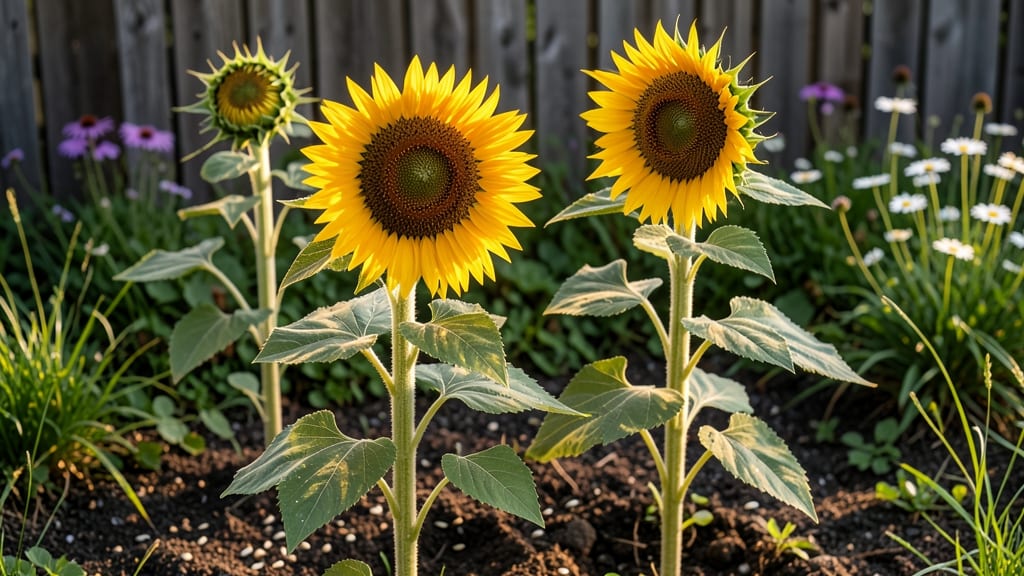
Sunflowers can grow anywhere from 3 feet to towering 16 feet tall, depending on the variety you choose—making them a game-changer for vertical garden design.
Picture this: a Russian Mammoth reaching the height of a two-story building, or a Teddy Bear variety adding cheerful charm to a small patio. The difference isn’t just about space—it’s about support, spacing, and even how much sun your garden gets.
If you’ve ever struggled to fit sunflowers into your layout or wondered why some varieties flop while others stand strong, the answer lies in their genetics and growing conditions.
I’ll break down exactly how tall each popular type gets, plus the 3 key factors that determine whether your sunflowers will stretch toward the sky or stay compact.
By the end, you’ll know which varieties to pick for containers, borders, or windy spots, and how to stake them for maximum height—no guesswork required.
Dwarf
1-3 ft
Container friendly
Semi-Dwarf
3-6 ft
Most popular
Standard
8-16 ft
Full orchard size
Sunflower height guide: exact growth ranges by popular varieties
Sunflowers grow from delicate seedlings to towering giants, but their mature height varies dramatically by variety. Whether you're planning a backyard border, container garden, or cut-flower display, knowing exact heights helps you choose the right plants for your space.
Some varieties barely reach your knee, while others can outgrow your fence—and that's before accounting for wind or poor soil conditions.
I’ve grown sunflowers from 1-foot dwarfs to 14-foot giants, and the differences in spacing, staking needs, and even bloom timing are staggering. For example, a Russian Mammoth might need 3 feet of space to avoid shading neighbors, while a Teddy Bear can thrive in a 5-gallon container.
Let’s break down the exact height ranges for 12 popular varieties, plus spacing tips to maximize your garden’s vertical potential.
| Variety |
Height Range |
Spacing Needs |
Best For |
| Russian Mammoth |
12–16 ft |
3–4 ft apart |
Cut flowers, windbreaks |
| Autumn Beauty |
5–7 ft |
18–24 in apart |
Pollinator gardens |
| Teddy Bear |
1–3 ft |
12–18 in apart |
Containers, borders |
| Moulin Rouge |
4–6 ft |
12–18 in apart |
Cut flowers, bouquets |
| Skyway |
3–5 ft |
12–18 in apart |
Drought-prone areas |
| Little Becka |
1.5–2.5 ft |
12 in apart |
Small gardens |
| ProCut |
6–8 ft |
18–24 in apart |
Florist use |
| Sunspot |
2–3 ft |
12 in apart |
Edging, containers |
| Giant Russian |
10–14 ft |
4–5 ft apart |
Windbreaks, focal points |
How sunflower height affects garden planning and support needs
Choosing the right sunflower variety isn’t just about aesthetics—it’s about space management and structural support. Tall varieties like Russian Mammoth can reach 12-16 feet, while compact Teddy Bear sunflowers stay under 3 feet.
This height difference directly impacts where you plant them, how you arrange your garden beds, and whether you’ll need to stake them to prevent flopping.
For small gardens or containers, dwarf varieties are ideal—they won’t overwhelm your space or block sunlight from other plants. But in larger landscapes, tall sunflowers create stunning vertical focal points. The key is matching your sunflower height to your garden’s layout and your own maintenance capacity.
Tall Sunflowers (8-16 ft)
- Pros: Dramatic vertical impact, great for focal points, attracts pollinators
- Cons: Needs staking, requires more space, may need wind protection
Dwarf Sunflowers (1-3 ft)
- Pros: Perfect for containers, low-maintenance, ideal for small spaces
- Cons: Less dramatic height, may need more plants for visual impact
If you’re planting tall sunflowers in windy areas, consider staking them early—even before they reach 4 feet tall. Use soft garden ties and bamboo stakes to support their weight without damaging the stems.
For varieties like Autumn Beauty or Moulin Rouge, which can grow 10+ feet, staking isn’t optional—it’s essential to prevent them from toppling over in storms or heavy rain.
For border plantings or mixed beds, semi-dwarf varieties like Skyway (5-6 feet) strike a balance. They add height without overwhelming smaller perennials or shrubs. Always leave 18-24 inches of space between tall sunflowers to avoid competition for nutrients and sunlight, which can stunt their growth.
Wind exposure is another critical factor. Open, exposed gardens may require additional support, like trellises or cages, especially for varieties prone to flopping. Even in sheltered areas, tall sunflowers benefit from gentle pruning—removing lower leaves helps improve airflow and reduces disease risk while supporting their upright growth.
Don’t forget about container gardening! Dwarf varieties like Teddy Bear thrive in 5-gallon pots with proper drainage. Use a supportive cage or small stake to keep them upright, even in pots. Just ensure your container is deep enough—at least 12 inches—to accommodate their root systems.
Ultimately, your sunflower height choices should align with your garden’s vertical vision. Whether you’re aiming for a whimsical cottage border or a dramatic backyard centerpiece, selecting the right variety—and providing the right support—will ensure your sunflowers stand tall and proud all season long. 🌻
★★★★★4.6(9 reviews)