
How To
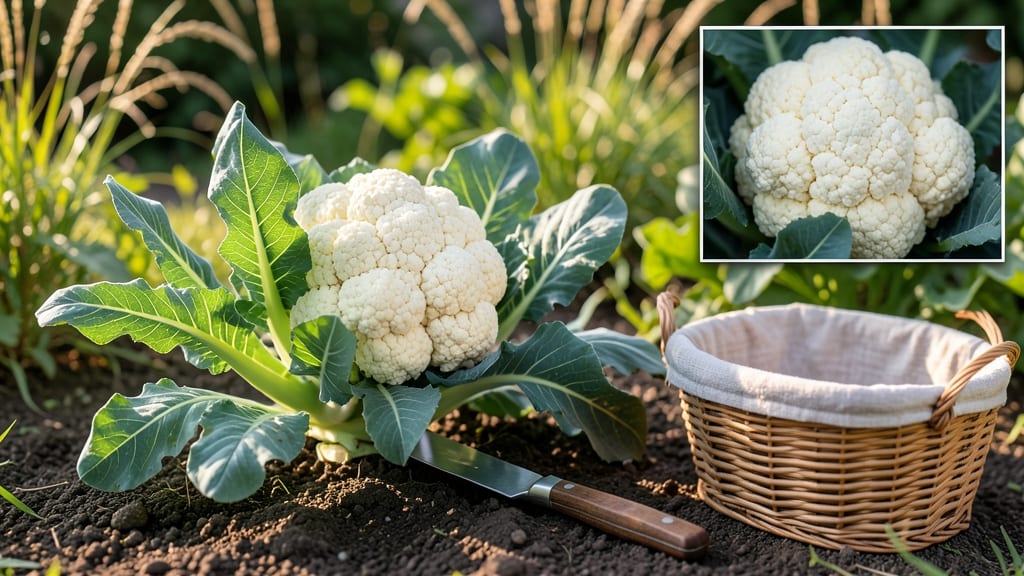
Knowing when to pick cauliflower is the key to a tender, flavorful head 🥬—because waiting too long turns that perfect curd into a bitter, woody mess.
Picture this: you’ve nurtured your plants all season, and now the moment of truth arrives. The head is firm, the leaves are yellowing, but is it really ready? One wrong move, and you’re left with a sad, overgrown disappointment.
Don’t worry—I’ll walk you through the exact visual and tactile cues to nail the perfect harvest every time.
From curd color and size to leaf condition and weather timing, these simple checks will help you avoid the most common mistakes gardeners make. No more guessing whether that head is ready or still needs a few more days.
By the end, you’ll confidently harvest your cauliflower at peak freshness, store it properly, and enjoy the sweet, crisp reward of a job well done. Let’s get started!

Cauliflower curd color and size: the ultimate ripeness checklist
Harvesting cauliflower at the right moment transforms your garden into a flavorful feast, but timing is everything. A perfectly ripe head should be firm, compact, and vibrant—not loose, yellowed, or bitter.
The key lies in understanding color cues and size benchmarks for your specific variety, whether it's the classic white, deep purple, or rare green cauliflower. Let’s break down how to spot the ideal moment to harvest, so you never miss the window.
Not all cauliflower looks the same at maturity. White varieties like 'Snowball Y' are ready when their curds reach 6-8 inches and turn a creamy, uniform color. Purple types such as 'Graffiti' should have a rich, deep hue with tightly packed florets, while green cauliflower like 'Violet Queen' will have a vibrant, almost broccoli-like green tint.
Each variety has its own visual maturity clues, so knowing what to look for saves you from harvesting too early or too late.
| Variety Type | Ideal Curd Size | Perfect Color | Leaf Condition | Days to Maturity |
|---|---|---|---|---|
| White (e.g., 'Snowball Y') | 6-8 inches | Creamy white, uniform | Lower leaves yellowing | 70-90 days |
| Purple (e.g., 'Graffiti') | 5-7 inches | Deep purple, no green | Outer leaves dying back | 65-80 days |
| Green (e.g., 'Violet Queen') | 4-6 inches | Bright green, compact | Leaves curling inward | 60-75 days |
| Orange (e.g., 'Cheddar') | 5-7 inches | Vibrant orange-yellow | Lower leaves brown | 75-90 days |
Size matters more than you might think. A cauliflower head that’s too small (under 4 inches) is likely underdeveloped, while one that’s oversized (over 10 inches) can become woody and bitter.
For most varieties, aim for a 6-8 inch diameter when the head is tightly closed with no visible gaps between florets. If you see small buds starting to open, it’s past prime.
Use a ruler or your hand as a quick guide—most mature heads fit perfectly in a palm-sized circle.
Color consistency is your best friend when checking ripeness. A ready-to-harvest head should have a uniform hue with no green streaks or yellowing patches. For white cauliflower, this means a pure, snow-white appearance. Purple varieties should look deep violet throughout, not mottled or fading.
Green cauliflower will have a bright, even green, while orange types will glow like a sunset. If you spot uneven coloring, the head may still need time or is stressed from weather or pests.
Don’t overlook the leaves surrounding the curd—they’re silent sentinels of ripeness. When the outer leaves start to yellow and die back, it’s a clear signal that the head is nearing maturity.
However, if the entire plant turns yellow or the leaves wilt suddenly, it could mean bolting (going to seed) or heat stress. In this case, harvest immediately or risk a bitter, tough head. Pro tip: Gently pull back the leaves to inspect the curd without damaging the plant.
Weather plays a sneaky role in ripening. Cool, cloudy days slow down maturation, while hot, sunny spells can speed it up. If your cauliflower is struggling to form in warm weather, try shading it with a light cloth to prevent bolting.
Conversely, if your plants are ripening too fast in summer heat, harvest earlier than usual to avoid overmaturity. Always check the forecast
How to test cauliflower firmness and texture for perfect harvest
Testing your cauliflower for firmness and texture is the secret to harvesting at peak flavor. A perfectly ripe head should feel dense and compact, with tightly packed curds that resist gentle pressure.
Start by running your fingers over the outer leaves—they should feel slightly crisp but not brittle. If they crumble easily, your cauliflower may be overmature and past its prime.
Next, focus on the head's size. For most varieties, aim for a diameter between 6 to 8 inches. Smaller heads are often underdeveloped, while larger ones risk becoming woody or bitter.
Press the curds gently—if they give slightly but bounce back, they’re ready. If they feel spongy or hollow, harvest immediately to avoid bolting or seed formation.
🚨
⚠️ Warning: Overripe Cauliflower Signs
Watch for these red flags that mean your cauliflower is past its peak:
- Yellowing buds inside the head
- Loose, fluffy texture when pressed
- Bitter taste when sampled
Harvest immediately if you spot these—overripe cauliflower won’t improve!
Check the leaf wraps around the head for color changes. Healthy outer leaves should be vibrant green, but the ones closest to the curd may start yellowing as a natural signal.
If the leaves are entirely green and lush, your cauliflower needs more time. Conversely, if the leaves are brown or wilted, the head may have already bolted, making it inedible.
Weather plays a critical role in timing. Harvest on cool, cloudy days to prevent stress on the plant. Avoid picking after heavy rain, as moisture can accelerate rot. If your garden is experiencing hot, dry spells, check firmness more frequently—heat speeds up maturation.
Store harvested cauliflower in a plastic bag in the fridge for up to 5 days to preserve freshness.
For purple or orange varieties, the color deepens as they ripen. Press the curds—if they’re firm and the color is vibrant and uniform, it’s time to harvest. If the color fades or the head feels hollow, it’s overripe.
Always cut the stem at a 45-degree angle about 1 inch below the base to encourage regrowth for a second harvest.
Practice makes perfect! With each harvest, you’ll sharpen your ability to spot the ideal texture and firmness. Keep a journal noting the days to maturity for your specific variety—this helps predict future harvests. Soon, you’ll be harvesting cauliflower with restaurant-quality consistency every time. 🌱