
Planting
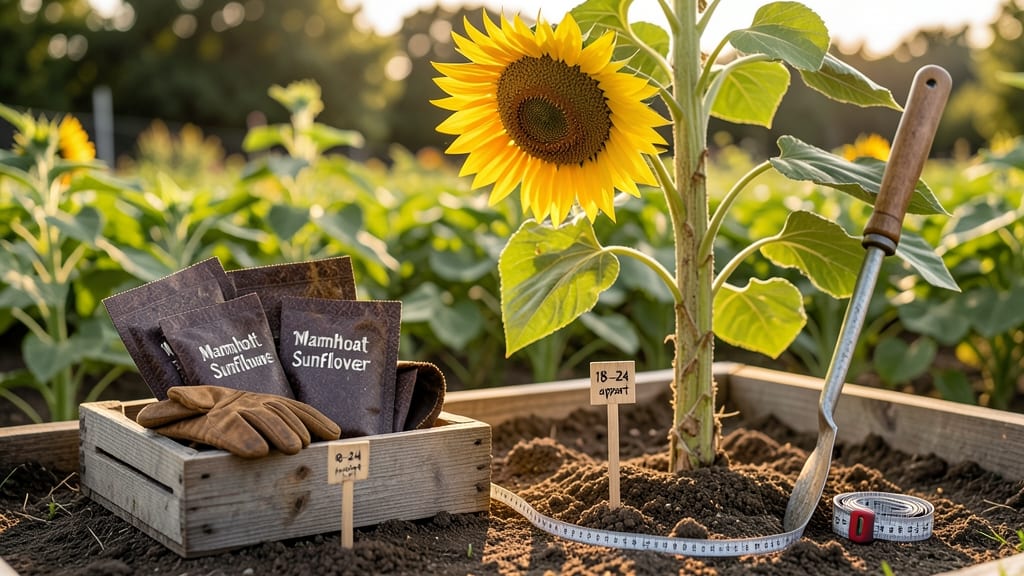
Spacing mammoth sunflowers 🌻 correctly is the secret to those jaw-dropping 10-foot-tall giants that dominate your garden like golden skyscrapers.
Picture this: You’ve waited all spring, planted your seeds with care, and now you’re staring at a sea of skinny, leaning stems fighting for sunlight—because you packed them too close.
Or worse, you gave them too much room, leaving half your plot bare while the plants struggle to reach their potential.
Getting the spacing right isn’t just about avoiding crowded beds—it’s about unlocking the full drama of these towering beauties. Too tight, and you’ll end up with weak stems and puny blooms. Too wide, and you’ll waste space (and your patience) watching them stretch like overgrown teenagers.
In this guide, I’ll break down the exact distances for different garden layouts—whether you’re planting in rows, containers, or mixed beds—plus how to adjust for your soil, climate, and even companion plants. No more guesswork, just stunning, healthy mammoth sunflowers that steal the show from summer through fall.
Optimal mammoth sunflower spacing by variety and growth conditions
Mammoth sunflowers like 'Russian Giant' and 'Mammoth Russian' need precise spacing to reach their stunning heights of 10-12 feet. Crowding them too closely leads to weak stems, smaller blooms, and competition for nutrients—while spacing them too far wastes garden space.
The right distance depends on your variety, soil quality, and climate zone, ensuring each plant gets enough sunlight and root room to thrive.
For most mammoth varieties, 18-24 inches apart is ideal when planted in-ground, but this can vary. Poor soil or dry climates may require wider spacing (up to 3 feet) to prevent stress.
Container growing demands even tighter spacing (12-16 inches), but with careful monitoring of water and nutrients. Let’s break down the exact spacing rules for your garden setup.
| Variety | In-Ground Spacing | Container Spacing | Notes |
|---|---|---|---|
| 'Russian Giant' | 24" | 16" | Needs extra room for massive blooms |
| 'Mammoth Russian' | 20-24" | 14-16" | Adjust for soil fertility |
| 'Autumn Beauty' | 18-20" | 12-14" | Smaller blooms tolerate closer spacing |
| 'Giant Moonglow' | 22-24" | 16" | Requires staking in windy areas |
| All Varieties (Poor Soil) | 30-36" | N/A | Amend soil with compost |
Your climate zone also plays a critical role in spacing. In hot, dry regions (USDA zones 8-10), increase spacing to 24-36 inches to reduce water competition. In cooler zones (6-7), you can space them 18-22 inches apart since slower growth reduces competition.
Always plant in full sun—these giants need 6-8+ hours daily to reach their full potential.
For container growing, choose large pots (18-24 inches wide) with drainage holes. Plant one mammoth sunflower per container or two 'Autumn Beauty' varieties 12 inches apart.
Use a lightweight potting mix to prevent root-bound stress. Containers dry out faster, so monitor soil moisture closely—water deeply every 2-3 days during peak summer heat.
Soil quality directly impacts spacing needs. Well-draining, nutrient-rich soil allows closer planting (18-20 inches), while clay or sandy soil demands wider gaps (24-36 inches). Before planting, amend your soil with 2-3 inches of compost to improve fertility.
A simple soil test can reveal if your garden lacks phosphorus or potassium, which are essential for strong stems and large blooms.
If you’re planting in rows, space rows 3-4 feet apart to allow easy access for maintenance. For mixed flower beds, pair mammoth sunflowers with shorter companions like marigolds or cosmos, which thrive in their shade.
Avoid planting near competing perennials like sunflowers or corn, which can steal nutrients and sunlight.
Adjust spacing mid-season if you notice signs of stress. Yellowing leaves or weak stems signal overcrowding—thin plants to 20-24 inches apart immediately. Conversely, if blooms are smaller than expected, your spacing may be too wide.
Mammoth sunflowers need room to lean slightly for stability, so avoid pruning stems unless necessary for wind protection.
Pro tip: Use a spacing template made from cardboard or string to mark planting spots before sowing seeds. This ensures even distribution and prevents accidental overcrowding. For large gardens, consider planting in blocks rather than single rows—this creates a more natural, wind-resistant display and maximizes bloom density.
Remember, proper spacing isn’t just about aesthetics—it’s about plant health. When given the right room, mammoth sunflowers reward you with 10-12 inch blooms that turn heads and attract pollinators. Follow these guidelines, and your golden giants will tower over your garden like nature
Common spacing mistakes that stunt mammoth sunflower growth
Mammoth sunflowers need room to stretch their towering stems toward the sky—yet even experienced gardeners often make spacing mistakes that sabotage their growth. Overcrowding steals nutrients and sunlight, while excessive spacing wastes garden space and weakens structural support.
Both extremes leave you with yellowing leaves, weak stems, and blooms that never reach their full potential.
I’ve seen gardens where 18-inch spacing was ignored, leading to sunflowers leaning precariously or producing tiny, sad blooms. The worst part? These mistakes aren’t always obvious until it’s too late. By then, your sunflowers are already competing for resources, and recovery takes extra care—or even transplanting in severe cases.
⚠️ WARNING: SPACING MISTAKES YOU MIGHT BE MAKING ⚠️
Overcrowding
Plants spaced less than 12 inches apart struggle for nutrients and sunlight, leading to pale, weak stems and smaller blooms. Look for yellowing lower leaves or stems bending toward each other.
Excessive Spacing
Spacing over 24 inches wastes space and creates unstable stems prone to flopping. You’ll notice thin, leggy growth and blooms that never fully open.
Ignoring Mid-Season Adjustments
Even if you start correctly, uneven growth or soil compaction can force plants too close. Check for crowded stems touching or competition for sunlight—signs it’s time to thin.
If you’re already dealing with an overplanted bed, don’t panic. Mammoth sunflowers are resilient, and with a few adjustments, you can still salvage their growth. The key is acting early—once stems start leaning or leaves yellow, recovery becomes harder.
Start by removing the weakest plants first, focusing on those with pale stems or no buds.
For stubborn cases, transplanting might be necessary. Dig up the smallest plants and replant them 18-24 inches apart in a new spot with looser soil. Water deeply afterward to reduce shock.
If you’re working with containers, upgrade to larger pots (at least 12 inches in diameter) to give roots room to spread.
Pro tip: Use mulch around the base of your sunflowers to retain moisture and suppress weeds that could further compete for space. A 3-inch layer of straw or wood chips also helps regulate soil temperature, which is especially helpful in hot climates where roots can dry out quickly.
Remember, spacing isn’t set in stone—it’s a dynamic part of your sunflower’s care routine. Check your plants every 2-3 weeks during the growing season, and adjust as needed.
With the right spacing, your mammoth sunflowers will reward you with sturdy stems, vibrant blooms, and that showstopping height you’ve been dreaming of. 🌻