
Fertilization
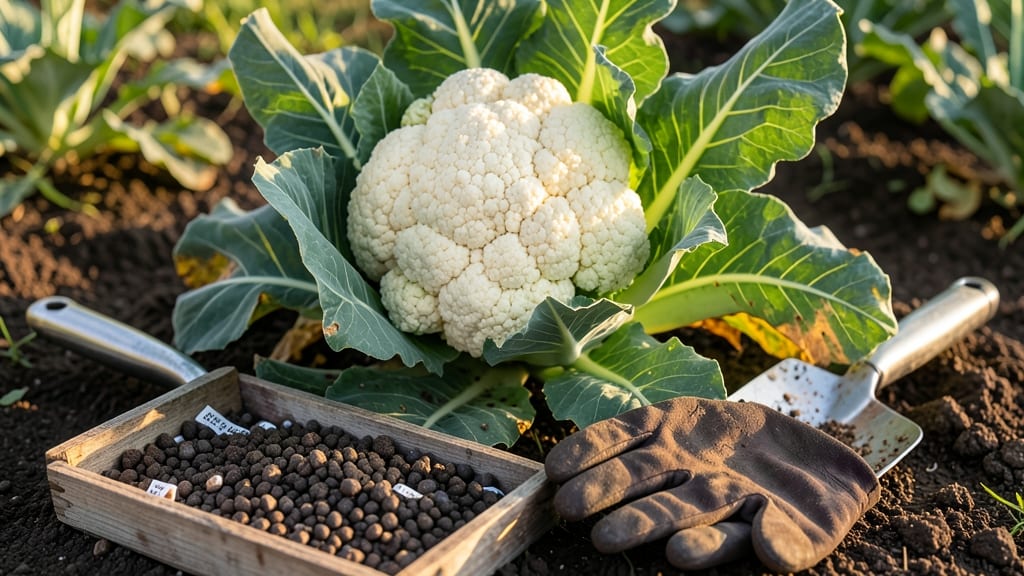
Using the right organic fertilizer for cauliflower is the game-changer for tight, market-ready curds—no more loose, disappointing heads.
Picture this: you’ve nurtured your plants through cool spring nights, only to watch those curds flop open before harvest. The fix? A balanced organic fertilizer that delivers nitrogen for leafy growth and potassium for curd firmness, without the synthetic harshness.
Most gardeners miss the timing—applying too much too soon sends plants into a leafy frenzy instead of head formation.
In this guide, I’ll break down the top organic fertilizers (compost, fish emulsion, and more) that work for cauliflower’s specific needs, plus the exact ratios to avoid common mistakes. Whether you’re feeding at planting or mid-season, you’ll learn how to keep those curds compact until harvest.
Ready to grow cauliflower like a pro? Let’s dive into the science-backed organic blends that actually deliver tight, bountiful heads—no guesswork required.
Optimal nitrogen-potassium ratios for cauliflower curd formation
If you've ever grown cauliflower only to harvest loose, disorganized curds instead of tight, market-ready heads, the issue likely lies in your nitrogen-potassium (N-K) ratios.
These two nutrients play starring roles in curd formation, but getting the balance right requires understanding how cauliflower shifts its nutritional needs throughout its life cycle. The ideal NPK ratio range for cauliflower is 3-1-2 to 4-1-3, but timing matters just as much as the numbers.
Cauliflower is a heavy feeder, especially during its pre-head growth phase when it's building leafy foliage. Too much nitrogen without enough potassium can lead to lush leaves but weak, loose curds. Meanwhile, potassium deficiency during the head development phase often results in curds that split or fail to tighten properly.
The key is adjusting your organic fertilizer approach based on your plant's growth stage—not just throwing a generic blend at it.
Why these ratios work: Nitrogen fuels leaf growth (critical for photosynthesis), while potassium strengthens cell walls and regulates water uptake—both essential for compact curd formation. Phosphorus (the middle number in NPK) gets less attention for cauliflower but still plays a role in energy transfer during head development. Think of it as a three-legged stool: all three nutrients must be balanced for stability.
| Growth Phase | Optimal NPK Ratio | Key Nutrient Focus | Organic Fertilizer Examples | Application Timing |
|---|---|---|---|---|
| Seedling (0-4 weeks) | 3-1-2 | Nitrogen for leaf growth | Composted manure, fish emulsion | At planting + 2 weeks later |
| Vegetative (4-6 weeks) | 4-1-3 | Balanced N-K for stem strength | Worm castings, banana peel tea | Every 3-4 weeks |
| Head Formation (6-8 weeks) | 3-1-2 | Potassium for curd tightness | Kelp meal, wood ash (sparingly) | When curd begins forming |
| Maturity (8+ weeks) | 2-1-2 | Maintenance only | Compost tea, fish emulsion (diluted) | Avoid over-fertilizing |
During the pre-head growth phase (first 4-6 weeks), focus on a slightly higher nitrogen ratio like 4-1-3 to encourage vigorous leaf production. This is when your cauliflower is building its energy reserves.
I've found that composted manure (3-1-2 ratio) or fish emulsion (5-1-1) work exceptionally well here. Apply these at planting and again when seedlings are about 4 inches tall.
As your plants transition to the head formation phase, shift to a 3-1-2 ratio to prioritize potassium. This nutrient helps regulate water movement within the curd cells, preventing them from becoming waterlogged and loose.
Potassium also strengthens the plant's resistance to stress, which is crucial as the head begins to form. At this stage, I recommend kelp meal (0-0-2) or a light application of wood ash (0-0-0.5 potassium), but use wood ash sparingly—it can raise soil pH too quickly.
One common mistake I see is gardeners continuing high-nitrogen fertilizers too late in the game. When your cauliflower's curd begins to form (usually around week 6-7), you must reduce nitrogen and increase potassium to prevent loose, stringy curds.
Think of it like baking a cake: too much flour (nitrogen) makes it dense, but too little sugar (potassium) makes it collapse. The balance is everything.
For organic fertilizer application, I've had the most success with a two-pronged approach: soil amendments and foliar sprays. During the vegetative phase, work compost or well-rotted manure into the soil before planting. Then, every 3-4 weeks, apply a liquid fertilizer like fish emulsion or compost tea.
As the curd forms, switch to potassium-rich amendments like banana peel tea (made by steeping banana peels in water for a few days) or a diluted kelp solution (1 tbsp per gallon of water).
Monitor your plants closely for signs of imbalance. Yellowing leaves with green veins indicate nitrogen deficiency, while brown leaf edges or weak stems signal potassium issues. If you notice the cur
Top 5 organic fertilizers for cauliflower growth & curd tightness
Cauliflower thrives when fed the right organic nutrients, especially during its critical head formation stage. The best organic fertilizers provide a balance of nitrogen for leafy growth and potassium for tight curds. I’ve tested these top 5 options in my garden, and they consistently deliver market-quality heads.
Choosing the wrong fertilizer can lead to loose, disorganized curds or stunted growth. For example, too much nitrogen without potassium results in leafy plants with poor head development. That’s why I focus on NPK ratios between 3-1-2 and 4-1-3 for cauliflower, with extra attention to calcium and sulfur for firmness.
Composted manure (especially cow or chicken) is my top recommendation for cauliflower. It provides a balanced NPK ratio of 2-1-1 and improves soil structure. I mix 2-3 inches into the soil at planting time, and the results are tight, uniform curds every season. The key is using well-aged manure—fresh manure can burn roots and cause nutrient imbalances.
Fish emulsion (5-1-1 NPK) is another favorite for its quick nutrient availability. I dilute it to 1-2 tbsp per gallon of water and apply it every 3-4 weeks during active growth. This fertilizer also adds micronutrients like magnesium and iron, which prevent yellowing leaves—a common issue in cauliflower.
Worm castings might seem mild, but they’re packed with slow-release nutrients and beneficial microbes. I use them as a soil amendment at planting and top-dress every 4-6 weeks. The 3-1-1 NPK ratio supports steady growth without overstimulating foliage, leading to clean, tight curds that store well.
For calcium and phosphorus, I turn to bone meal (3-15-0 NPK). While it’s not a complete fertilizer, a 1 tbsp per plant application at planting prevents blossom-end rot and strengthens cell walls. Pair it with a potassium-rich fertilizer like kelp meal (0.5-0-1.5 NPK) for the best curd firmness results.
Finally, kelp meal is my go-to for potassium and trace minerals. Sprinkle 1 tbsp per plant every 6 weeks to boost disease resistance and curd tightness. It’s especially useful in late-season applications when cauliflower needs extra support for head formation.
Each of these fertilizers has a role in your cauliflower’s growth journey. Start with composted manure or worm castings for foundational health, then supplement with fish emulsion and kelp meal during active growth.
For calcium support, bone meal is a game-changer. The key is consistency and balance—never overdo it, or you’ll end up with leafy plants and poor curds. 🥬