
Watering
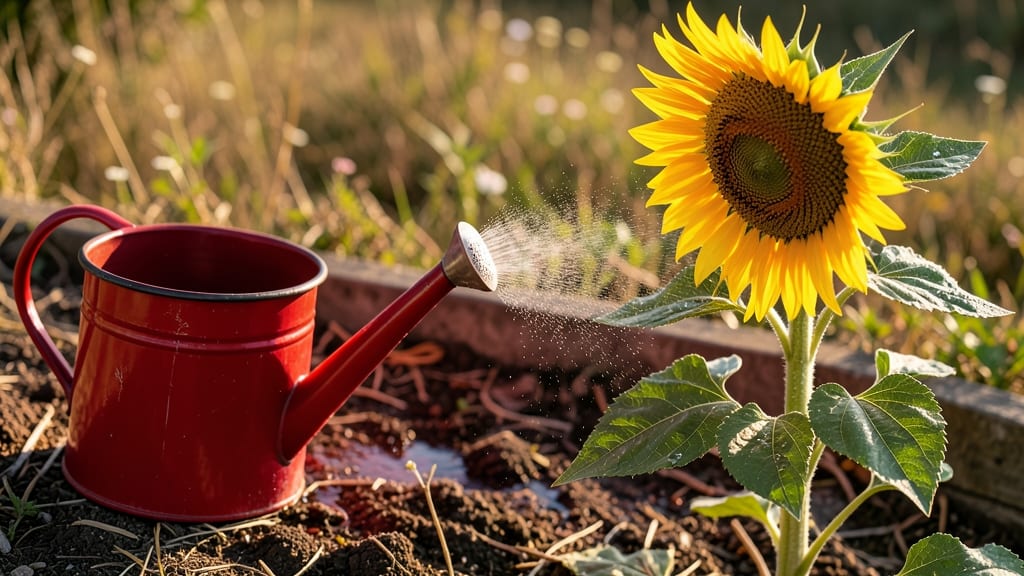
Sunflowers need consistent watering to support their deep roots and towering growth, but how much is just right?
Those 6-foot giants might look tough, but they’re actually finicky about moisture—too little and they’ll wilt before blooming, too much and their roots rot. The secret lies in timing, depth, and knowing when to adjust for heat or drought.
Here’s the breakdown: seedlings crave frequent, shallow drinks, while mature plants thrive on deep, infrequent soaks. We’ll cover the exact schedule for each stage, plus how to spot when your 🌻 is thirsty or drowning.
By the end, you’ll water like a pro—no guesswork, just sunflowers that reach for the sky.


How much water do sunflowers need per week (by growth stage)
Sunflowers are thirsty giants—those towering 🌻 stalks need consistent moisture to support their rapid growth. But here’s the catch: too much water can drown their deep taproots, while too little stunts their development.
The key is understanding their water needs by growth stage, from delicate seedlings to mature plants. Let’s break it down so you can water like a pro.
First, remember that sunflowers thrive in well-draining soil. Sandy soil dries out faster, while clay holds moisture longer. Adjust your watering schedule based on your soil type and local climate.
In hot, dry regions, you’ll need to water more frequently, while cooler, humid areas may require less. Always prioritize deep watering over shallow sprinkles to encourage strong root development.
Now, let’s dive into the watering rules by growth stage. Each phase has unique demands, and getting it right will determine whether your sunflowers reach their full potential—or fizzle out before blooming.
During the seedling stage, sunflowers are most vulnerable. Their tiny roots can’t reach deep water sources, so you’ll need to water lightly but frequently. Use a fine mist spray or watering can with a gentle flow to avoid disturbing the soil.
Aim for about ½ inch of water every 2-3 days, ensuring the top inch of soil stays moist. If the soil feels dry just below the surface, it’s time to water again.
As sunflowers enter the vegetative stage (4-8 weeks), they’ll start growing like weeds—sometimes up to 2-3 inches per day! This is when deep watering becomes critical. Instead of light sprinkles, give them 1-1.5 inches of water every 3-5 days.
Water in the early morning to allow foliage to dry quickly, reducing the risk of fungal diseases like powdery mildew. If your soil is sandy, you may need to water more often, while clay soil can hold moisture longer.
The flowering stage (8-12 weeks) is when sunflowers demand the most water—but also when they can handle slightly less frequent watering. Their deep roots are now established, allowing them to access moisture from lower soil layers. During this phase, water every 5-7 days with 1.5-2 inches per session.
Focus on the base of the plant and avoid wetting the leaves. If you notice buds wilting slightly in the heat, a deep watering in the evening can revive them overnight.
Once sunflowers reach maturity (12+ weeks), their water needs drop significantly. At this point, they’re focused on seed development rather than rapid growth. Reduce watering to every 7-10 days with 1-1.5 inches per session. Overwatering now can lead to seed rot or attract pests like slugs.
If your region experiences dry spells, monitor the soil moisture—stick your finger an inch deep. If it’s dry, water; if it’s damp, hold off.
Climate plays a huge role in sunflower watering. In hot, dry climates like the Southwest U.S., you may need to water daily during the vegetative stage, especially for younger plants. In humid regions like the Southeast, reduce frequency to avoid fungal issues.
Always check the soil before watering: stick your finger 2 inches deep. If it’s dry, water; if it’s moist, wait. This simple trick saves time and prevents overwatering.
Pro tip: Mulch is your best friend for sunflowers. Apply a 2-3 inch layer of organic mulch (like straw or wood chips) around the base of the plant. This helps retain moisture, regulates soil temperature, and suppresses weeds.
Just keep the mulch 2 inches away from the stem to prevent rot. For container-grown sunflowers, mulch helps the soil stay moist longer, but be mindful of drainage—potted plants dry out faster than in-ground varieties.
Finally, watch for signs of stress. Drooping leaves or a pale green hue often mean it’s time to water.
3 Critical signs your sunflowers are thirsty (or drowning)
Sunflowers send clear visual and tactile signals when their water needs aren’t met—whether they’re parched or drowning. The key is learning to read these subtle cues before permanent damage occurs.
I’ve seen wilting leaves and mushy stems both signal trouble, but they require very different fixes. Let’s decode the 3 critical signs your sunflowers are screaming for help.
First, leaf wilting is the most obvious sign of underwatering, but it’s not always what it seems. Young sunflowers may droop in the afternoon heat, only to perk up by morning.
However, if the wilting persists past sunrise or the leaves feel crispy to the touch, your plants are thirsty. This is your cue to water deeply—aim for 1-2 inches of soil moisture per week during dry spells.
Now, here’s where it gets tricky: overwatering often mimics underwatering symptoms at first glance. If your sunflower’s leaves turn yellow (especially the older ones near the base) and the stem feels soft when pressed, you’re likely dealing with root rot.
This fungal nightmare thrives in waterlogged soil, cutting off oxygen to the roots. The fix? Reduce watering frequency and improve drainage by adding organic matter like compost.
✅ DO THIS
- Water deeply 2-3x/week in morning hours (avoids fungal risk)
- Check soil moisture 2" below surface—dry? Water again
- Use mulch (straw or wood chips) to retain moisture
- For container sunflowers, water when topsoil feels dry
❌ AVOID THIS
- Shallow watering (encourages weak roots)
- Watering at night (promotes disease)
- Ignoring yellowing leaves (could mean overwatering)
- Using hard water without amending soil
Don’t overlook stem softness—this is a red flag for overwatering. Healthy sunflower stems should feel firm like a bamboo stalk.
If yours gives slightly when squeezed or feels spongy, roots are rotting. Act fast: Move potted sunflowers to a dry location and let the soil dry out completely before watering again. For in-ground plants, improve drainage by amending the soil with perlite or coarse sand.
Another sneaky sign is leaf curl or drooping that happens suddenly—even if the soil feels moist. This could mean your sunflowers are stressed from inconsistent watering. Sunflowers hate boom-and-bust watering, where they get too much one day and none the next.
Instead, aim for consistent moisture—think of it like a slow drip rather than a sudden downpour.
Finally, check the base of the plant for mold or fungus. Overwatered sunflowers often develop a white, fuzzy growth around the stem—a clear sign of root rot. If you spot this, trim affected roots (if potted) and repot in fresh, dry soil.
For in-ground plants, reduce watering immediately and consider adding sulfur or copper fungicide to the soil.
Remember, sunflowers are resilient but need your attention to thrive. By watching for these 3 critical signs—wilting leaves, soft stems, and yellowing—you’ll keep your sunflowers happy and healthy all season long. 🌻