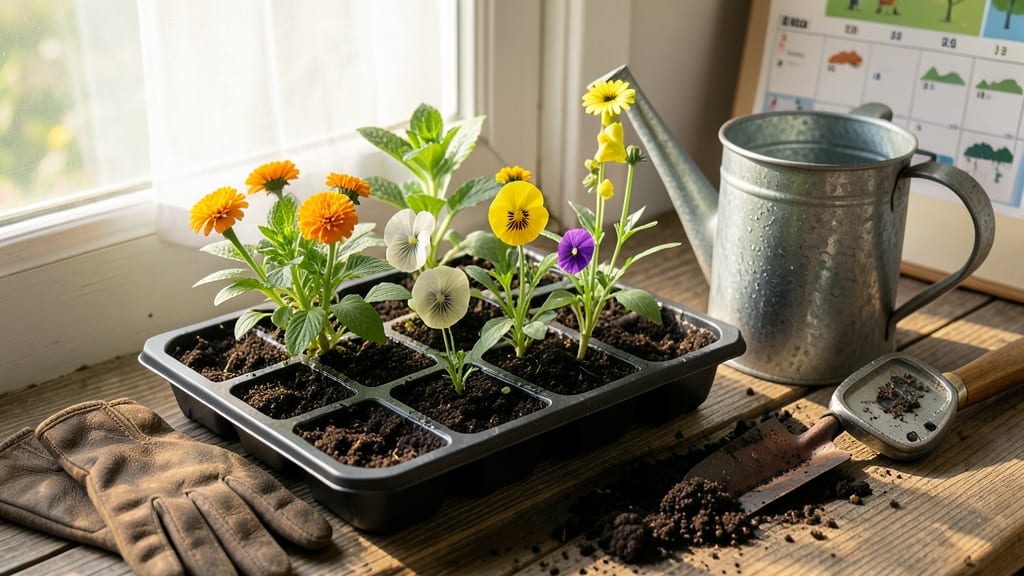
You can start planting flowers about 4-6 weeks before your last frost date—a window that shifts from February in warm zones to April in colder climates.
Timing is everything in gardening—plant your flowers too early, and a late frost will wipe out your hard work. Too late, and you’ll miss the full bloom season.
Whether you’re in USDA Zone 6a or a warmer region, knowing your frost-free dates ensures your 🌸 thrive from the first day in the ground.
Here’s how to time it right for cool-season blooms, tender varieties, and everything in between—plus how to adjust for early, mid-, or late-season planting.
Best Time to Plant in General
Spring (4-6 weeks before last frost) or Fall (6-8 weeks before first frost)
Plant after last frost date or in well-draining soil 6-8 weeks before first frost for fall blooms.
USDA Zone frost-free dates for planting flowers by region
Understanding your USDA hardiness zone is the first step to planting flowers at the perfect time. Frost-free dates vary dramatically across the country, from late March in Zone 10 to mid-June in Zone 3.
These dates determine whether you can plant cold-hardy annuals like pansies or wait for tender varieties like impatiens. Let’s break it down by zone so you can plan your flower garden calendar with confidence.
In Zones 3-5, gardeners face the shortest growing seasons, with last frost dates ranging from May 1 to May 15.
This means cool-season flowers like snapdragons and sweet peas can often be sown directly in early spring, while warm-season favorites like marigolds and zinnias should wait until after the last frost.
In contrast, Zones 6-8 enjoy longer seasons, with frost-free dates from April 15 to April 30, allowing for earlier plantings and even fall blooms.
For Zones 9-11, frost is rare, but heat tolerance becomes the bigger concern. Many tropical flowers like hibiscus and bougainvillea thrive year-round, while cool-season annuals may need shade during summer months. Always check your local extended weather forecasts—even in warm zones, unexpected frosts can occur.
🌱
| USDA Zone |
Last Frost Date |
Early Planting Window |
Mid-Spring Planting |
Late Planting Window |
Cold-Hardy Flowers |
Tender Flowers |
| Zone 3-4 |
May 1-15 |
4-6 weeks before last frost (March 15-April 1) |
After last frost (May 15-June 1) |
June 15-July 15 |
Pansies, Violas, Sweet Peas |
Petunias, Marigolds, Zinnias |
| Zone 5-6 |
April 15-May 1 |
March 15-April 15 |
April 15-May 15 |
June 1-July 15 |
Calendula, Stock, Snapdragons |
Impatiens, Begonias, Coleus |
| Zone 7-8 |
March 15-April 15 |
February 15-March 15 |
March 15-April 30 |
May 15-June 30 |
Dianthus, Primrose, Larkspur |
Geraniums, Vinca, Celosia |
| Zone 9-10 |
January 15-February 15 |
December 1-January 15 |
January 15-March 15 |
April 1-May 15 |
Sweet Alyssum, Dusty Miller |
Hibiscus, Bougainvillea, Lantana |
How to adjust planting times for early bloomers vs. late-season flowers
Extending your bloom season isn’t just about planting once—it’s about strategic timing and smart adjustments. Early bloomers like pansies and calendula can handle cooler temps, while late-season stars like cosmos and zinnias thrive in warmth. The key? Staggered planting and seasonal extensions with tools like row covers.
For gardeners in Zone 5 vs. Zone 6, the difference in frost dates means 4-6 weeks of shifting your schedule. In colder zones, start cool-season flowers indoors 8-10 weeks before the last frost, while warmer zones can direct-sow heat-loving annuals as early as March.
Let’s break down how to time it right for maximum blooms.
-
1
Start cool-season flowers indoors 8-10 weeks before last frost (e.g., snapdragons, stock). Use grow lights if natural light is limited.
-
2
Direct-sow heat-lovers (e.g., marigolds, sunflowers) 2-4 weeks after last frost. Soils must be at least 60°F for germination.
-
3
Use row covers to extend early plantings by 2-3 weeks. Ideal for pansies and sweet peas in Zones 4-6.
-
4
Stagger plantings every 2 weeks for continuous blooms. Example: Plant cosmos in batches from May to July.
-
5
Adjust for Zone 6+: Plant tender annuals (e.g., impatiens) after Memorial Day. In Zone 5, wait until 2 weeks post-last frost for safety.
Cold frames are another game-changer for early bloomers. Place them over hardy perennials like lavender or catmint in late winter to jumpstart growth. The 10-15°F protection lets you plant 3-4 weeks earlier than outdoor conditions allow.
For late-season flowers, focus on succession planting. Replace spent spring blooms with fall favorites like asters or chrysanthemums 6-8 weeks before your first frost. In Zones 7-10, you can even sow winter annuals (e.g., pansies) in September for holiday color.
Pro tip: Keep a planting calendar with your last/first frost dates. Mark 4-6 week intervals for staggered sowings. This ensures your garden stays vibrant from spring to frost, with no gaps between blooms.
Remember, soil temperature matters as much as air temperature. Use a soil thermometer—most seeds need 50-70°F soil to germinate. If temps are too cool, wait or use a heat mat for seed trays.
★★★★★4.8(1 review)