
Trees
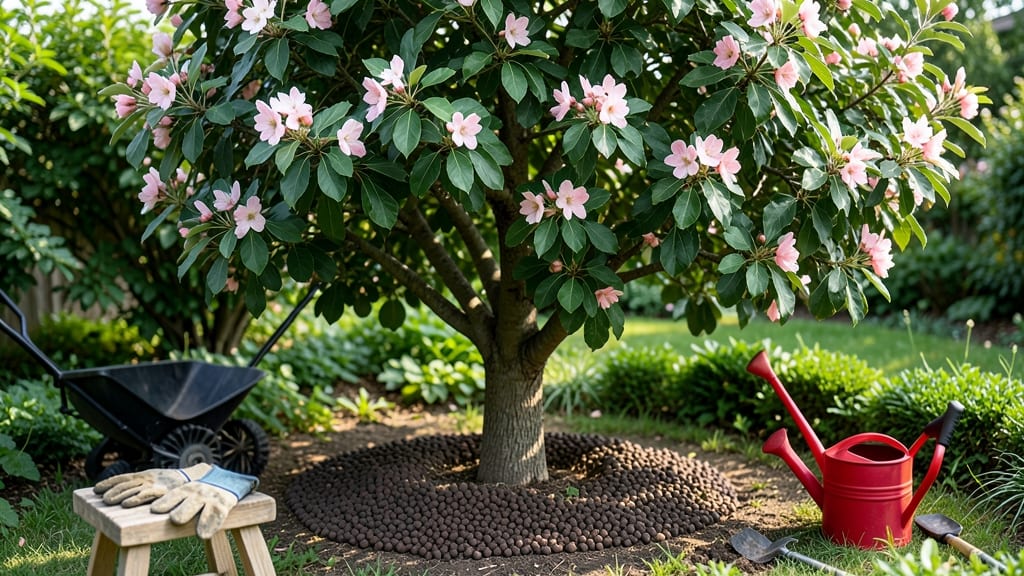
To fertilize flowering trees 🌸 at the best time means applying it in early spring, just as new growth starts—before buds swell but after winter dormancy.
Struggling to get your flowering trees to burst into vibrant blooms year after year? Timing your fertilizer application could be the secret weapon you’ve been missing—get it wrong, and you might as well skip it entirely.
Most flowering trees thrive when fed in early spring, but the exact window depends on your climate zone and whether your tree is an early or late bloomer.
Below, I break down the best months for fertilization, how to pick the right fertilizer for your tree type, and what to watch for if you overdo it.

Seasonal fertilization schedule for flowering trees by climate zone
Flowering trees need precise fertilization timing to produce their stunning blooms, but the best schedule depends on your USDA hardiness zone and whether your tree is an early bloomer or late bloomer.
In temperate zones (4-8), most trees benefit from a spring feeding followed by light summer applications, while tropical zones (9-11) can fertilize year-round with adjustments for monsoon seasons. Cold regions (zones 1-3) require early spring feeding to kickstart growth before frost risks return.
Early bloomers like cherry blossoms and magnolias need fertilizer 6-8 weeks before buds open, while late bloomers such as crape myrtles and hibiscus thrive with a post-bloom feeding in late summer.
Understanding these differences ensures your tree stores nutrients at the right time for vibrant flowers. Let’s break down the ideal schedule by zone and blooming type.
🌸 Pro Tip: Always test your soil before fertilizing—most flowering trees prefer a slightly acidic to neutral pH (6.0-7.0). If your soil is already rich, you may only need a light feeding or organic amendments like compost.
| Climate Zone | Early Bloomers (Spring) | Late Bloomers (Summer) | Tropical (Year-Round) | Cold Regions (Zones 1-3) |
|---|---|---|---|---|
| Spring Feeding | Early March-April (before buds swell) | Late May-June (after blooms fade) | February & August (avoid rainy season) | Late April-May (after last frost) |
| Summer Feeding | Light feed in July (if needed) | July-August (every 6 weeks) | April, June, October (monthly) | None (tree focuses on root growth) |
| Fall Feeding | None (tree prepares for dormancy) | None (stop by September) | November (light organic feed) | None (unless heavy pruning occurred) |
| Winter Feeding | None (dormant period) | None (dormant period) | None (unless potted) | None (snow cover protects roots) |
| Fertilizer Type | Balanced (10-10-10) or bloom booster | Low-nitrogen (5-10-10) | Organic (compost/manure) | Slow-release granules |
In USDA zones 4-8, most flowering trees follow a spring-summer feeding pattern. For example, dogwoods and redbuds (early bloomers) need their first feeding in early March when soil temperatures reach 50°F (10°C).
Late bloomers like crape myrtles should skip spring feeding and instead receive a post-bloom boost in July to encourage next year’s flowers.
For tropical zones (9-11), fertilization is more flexible but requires caution during monsoon seasons. Apply a light organic feed every 2 months, avoiding heavy rains that can leach nutrients.
Potted tropical trees may need monthly feeding with diluted liquid fertilizer. Always water thoroughly after applying to prevent root burn.
In cold climates (zones 1-3), focus on early spring feeding to stimulate growth before the last frost date. Use slow
How to choose the right fertilizer type for different flowering trees
Selecting the right fertilizer for your flowering trees can feel overwhelming with so many options available. The wrong choice might leave your azaleas or magnolias blooming weakly, while the right one can transform them into vibrant showstoppers.
Let’s break down the key factors to consider when choosing between organic and synthetic fertilizers, as well as slow-release versus quick-release options.
First, understand that flowering trees like crape myrtles and dogwoods thrive on balanced nutrition, but their needs vary by species. For example, acid-loving plants like azaleas require low pH soil, while others like honey locusts tolerate a wider range.
A soil test is your first step—it reveals deficiencies and guides your fertilizer selection.
| Tree Type | Ideal NPK Ratio | Fertilizer Type | Application Timing |
|---|---|---|---|
| Azaleas | 30-10-10 (acid-loving) | Organic (slow-release) | Early spring + post-bloom |
| Crape Myrtles | 10-10-10 (balanced) | Synthetic (quick-release) | Late spring + summer |
| Magnolias | 12-6-6 (low nitrogen) | Organic (slow-release) | Early spring only |
| Dogwoods | 10-20-20 (phosphorus-heavy) | Synthetic (slow-release) | Early spring + fall |
Organic fertilizers, like compost or fish emulsion, release nutrients slowly, improving soil health over time. They’re ideal for long-term growth and microbe activity, but may require more frequent applications.
On the other hand, synthetic fertilizers like 10-10-10 provide immediate results, perfect for a quick nutrient boost during the blooming season.
Watch for deficiency symptoms like yellowing leaves (nitrogen deficiency) or weak stems (potassium deficiency). If your flowering trees show signs of stress, adjust your fertilizer’s NPK ratio accordingly. For instance, a high-phosphorus fertilizer (e.g., 5-10-5) encourages more blooms, while high-nitrogen (e.g., 20-5-5) promotes leafy growth over flowers.
Always follow the manufacturer’s instructions for application rates. Over-fertilizing can lead to fertilizer burn, causing leaf scorch or root damage. For young trees, start with half the recommended dose and monitor their response closely. Remember, the goal is to support healthy growth, not just bigger blooms.
By matching your fertilizer choice to your tree’s specific needs—and applying it at the right time—you’ll set the stage for show-stopping blooms year after year. Happy gardening!