
Transplanting
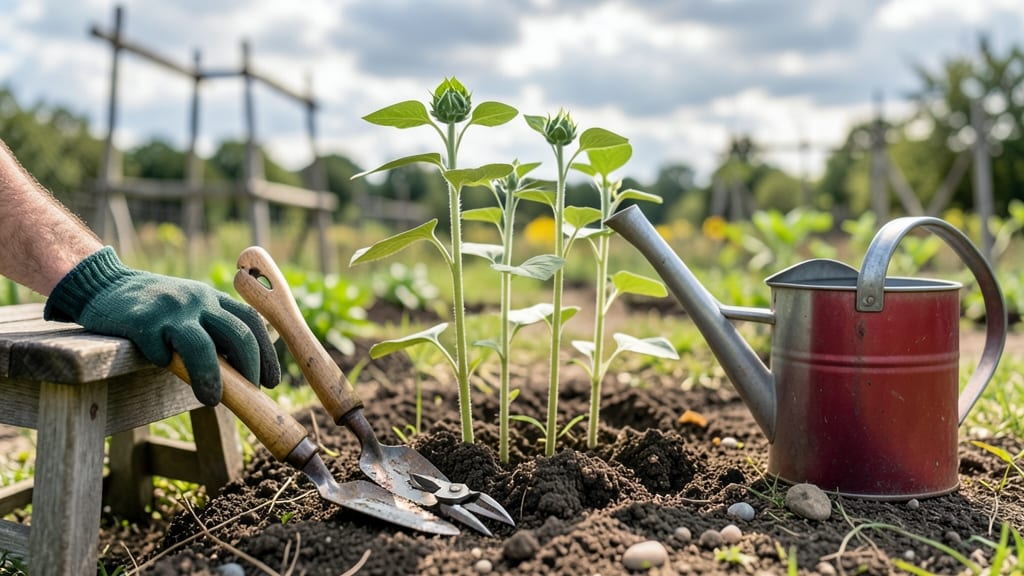
Thinning sunflower seedlings at the right time—when they’re 2 to 4 inches tall with 1 to 2 true leaves—is the secret to towering, sturdy stems and a bountiful harvest.
Here’s the catch: too early, and you risk stunting their growth; too late, and you’re left with weak, leaning plants that struggle to reach their full 10-foot potential. Sunflowers may seem low-maintenance, but proper thinning is what turns a patchy garden into a sunlit spectacle.
Timing isn’t just about height—it’s about soil warmth, leaf development, and even the moon’s phase (yes, really). In Zone 6a, where spring soil can still be cool, wait until after your last frost—usually mid-April—and when seedlings are 3 to 4 weeks old.
Below, I’ll walk you through the exact steps, from spacing to tools, so you avoid the three biggest mistakes and end up with sunflowers that shade your fence—and your neighbors’ envy.
The perfect timing for thinning sunflower seedlings (with growth stages)
Thinning sunflower seedlings isn’t just about making space—it’s about giving each plant the room to grow strong stems and vibrant blooms. When done too early or too late, you risk weak stems that snap in wind or stunted growth from competition.
The key is watching for specific growth milestones that signal the perfect moment to act.
Sunflower seedlings are ready for thinning when they reach 2 to 4 inches tall and have 1 to 2 true leaves (not just the initial seed leaves). This typically happens 3 to 4 weeks after sowing, depending on your climate zone and soil warmth.
Skipping this step can lead to overcrowded plants that struggle to reach their full height potential.
Here’s why timing matters: Thinning too early can damage delicate roots, while waiting too long means seedlings compete for nutrients, resulting in leggy, weak stems that may not support those iconic sunflower blooms you’re dreaming of. The goal is to balance growth and spacing for maximum yield.
If you’re growing dwarf varieties (like ‘Teddy Bear’), aim for 6 inches between plants, while tall varieties (like ‘Mammoth’) need 12-18 inches to avoid competition. The extra space gives roots room to anchor deeply and stems to thicken naturally, preventing the floppy stems that often plague overcrowded sunflowers.
One common mistake is thinning based on seed packet spacing without checking seedling size. For example, a packet might suggest 6 inches apart, but if your seedlings are only 1 inch tall, that’s too soon.
Always measure height and leaf count first—this ensures you’re thinning at the optimal growth stage for your climate.
Another pro tip: Thin on a cloudy day to reduce stress on seedlings. The lower light intensity helps them recover faster from the root disturbance of thinning. Avoid thinning when soil is waterlogged or bone-dry, as both conditions can shock the plants and slow recovery.
After thinning, give your sunflowers a light fertilizer application (like a balanced 10-10-10) to replenish nutrients. This step is crucial for rebounding growth and ensuring those remaining seedlings reach their full potential. Watch for new leaf growth within 7-10 days—a sure sign your thinning was successful!
Remember, the goal isn’t just to remove extra plants but to create an environment where each sunflower can thrive without competition. When done correctly, your sunflowers will reward you with taller stems, larger blooms, and healthier seeds—all thanks to the perfect timing of thinning.
🌻
Optimal spacing for sunflowers: how far apart to thin seedlings
Sunflowers need proper spacing to grow into those sturdy, towering beauties you dream of. Too close together, and they’ll compete for nutrients, leading to weak stems and smaller blooms. The right spacing depends on your sunflower variety and soil conditions, so let’s break it down by type.
Most gardeners make two big mistakes: thinning too early (when seedlings are still fragile) or too late (when roots are already tangled). The ideal time is when seedlings have 1-2 true leaves and are about 2-4 inches tall, usually 3-4 weeks after sowing.
This gives them enough strength to survive thinning but hasn’t let competition take over.
| Sunflower Type | Spacing Needs | Common Mistake | Ideal Thinning Technique |
|---|---|---|---|
| Dwarf Varieties (1-3 ft) | 6-12 inches apart | Spacing too far (leads to gaps) | Use scissors to snip at soil level |
| Medium Varieties (3-6 ft) | 12-18 inches apart | Thinning too late (root tangling) | Pull gently after rain when soil is moist |
| Giant Varieties (8-16 ft) | 24-36 inches apart | Overcrowding (stunted growth) | Thin in stages if densely planted |
| Poor Soil Conditions | Increase spacing by 20% | Ignoring soil quality | Amend soil with compost first |
For dwarf varieties, like 'Teddy Bear' or 'Moulin Rouge', keep them 6-12 inches apart to prevent competition. These compact types can handle closer spacing because their shorter stature means less resource demand.
If you’re growing them in containers or raised beds, reduce spacing to 4-6 inches since space is limited.
Medium-height sunflowers, such as 'Autumn Beauty' or 'ProCut', thrive with 12-18 inches of space. This spacing gives their stronger stems room to develop while still allowing you to grow multiple plants in a small garden bed.
If your soil is particularly fertile, you can stretch this to 20 inches for even better airflow.
Giant varieties like 'Russian Giant' or 'Mammoth' need the most room—24-36 inches apart. These sunflowers can grow taller than you are, and their massive root systems require deep, uncompetitive soil.
If you’re short on space, consider growing just one or two giants as a focal point and fill the rest with medium or dwarf varieties.
After thinning, water deeply to help the remaining seedlings recover and establish. Avoid fertilizing immediately, as the disturbed roots need time to adjust. Instead, focus on consistent moisture and watch as your sunflowers grow into those show-stopping giants you planted for.