
Fertilization
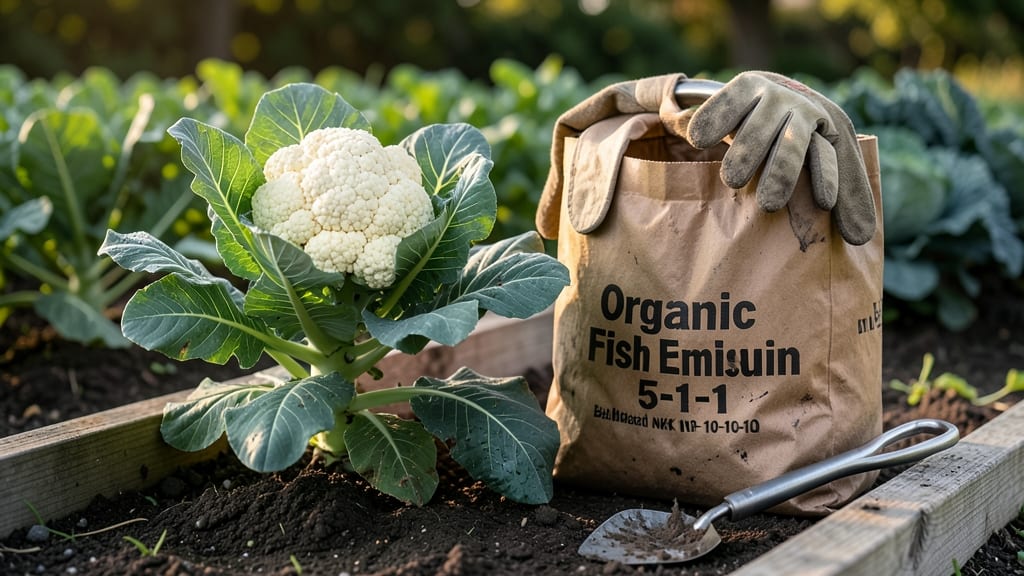
To grow tight, curd-free cauliflower heads 🥬, you need the right fertilizer blend—one that balances nitrogen for leafy growth with potassium to lock in those perfect heads.
Struggling to grow cauliflower with loose, discolored heads? The right fertilizer balance—especially nitrogen and potassium—can transform your harvest from disappointing to showstopping.
Most gardeners overlook the 3-1-4 NPK ratio that cauliflower thrives on, and without it, you risk weak plants or bitter curds. Whether you prefer organic compost or a synthetic blend, the key is timing and precision.
In this guide, I’ll break down the best fertilizers for each growth stage, how to avoid over-feeding, and when to switch from nitrogen-heavy feeds to potassium-rich boosts for those firm, tight heads you’ve been dreaming of.

Nitrogen-potassium ratio explained: why cauliflower needs 3-1-4 fertilizer
If you've ever grown cauliflower only to end up with loose, discolored heads, the issue likely lies in your fertilizer ratio. Cauliflower thrives on a 3-1-4 NPK ratio, where nitrogen (N) fuels leafy growth, phosphorus (P) supports root development, and potassium (K) ensures tight, firm curds.
This balance prevents common problems like head splitting or yellowing leaves.
The 3-1-4 ratio isn't arbitrary—it reflects cauliflower's unique needs. Too much nitrogen leads to excessive foliage at the expense of head formation, while potassium deficiency causes curds to loosen or develop brown spots. Understanding this ratio helps you adjust fertilizers at each growth stage for optimal yields.
Before diving into fertilizers, test your soil pH (ideal: 6.0–6.8). Cauliflower struggles in acidic or alkaline soils, where nutrient uptake suffers. A simple soil test kit ($15–$25) reveals deficiencies early, saving you from over-fertilizing.
During the seedling stage, focus on a 2-1-2 NPK ratio to build strong roots without overwhelming the plant. Synthetic options like 10-10-10 can work, but dilute to half-strength to avoid leaf burn. Organic growers often use compost tea or worm castings, which provide slow-release nutrients.
As cauliflower enters the vegetative stage (4–6 weeks after transplanting), switch to a 3-1-4 ratio. Here, nitrogen supports leaf expansion, while potassium strengthens stems to prevent lodging. Over-fertilizing with nitrogen now leads to leafy heads instead of compact curds—a common mistake among beginners.
In the heading stage, reduce nitrogen entirely and increase potassium to 0-0-50 or higher. This prevents curd loosening and brown spots. Organic gardeners can use wood ash (sparingly) or kelp meal for potassium. Avoid synthetic potassium chloride, which can raise soil pH over time.
Adjusting ratios based on soil test results is key. For example, if your soil tests high in phosphorus, skip P-heavy fertilizers like bone meal. Instead, opt for potassium sulfate or greensand to correct imbalances. Always water fertilizers deeply to prevent root burn.
Signs of nutrient imbalance include yellowing leaves (nitrogen deficiency), weak stalks (potassium deficiency), or purple stems (phosphorus deficiency). Address these promptly by adjusting your fertilizer blend. For instance, a fish emulsion (high in nitrogen) can revive yellowing foliage, while a banana peel tea (rich in potassium) tightens loose curds.
For organic vs. synthetic choices, consider your garden's needs. Synthetic fertilizers like Miracle-Gro Shake 'n Feed (12-12-17) offer quick results but require frequent applications. Organic options like composted manure or alfalfa meal improve soil health long-term but take longer to show effects. I recommend blending both for balanced nutrition.
Timing matters too. Apply pre-plant fertilizer 2–3 weeks before transplanting, then side-dress with a low-nitrogen blend 4–6 weeks later. Avoid fertilizing within
Top 5 fertilizers for cauliflower (organic vs. synthetic comparison)
Choosing the right fertilizer for cauliflower can make the difference between tight, compact heads and loose, discolored curds. Cauliflower thrives on a balanced NPK ratio with more potassium than nitrogen to prevent head loosening. Whether you prefer organic fertilizers or synthetic blends, each option has unique benefits—and potential pitfalls.
I’ve tested five top-performing fertilizers in my garden, comparing their effectiveness, ease of use, and cost. From fish emulsion to compost tea, here’s what works best for cauliflower cultivation, along with how to avoid over-fertilizing—a common mistake that leads to bitter, underdeveloped heads.
🥬 Organic vs. Synthetic Fertilizer Comparison
Organic Options
- 🌱 Fish Emulsion: Rich in nitrogen but requires dilution to avoid burning. Best for leafy growth.
- 🍂 Compost Tea: Balanced nutrients, improves soil structure. Must be brewed fresh for potency.
- 🐄 Aged Manure: Slow-release, great for long-term soil health. High phosphorus for root development.
✅ Pros:
- Improves soil microbiome
- Low risk of over-fertilization
- Sustainable and eco-friendly
❌ Cons:
- Slower results than synthetic
- Can attract pests if overused
- Higher upfront cost for bulk
Synthetic Options
- 🧪 10-10-10 NPK: Balanced formula for all growth stages. Easy to measure and apply.
- 💧 Liquid Bloom: High potassium for head formation. Fast-acting but requires frequent reapplication.
- 🪴 Slow-Release Granules: Convenient for timed feeding. Risk of salt buildup if overused.
✅ Pros:
- Precise nutrient control
- Faster visible results
- Affordable for large gardens
❌ Cons:
- Can harm soil microbiome
- Risk of over-fertilization
- Environmental runoff concerns
💡 Tip: For cauliflower, avoid fertilizers with high nitrogen (e.g., 12-6-6) after heading begins—it causes loose curds!
My top pick for organic fertilization is compost tea brewed from well-aged compost. It provides a balanced nutrient profile while improving soil structure, which is critical for cauliflower roots. Apply it every 2-3 weeks during the growing season, but always dilute to half-strength to prevent salt buildup.
For synthetic options, a 10-10-10 NPK blend is my go-to because it matches cauliflower’s ideal 3-1-4 ratio when used carefully. Start with 1 tablespoon per plant at transplanting, then side-dress with ½ tablespoon when heads begin forming.
Overdoing it leads to bitter, loose curds—a mistake I made my first year!
If you’re growing cauliflower in containers, fish emulsion is a game-changer. Its high nitrogen content promotes lush foliage, but I dilute it to 1:10 ratio to avoid root burn.
For pot-bound plants, reapply every 4 weeks until harvest. Just remember: less is more when it comes to nitrogen-heavy fertilizers.
For cost-effectiveness, aged manure (like cow or chicken) is unbeatable. Spread 2-3 inches of composted manure in the planting bed before transplanting, then top-dress with 1 inch of compost when heads form. This method costs pennies per pound and keeps soil fertile for years.
No matter which fertilizer you choose, soil testing is key. Aim for a pH of 6.0-6.8—cauliflower won’t thrive outside this range. If your soil is too acidic, mix in lime before planting. And always water deeply after fertilizing to help nutrients penetrate the root zone.