
Watering
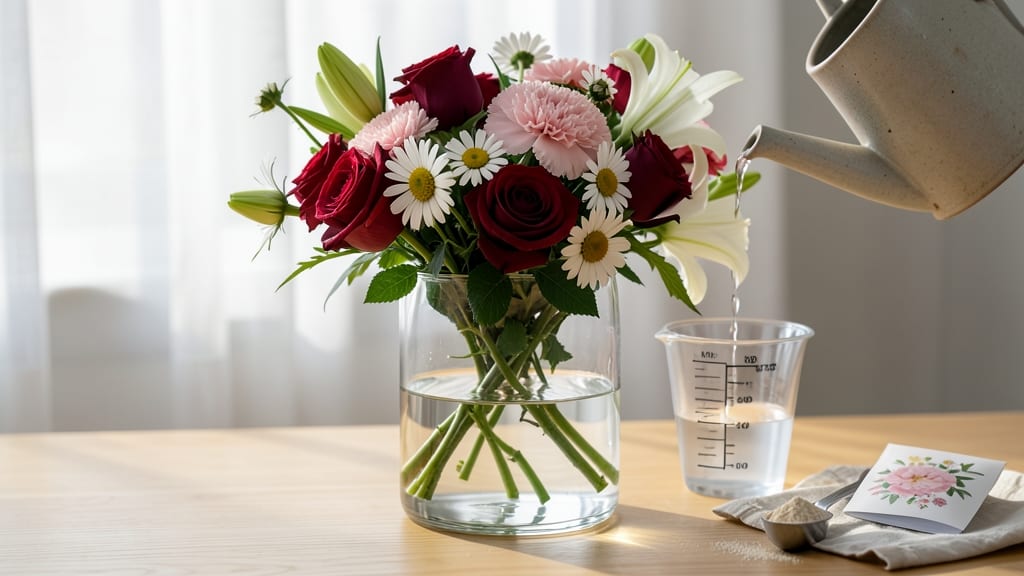
Flowers in a vase need 1 to 2 inches of fresh water changed every 2 to 3 days—but that’s just the start of the story.
Struggling to keep your cut flowers fresh longer than a weekend? The secret isn’t just adding water—it’s how much and when you refresh it. Discover the science-backed vase care routine that extends bloom life by days (or even weeks) without guesswork.
Most people overfill vases, drowning delicate stems, or forget to trim stems at an angle, trapping air bubbles that block water uptake. Even the best bouquets can wilt in days if you skip the daily refresh trick—like adding a splash of bleach or vinegar to keep water clean.
Below, I break down the exact water amounts by flower type, the best times to refresh your vase, and hidden tricks to make your blooms last twice as long. Ready to transform your vase life?


The perfect water amount for flowers in a vase (by flower type)
Cut flowers deserve more than just a splash of water to stay fresh. The right water amount depends on the flower type and stem thickness, not just the vase size.
Delicate blooms like orchids or peonies need gentle hydration, while hardy stems like roses or sunflowers can handle more. Let’s break down the science so you never overfill or underfill again.
Most vases should hold 1-2 inches of water above the stems to prevent air bubbles from blocking uptake. For a 12-inch vase, aim for 250-300ml of water—enough to cover stems but not drown them.
The key is balance: too little water starves the stems, while too much promotes bacterial growth. Let’s dive into the specifics for your favorite flowers.
| Flower Type | Vase Size (inches) | Water Amount (ml) | Notes |
|---|---|---|---|
| Delicate Blooms (Roses, Tulips, Orchids) | 6-8 | 150-200ml | Use lukewarm water; change every 2 days |
| Medium Stems (Carnations, Daisies, Lilies) | 8-10 | 200-250ml | Add 1 tsp sugar to extend life |
| Hardy Stems (Sunflowers, Alstroemeria, Chrysanthemums) | 10-12 | 300-400ml | Trim stems every 2 days for fresh uptake |
| Tropical Blooms (Anthuriums, Gardenias, Hydrangeas) | 8-10 | 200-250ml | Use distilled water to prevent spots |
For roses and tulips, the most popular cut flowers, start with 150ml of water in a 6-inch vase. These blooms have delicate stems that absorb water quickly, so refreshing the vase every 48 hours is crucial.
A pro tip: Add a drop of bleach (1/8 tsp) to the water to kill bacteria lurking in the stems.
If you’re arranging sunflowers or alstroemeria, opt for a 10-12 inch vase filled with 350-400ml of water. These hardy stems can handle more volume, but don’t overdo it—overfilling can cause the stems to rot.
These flowers also benefit from fresh cuts every 2 days to keep water flowing freely.
For tropical blooms like gardenias or hydrangeas, distilled water is your best friend. These flowers are sensitive to chlorine and minerals in tap water, which can leave unsightly spots. Use a 8-inch vase with 200ml of water and change it every 3 days.
Place the vase in a humid spot, like a bathroom or near a humidifier, to mimic their natural environment.
Avoid the common mistake of filling the vase to the brim. Overfilling can cause stems to drown, while underfilling leaves stems thirsty. The ideal water level is 1-2 inches above the stems, ensuring they stay hydrated without risking bacterial buildup.
For mixed bouquets, adjust the water level based on the tallest stems in the arrangement.
Proper water volume isn’t just about the amount—it’s also about water temperature. Use lukewarm water (around 70°F) to encourage faster uptake. Cold water can shock the stems, while hot water may damage delicate petals.
Always trim stems at a 45-degree angle before placing them in the vase to maximize water absorption.
Experiment with different vase shapes to see what works best for your flowers. Narrow vases are great for tall stems like snapdragons, while wide vases work well for spread-out blooms like peonies.
The vase material matters too: Glass keeps water cooler, while ceramic retains warmth better. Choose based on your flower’s needs and your home’s environment.
Remember, the golden rule is to observe and adjust. If petals start wilting or stems look droopy, it’s time to refresh the water and retrim the stems.
With the right water amount and care routine, your cut flowers can last 2-3 weeks—not just a few days. Happy arranging!
Daily vase refresh routine: when and how to change water for maximum freshness
I’ve learned the hard way that cutting flowers deserve more than a quick splash of water to stay fresh. The key to long-lasting blooms lies in a consistent refresh routine—one that balances timing, water quality, and cleanliness.
Most people change vase water every few days, but without the right technique, you’re fighting an uphill battle against bacterial buildup and stem clogging. Let’s break down the science-backed routine that keeps my bouquets vibrant for weeks.
First, the best time to refresh your vase is morning, between 8 AM and 10 AM. Why? Cooler temperatures reduce bacterial growth overnight, and indirect sunlight in the morning helps stems absorb water efficiently.
Evening refreshes are riskier because warm night air can accelerate spoilage. If you must refresh at night, use room-temperature water and avoid placing the vase near heat sources like radiators.
Now, let’s talk water temperature. Always use lukewarm water—never cold or hot. Cold water shocks the stems, while hot water can cook them. Fill your vase with enough water to cover stems by 1-2 inches, but avoid overfilling, which can drown delicate blooms.
Pro tip: Add 1 teaspoon of white vinegar or a commercial floral preservative to the water to slow bacterial growth and extend freshness by up to 3 days.
Here’s where most people go wrong: skipping the cleaning step. Before adding fresh water, rinse the vase thoroughly with hot, soapy water to remove old bacteria and debris. A 10-minute soak in vinegar (1:1 ratio) is even better for deep cleaning.
If your vase has a narrow neck, use a bottle brush to scrub stubborn residue. This step alone can double your flowers’ lifespan by preventing clogged stems.
Don’t overlook the environment where your vase sits.
Place flowers in a cool, draft-free spot away from direct sunlight, heating vents, or fruit bowls (ethylene gas from fruit speeds up wilting). Mist the blooms lightly with water once a day to maintain humidity, especially for delicate varieties like orchids or tulips.
This simple trick can add 2-4 extra days to their freshness.
For long-stemmed flowers like roses or snapdragons, recut the stems every 2 days to reactivate water uptake. Short-stemmed blooms, like carnations or baby’s breath, need less frequent trimming but still benefit from the same water refresh routine.
The goal is to mimic the plant’s natural hydration cycle—just like in the garden, consistency is key.
With this routine, my peony bouquets stay fresh for 14 days, and even wildflower arrangements last nearly twice as long as store-bought ones. The secret? Treating your cut flowers like the living plants they are—not just decorative accents.
Now grab your scissors and give your vase the refresh it deserves! 🌸