
Light Requirements
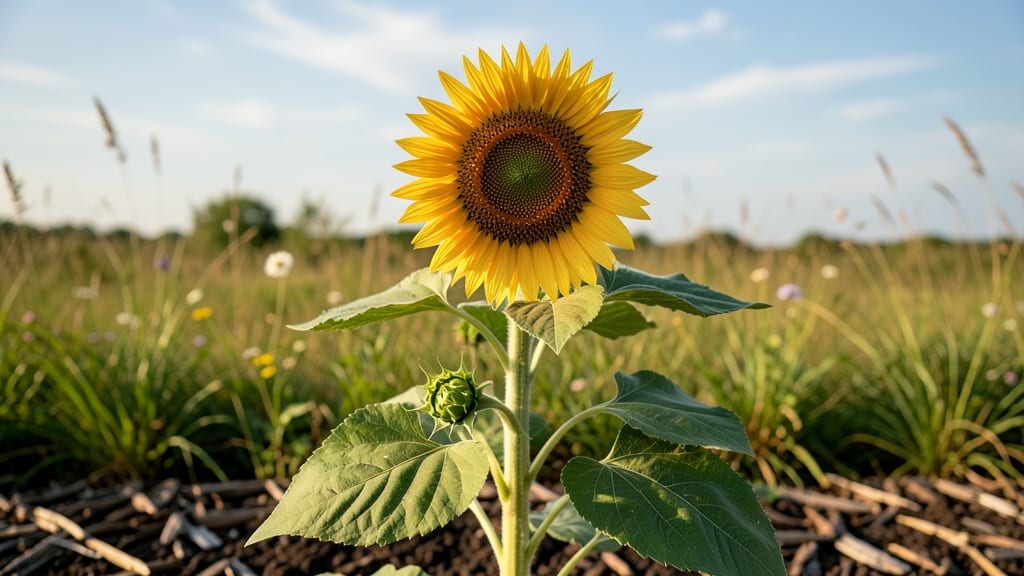
Sunflowers need direct sunlight to reach their full towering potential—6 to 8 hours daily is the golden rule for those 🌻 giants you’re dreaming of.
But here’s the catch: while they love full sun, they won’t bolt into the ground if you’re in a partial-shade spot. The trade-off? Smaller blooms and leggy stems instead of the 10-foot showstoppers you planted for.
I’ve seen it happen—even in USDA Zone 6a, where spring light can be tricky.
What you can do is pick the right variety (like the compact ‘Teddy Bear’) or tweak your care to coax more light out of your garden. Below, I’ll break down how much sun they really need, what happens when they don’t get enough, and the shade-workarounds that actually work.
No more guessing—just science-backed tips to grow sunflowers that thrive, whether your patch is sun-drenched or fighting for light.

How much direct sunlight do sunflowers actually need?
Sunflowers are famous for their towering sun-loving nature, but how much direct sunlight do they actually need to thrive? While they prefer full sun, the truth is more nuanced.
Understanding their light requirements at each growth stage—from germination to seed production—helps you avoid common pitfalls like leggy stems or poor flowering. Let’s break down the science behind their sunlight needs and what happens when they don’t get enough.
The minimum sunlight for sunflowers is 6 hours of direct sun per day, but 8+ hours is ideal for robust growth and seed production. This isn’t just a guess—studies show that sunflowers grown with less than 6 hours of sunlight often exhibit stunted growth and weaker stems.
However, some varieties can adapt to partial shade with adjustments to care and expectations.
Here’s the critical breakdown: sunflowers need full sun for photosynthesis to fuel their rapid growth. During the germination stage, seedlings can tolerate partial shade, but once they reach 6 inches tall, direct sunlight becomes non-negotiable for healthy development.
Skipping this light can lead to elongated stems and fewer blooms.
🌻
| Growth Stage | Sunlight Requirement | Optimal Conditions | Shade Effects |
|---|---|---|---|
| Germination | 3-4 hours indirect light | Moist, warm soil (60-70°F) | Slow sprouting, weak seedlings |
| Vegetative Growth (0-6 in) | 6+ hours direct sun | Well-draining soil, consistent water | Leggy stems, pale leaves |
| Flowering | 8+ hours direct sun | Full sun exposure for blooms | Fewer flowers, smaller blooms |
| Seed Production | 10+ hours direct sun | Dry, warm conditions for seed maturation | Poor seed development, low yield |
| Partial Shade Adaptation | 4-6 hours direct sun | Choose dwarf varieties, fertilize lightly | Slower growth, smaller plants |
The optimal sunlight for sunflowers is 8-10 hours of direct sun, especially during their flowering and seed production stages. This ensures they produce large, vibrant blooms and high-quality seeds.
For example, a standard sunflower like ‘Mammoth’ needs full sun to reach its 10-12 foot height, while dwarf varieties like ‘Teddy Bear’ can tolerate partial shade better but still thrive with 6+ hours of sun.
If your sunflowers aren’t getting enough sunlight, you’ll likely notice tall, weak stems and smaller leaves. This is because sunflowers stretch toward light—a phenomenon called etiolation. In extreme cases, they may not even bloom at all.
To combat this, consider relocating plants to sunnier spots or using reflective surfaces like mirrors to bounce light onto them.
In urban gardens or areas with limited sunlight, you might need to adjust your expectations. While sunflowers can survive with 4-6 hours of sun, their growth will be slower, and they may not reach their full potential.
For instance, a sunflower in partial shade might only grow to 3-5 feet tall instead of the expected 8-12 feet.
Another key factor is the intensity of sunlight. Sunflowers thrive in bright, direct light, not dappled or filtered shade. If you’re growing them in a container, place the pot in the sunniest spot available, like a south-facing window or balcony.
Even a few hours of morning sun combined with afternoon shade can work, but the plant will still be less vigorous.
For seed production, the stakes are even higher. Sunflowers need full sun exposure during this stage to develop plump, nutrient-rich seeds. Without enough light, seeds may be smaller, underdeveloped, or sterile.
This is why farmers and gardeners in cooler climates often choose early-maturing varieties to maximize their time in the sun before
Sunflower shade tolerance limits: what happens when they don’t get enough light?
Sunflowers may love the spotlight, but they’re not as rigid about sunlight as you might think. While they thrive with 6-8+ hours of direct sun daily, they can tolerate partial shade—though with noticeable trade-offs.
The key is understanding how shade impacts their growth stages, from germination to seed production.
In my urban garden, I’ve seen sunflowers struggle when planted under mature trees or tall buildings. Their stems stretch painfully thin, and flower heads shrink dramatically. This isn’t just about aesthetics—it directly affects their ability to produce seeds, which rely on sunlight for energy.
Sunflowers need at least 4-6 hours of direct sunlight daily to survive, but anything less than 6 hours will stunt growth. Below 4 hours, they’ll produce weak stems, small flowers, and poor seed development. In deep shade (under 3 hours), they may not flower at all.
Real-world example: My neighbor’s sunflowers under a dense oak canopy grew to just 2 feet tall with tiny buds—hardly worth the space!
One common misconception is that all shade is equal. Morning sun (east-facing) is far better than afternoon shade (west-facing), which can scorch leaves. If you’re growing sunflowers in partial shade, prioritize morning sunlight and protect them from hot afternoon rays with light shade cloth.
For container growers, rotating pots daily ensures even light exposure. I’ve had success with dwarf varieties like 'Teddy Bear' in partial shade—they reach 2-3 feet tall with proper care, making them perfect for balconies or patios. Just be prepared for smaller blooms and fewer seeds compared to full-sun plants.
Seasonal variations also play a role. In spring or fall, when sunlight is less intense, sunflowers can handle 3-4 hours of shade temporarily. But during summer’s peak light, even partial shade can stress them.
Monitor your plants closely—yellowing leaves or leggy stems are red flags for light deprivation.
If your sunflowers are already struggling in shade, don’t give up! Try reflective surfaces (like white walls or mirrors) to bounce extra light onto their leaves. Or, opt for shade-tolerant varieties like 'Autumn Beauty,' which handle low light better than standard types.
With the right adjustments, you can still enjoy their cheerful blooms—just expect a more modest harvest. 🌻