
Flowers
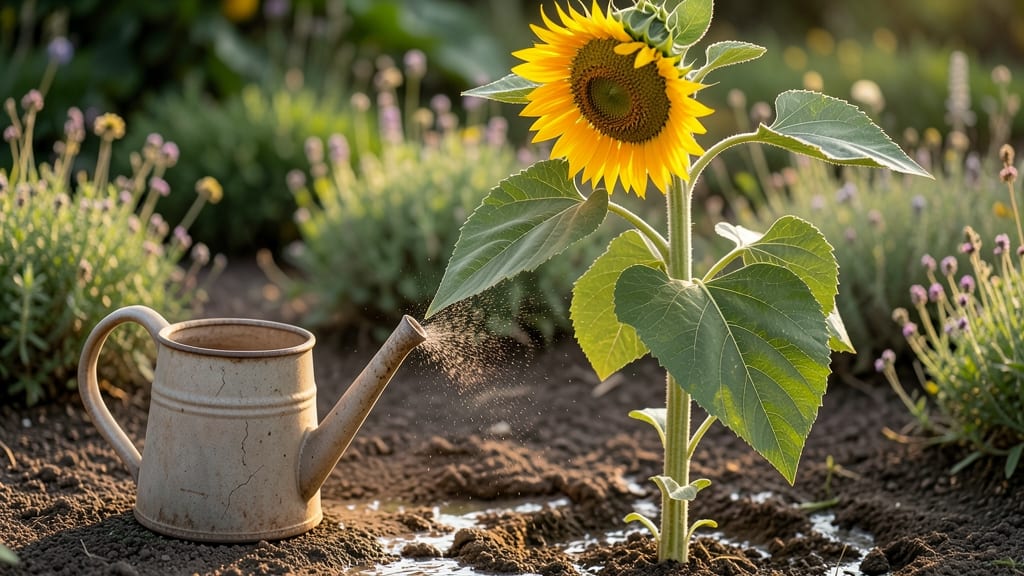
To grow healthy sunflowers 🌻, you should how often should sunflowers be watered deeply every 3 to 5 days—but timing and technique make all the difference.
Skip this schedule, and you’ll end up with sunflowers that struggle to stand tall or bloom at all. Too much water drowns roots, while too little stunts growth, leaving you with a sad, drooping plant instead of a towering masterpiece.
Here’s the exact routine to keep your sunflowers thriving: how often to water based on their growth stage, how deep to soak the soil, and when to adjust for heatwaves or heavy rain.
By the end, you’ll know the one trick that prevents weak stems and ensures your sunflowers reach their full, sun-soaked potential.
Sunflower watering schedule by growth stage: deep soak secrets for strong stalks
Sunflowers thrive on consistent moisture, but their watering needs change dramatically from seedling to towering giant. Too little water stunts growth, while too much causes root rot and weak stems that snap under their own weight.
The key? Deep, infrequent watering that encourages strong root development. Let’s break down the perfect schedule for each growth stage—because your sunflowers will thank you with 10-foot stalks and vibrant blooms.
Newly planted seeds and seedlings are the most delicate stage. Their shallow roots can’t reach deep water, so keep the soil evenly moist (not soggy) by watering every 2-3 days. Use a spray bottle or gentle stream to avoid displacing seeds.
Once sprouts appear, increase to 1 inch of water per week, delivered in deep soaks rather than frequent light sprinkles. This trains roots to grow downward for stability.
| Growth Stage | Watering Frequency | Depth | Soil Test | Climate Adjustments |
|---|---|---|---|---|
| Seed Germination | Every 2-3 days | Top 1 inch | Finger test: damp 1" | Reduce if rainy |
| Seedling (0-4 weeks) | Every 3-4 days | 2-3 inches deep | Top 2" should be moist | Increase in heat |
| Vegetative (4-8 weeks) | Every 5-7 days | 4-6 inches deep | Top 3" should be dry | Reduce in rain |
| Flowering (8-12 weeks) | Every 7-10 days | 6+ inches deep | Top 4" should be dry | Increase in drought |
| Mature (Post-Bloom) | Every 10-14 days | Deep roots (12+") | Top 6" should be dry | Minimal in rain |
During the vegetative stage (4-8 weeks), when stalks shoot up rapidly, switch to deep watering every 5-7 days. Insert your finger 2-3 inches into the soil—if it’s dry, water until moisture reaches 6 inches deep.
This mimics natural rainfall and prevents shallow root systems. Avoid wetting foliage to reduce fungal diseases like powdery mildew, which thrives in damp leaves.
When buds form (8-12 weeks), your sunflowers are entering the critical flowering stage. Reduce frequency to every 7-10 days but increase depth to 6+ inches. Water at the base only—never overhead—and always in the early morning to let leaves dry before nightfall.
This ensures bold, vibrant blooms instead of droopy, pale flowers. If your region experiences drought conditions, extend watering to every 5-7 days during this phase.
Mature sunflowers (post-bloom) are surprisingly drought-tolerant. Once fully grown, cut back to every 10-14 days, focusing on deep soaks that reach their extensive root systems. Test soil moisture by digging down 6 inches—if it’s dry, water thoroughly.
Overwatering at this stage wastes resources and can lead to stem rot, especially in heavy clay soils. Mulch with straw or wood chips to retain moisture and regulate soil temperature.
Container-grown sunflowers dry out 3x faster than in-ground plants. Water them every 2-3 days in summer, checking soil moisture daily. Use pots with drainage holes and elevate them to prevent waterlogging. If you notice wilting leaves by midday, it’s a sign the roots aren’t getting enough water—adjust your schedule immediately.
In hot climates, consider adding a self-watering reservoir to maintain consistent moisture without overwatering.
One of the biggest mistakes gardeners make is watering on a rigid schedule
How to tell if your sunflowers are thirsty (or drowned): 5 key signs to watch
Sunflowers send clear signals when their water needs aren’t met—but many gardeners miss them until it’s too late. Yellowing leaves or drooping stems often appear only after damage is done. The key is learning to read your plants before these warning signs escalate.
I’ve grown sunflowers for years, and I’ve seen firsthand how quickly a simple soil moisture check can prevent irreversible harm.
Start by checking the soil 1-2 inches deep with your finger. If it feels dry like powdered sugar, your sunflower is thirsty. But if it’s soggy or smells musty, you’ve overdone it. Sunflowers hate waterlogged roots, which can cause stem rot and collapse.
The good news? These 5 key signs will help you diagnose the problem fast and adjust your watering routine before your towering beauties suffer.
- 1 Seedlings: Water daily for 10-15 minutes to keep soil moist but not soggy. Use a spray bottle for gentle hydration.
- 2 Vegetative Stage: Deep water 2-3 times per week (1-2 inches of water per session). Focus on the root zone, not the leaves.
- 3 Flowering Stage: Reduce to 1-2 times per week unless in extreme heat. Morning watering prevents fungal diseases like powdery mildew.
- 4 Mature Plants: Weekly deep soak (1-2 inches). Once established, sunflowers are drought-tolerant but still need consistent moisture.
- 5 Containers: Water every 2-3 days—potted sunflowers dry out 3x faster than in-ground plants. Check soil daily in summer.
Now that you know the ideal watering schedule, let’s tackle the 5 red flags that reveal whether your sunflowers are thirsty or drowned. First, watch for wilting leaves that don’t perk up after watering—this is a classic sign of underwatering.
But if the wilting happens after a heavy rain or overwatering, your plant may be struggling with root rot.
Next, inspect the stem base for softness or discoloration. A healthy sunflower stem should feel firm and green. If it’s mushy or brown, overwatering has likely caused fungal infections.
I’ve seen this happen when gardeners assume "more water is better" during humid summers. Yellowing leaves that start at the bottom are another clue—often a sign of root stress from inconsistent watering.
Don’t overlook the flower buds either. If they’re drooping or failing to open, your sunflower may be underwatered during its critical growth phase. On the flip side, mold or white powder on leaves? That’s a fungal warning from overwatering.
The solution? Adjust your routine immediately—water deeply but less frequently and ensure the soil has proper drainage. A quick fix is to mulch around the base to retain moisture without suffocating the roots.
Finally, perform the "finger test" regularly. Stick your finger 1-2 inches into the soil—if it’s bone-dry, it’s time to water. If it’s damp, wait another day. This simple habit has saved my sunflowers from both drought and rot more times than I can count.
Remember, sunflowers are resilient, but they won’t forgive chronic neglect—whether it’s too much or too little water.