
Watering
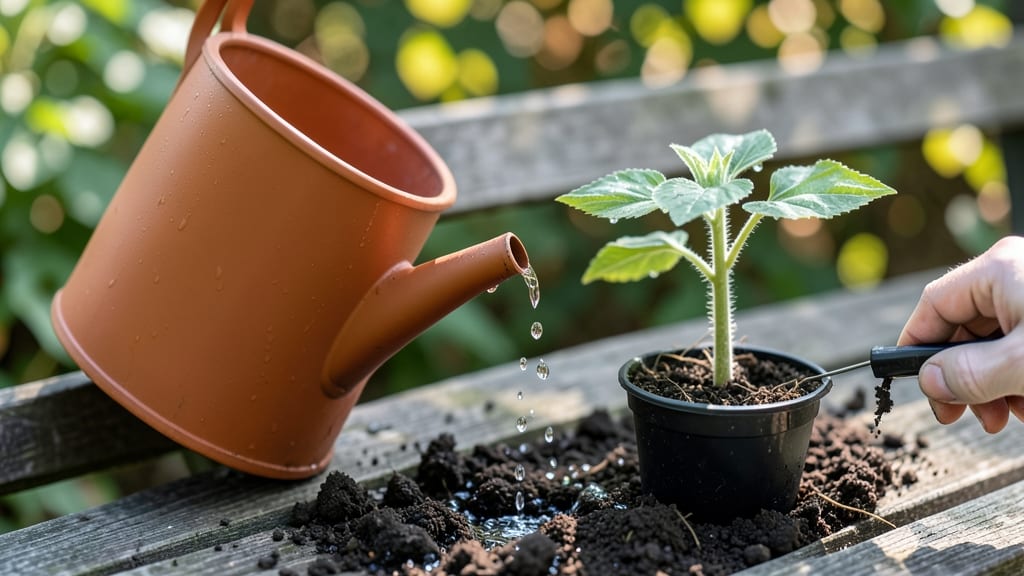
Watering sunflower seedlings every 2-3 days keeps the soil consistently moist but never soggy—critical for fast germination and sturdy stems.
Struggling to coax your sunflower seedlings into strong, healthy growth? Overwatering or underwatering can stall germination and weaken stems—here’s the exact moisture schedule you need for fast, reliable sprouting.
Most gardeners assume sunflowers are drought-tolerant, but seedlings need precise moisture control to avoid damping-off disease or leggy growth. The key is checking soil moisture daily and adjusting for rain or heat.
In this guide, I’ll break down the ideal watering frequency by growth stage, signs of over/under-watering, and the best methods to keep your 🌻 seedlings thriving without wasting water.
Sunflower seedling watering schedule by growth stage: germination to first leaves
Sunflower seedlings demand precise watering to transition from fragile sprouts to sturdy plants. The key is maintaining consistent moisture without drowning the seeds—especially during the critical germination phase.
Too much water causes damping-off, while too little stalls growth. My schedule balances both, using simple visual cues like soil weight and finger tests to guide you.
Before seeds even sprout, the soil must stay uniformly moist but not soggy. Think of it like a damp sponge: if you squeeze it, a few drops should escape, but it shouldn’t drip.
This pre-germination phase (days 1-7) is where most watering mistakes happen. I’ve learned that overwatering here is far riskier than underwatering—seedlings can recover from dryness but rarely from rot.
| Growth Stage | Watering Frequency | Soil Moisture Target | Visual Cue | Key Risks |
|---|---|---|---|---|
| Pre-Germination (Days 1-7) | Every 1-2 days (light misting) | Damp sponge consistency | Finger test: Top ½" moist | Damping-off fungus |
| Germination (Days 7-14) | Every 2 days (deep water) | Wet but not waterlogged | Weight check: Heavy pot | Stunted sprouts |
| First Leaves (Days 14-21) | Every 3-4 days (soak) | Top 1" dry, 2" moist | Leaf turgor: Plump leaves | Yellowing leaves |
During germination (days 7-14), seedlings emerge with their first true leaves, and watering shifts to deep but infrequent soaks. I use a spray bottle for the initial sprouts, then switch to a watering can with a gentle stream to avoid dislodging delicate stems.
The goal is to moisten the entire root zone—about 2-3 inches deep—without creating surface puddles. A simple trick I’ve found helpful is to lift the seedling tray: if it feels heavy but not dripping, you’ve hit the right moisture level.
Once your seedlings develop their first pair of true leaves (days 14-21), they’re ready for a more structured routine. Now, water every 3-4 days with enough volume to saturate the soil to a depth of 2-3 inches.
I recommend using a moisture meter or the finger test: stick your index finger 1 inch deep—if it feels dry, it’s time to water. If it’s damp, wait another day. This stage is where many gardeners overcorrect after early struggles, so consistency is more important than frequency.
Watch for visual stress signals like wilting leaves or yellowing at the base—these often mean your watering routine needs adjustment. For example, if leaves curl upward in the heat, it’s a sign of underwatering, while mushy stems indicate overwatering.
My biggest lesson? Sunflowers are surprisingly resilient once established, but the seedling phase demands your full attention. A missed watering here can set a plant back for weeks.
To prevent damping-off disease, always water at soil level rather than overhead. I’ve had the most success using a drip irrigation line or a watering can with a narrow spout to direct moisture precisely where the roots are forming.
Avoid getting foliage wet, as this creates the perfect conditions for fungal spores to thrive. If you notice blackened stems at the soil line, act fast by improving air circulation and reducing water volume.
Temperature plays a hidden role in your watering schedule. In cool weather (below 60°F), soil stays moist longer, so you can stretch intervals to every 4-5 days.
But when temperatures climb above 75°F, evaporation accelerates—check soil moisture daily and water in the early morning to let excess moisture evaporate before nightfall. I’ve seen seedlings collapse from heat stress when gardeners don’t adjust their routine for seasonal shifts.
One common mistake I see is assuming all sunflower varieties have identical water needs. Dwarf varieties like 'Teddy Bear' need slightly more frequent watering than giants like 'Mammoth', which have deeper root systems.
Always check the seed packet for specific guidance, but use the growth stage schedule above as your baseline. For container-grown seedlings, reduce watering by 20%—pots dry out faster and can lead to root burn if overwatered.
As your seedlings near the transplant stage (4-6 inches tall), you’ll gradually reduce watering frequency to every 5-7 days, letting them develop stronger root systems.
But during this transition, keep an eye on the soil surface: a thin layer of mulch (like straw) helps retain moisture while preventing crusting. My final tip? Invest in a self-watering
Common watering mistakes that kill sunflower seedlings (and how to fix them)
Sunflower seedlings are surprisingly delicate during their first few weeks. I’ve seen overzealous watering drown tender roots while inconsistent moisture leaves them stunted. The key is consistency without sogginess—here’s how to spot and fix the most common pitfalls before they become fatal.
First, let’s address the biggest mistake: assuming "more water = faster growth." Seedlings actually suffocate in wet soil, leading to blackened stems and fungal infections. This happens when trays or containers don’t drain properly or when you water without checking soil moisture first.
Always use containers with drainage holes and lift them to check weight—dry soil feels light, while soggy soil feels heavy.
⚠️ callout warning
Germination stage (0-7 days): Keep soil evenly moist—water daily with 1 tbsp per seedling. Use a spray bottle for gentle misting to avoid displacing seeds.
Early leaves (7-21 days): Water every 2-3 days when top ½ inch feels dry. Let excess water drain completely to prevent root rot.
True leaves (3+ weeks): Reduce to every 3-5 days—deep watering encourages strong root development.
Another deadly habit is watering on a schedule rather than by need. Weather changes everything: hot days dry soil faster, while cool mornings slow evaporation. I recommend the finger test—stick your index finger 1 inch deep into the soil.
If it feels dry, water; if damp, wait. Yellowing leaves or wilted stems are late warnings of stress.
Poor drainage is the silent killer of seedlings. If your containers lack drainage holes, add perlite or vermiculite to improve airflow. Even worse? Compacted soil from heavy watering cuts off oxygen to roots.
Fluff the soil gently with a chopstick if it feels hard as a brick—this restores porosity and prevents suffocation.
Inconsistent moisture causes stunted growth and weak stems. Sunflowers need steady hydration, not feast-or-famine cycles. Use self-watering trays or mulch with straw or coconut coir to lock in moisture. Avoid overhead watering, which can spread fungal spores and create uneven dampness.
Finally, watch for signs of distress like crispy leaf edges (underwatering) or mushy stems (overwatering). Adjust immediately: for underwatering, water deeply and move seedlings to shade for 24 hours to reduce stress.
For overwatering, stop watering and repot in fresh, dry soil if roots smell foul. With these fixes, your seedlings will grow strong and sturdy—ready for transplanting in no time! 🌱