
Flowers
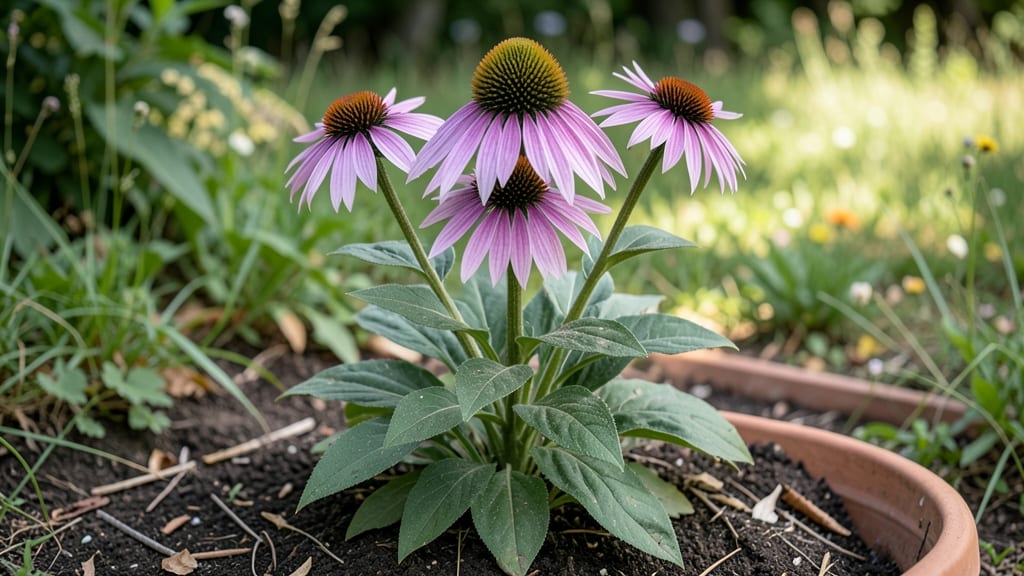
Coneflowers grow anywhere from 1 to 5 feet tall, depending on the variety, making them a versatile choice for nearly every garden design.
Wondering if coneflowers will tower over your garden or blend seamlessly into your landscape design? Their height varies dramatically by variety—some stay compact while others reach towering proportions—making the right choice critical for your garden’s flow.
For example, the classic Echinacea purpurea (🌼) typically reaches 3 to 5 feet, perfect for back borders or pollinator gardens, while dwarf varieties like 'White Swan' stay under 2 feet, ideal for containers or front-of-bed planting.
In this guide, I’ll break down the height differences between popular varieties, how to use them in your layout, and tips to control their growth—so you can create a balanced, stunning garden that thrives year after year.


Coneflower height by variety: tall vs. dwarf options for your garden space
Coneflowers (Echinacea spp.) are prized for their vibrant blooms and pollinator-friendly properties, but their mature height can vary dramatically between varieties. Choosing the right size is key—whether you're designing a pollinator meadow, a container garden, or a border planting.
Some varieties stay under 2 feet while others reach towering 5 feet, making them versatile for nearly any garden space.
If you're working with limited space, dwarf varieties like 'White Swan' or 'Sombrero Mexican Hat' stay compact and perfect for front-of-border planting. On the other hand, tall varieties like 'Magnus' or 'White Swan''s taller cousins can serve as backdrop plants or focal points in wildflower meadows.
Let's break down the height ranges so you can select the perfect fit for your design.
| Variety | Mature Height | Growth Habit | USDA Zones | Best For |
|---|---|---|---|---|
| 'White Swan' | 3-5 ft | Upright, clumping | 3-9 | Back borders, meadows |
| 'Magnus' | 4-5 ft | Upright, bushy | 4-9 | Cut flowers, tall borders |
| 'Green Envy' | 2-3 ft | Compact, bushy | 4-9 | Pollinator gardens, containers |
| 'Sombrero Mexican Hat' | 1-2 ft | Dwarf, spreading | 3-9 | Front borders, rock gardens |
| 'Purple Beauty' | 2-3 ft | Semi-dwarf, clumping | 3-9 | Mixed borders, containers |
| E. pallida (Wild type) | 2-4 ft | Slender, upright | 4-9 | Prairie gardens, wildflower mixes |
For small gardens or container planting, focus on the dwarf varieties like 'Sombrero Mexican Hat' or 'Green Envy'. These stay under 2 feet and work beautifully in window boxes or as edging plants.
Their compact size also makes them ideal for urban gardens where space is limited but pollinators need support.
If you're designing a wildflower meadow or a pollinator-friendly border, taller varieties like 'Magnus' or E. pallida will thrive. Their 4-5 foot height creates a dramatic backdrop, while their upright growth habit provides structure. Pair them with shorter perennials like black-eyed Susans or beebalm for a layered look.
Don't overlook Echinacea atrorubens, also called brown coneflower, which typically reaches 2-3 feet
How coneflower height affects garden design: placement tips for visual balance
Coneflowers aren’t just pretty—they’re architectural stars that can dramatically shape your garden’s visual rhythm. Their height range (from 1-foot dwarf varieties to 5-foot giants) lets you use them as focal points, textural layers, or softening edges in your design.
The key is matching their mature size to your space’s existing height zones.
Tall coneflowers like Echinacea purpurea ‘Magnus’ (4-5 feet) thrive as backdrop plants behind perennials or shrubs, while dwarf varieties (1-2 feet) work beautifully in front borders or container gardens. Even their spreading habit (18-36 inches wide) affects how you group them—too close, and they’ll compete for sunlight.
-
🌿 Backdrop Plants (4-5 ft)
Use behind shrubs or tall grasses (e.g., ‘Magnus’, ‘White Swan’) -
🌼 Mid-Height Accents (2-3 ft)
Pair with black-eyed Susans or bee balm in mixed borders -
🌱 Front-of-Bed Dwarfs (1-2 ft)
Edge pathways or containers with ‘Little Sky’ or ‘White Lustre’ -
🪴 Container Stars (2-3 ft)
Combine with salvia or coreopsis in large pots
For pollinator gardens, I recommend staggering heights: plant tall varieties at the back, medium heights in the middle, and dwarf coneflowers up front. This creates a natural tiered effect that guides the eye while giving bees and butterflies easy access to all blooms.
Pro tip: Add low-growing thyme or lavender at the base to fill gaps.
If your space is small or urban, opt for semi-dwarf coneflowers (2-3 feet) like ‘Green Envy’ or ‘Hot Papaya’. These still provide bold color but won’t overwhelm a patio or balcony. Group 3-5 plants together for maximum impact—odd-number clusters create visual harmony.
Don’t forget seasonal height shifts! Coneflowers grow taller each year, so account for their 3-year maturation when planning. In year one, they’ll stay 1-2 feet tall—perfect for filling gaps in spring plantings—but by year three, they’ll need their full 3-5 feet of space.
To tie it all together, use companion plants that complement their height. For tall coneflowers, try Russian sage (5 feet) or Joe Pye weed (4-6 feet) as neighbors. For dwarfs, catmint (1-2 feet) or sedum (1 foot) work beautifully. The goal? A layered, textured garden that feels intentional, not random.