
Flowers
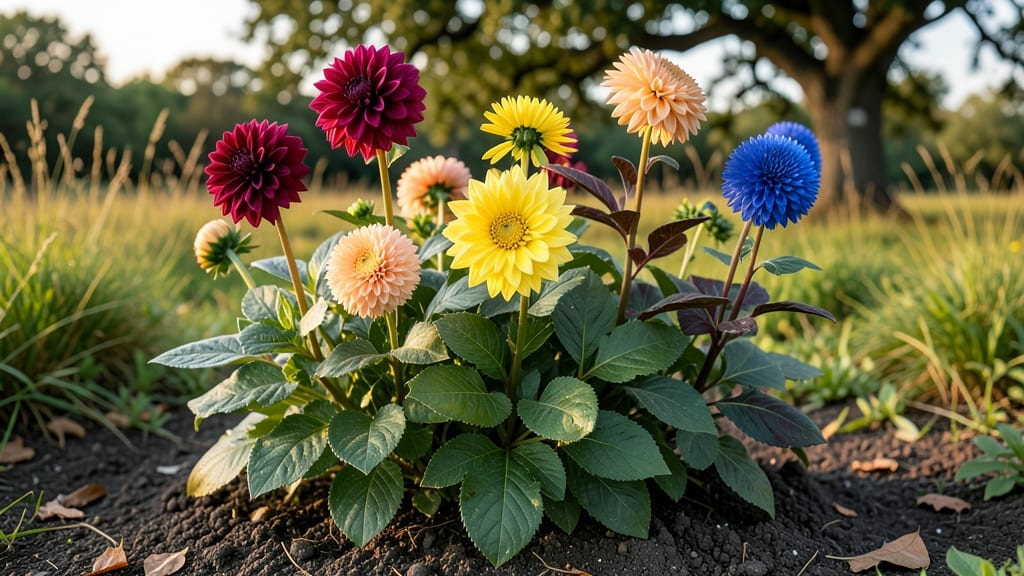
Dahlia flowers grow anywhere from 6 inches to a towering 7 feet tall, depending on the variety you choose and how you care for them 🌼.
If you’ve ever pictured a dramatic garden centerpiece only to realize your space is too small, don’t worry—there’s a dahlia height for every garden. Some stay compact enough for containers, while others reach heights that make them the stars of a mixed border.
The key to getting the most out of your dahlias lies in understanding their growth habits. Dinnerplate varieties can soar to 6 feet, while cactus and pompon types often stay between 2 and 4 feet.
Even dwarf varieties pack a punch with their vibrant blooms, just on a smaller scale.
In this guide, I’ll break down the height ranges of popular dahlia types, share tips for supporting tall varieties, and help you pick the perfect size for your garden layout—so you can enjoy blooms all season long.


Dahlia height chart: small to giant varieties explained
Dahlias are one of the most versatile garden flowers, offering heights ranging from just 6 inches to towering 7 feet. This incredible range means you can find the perfect variety for containers, borders, or dramatic back-of-the-garden statements.
The key to selecting the right dahlia lies in understanding how each height category grows and how to space them properly for optimal health and blooms.
Most dahlia varieties follow predictable growth patterns based on their classification: dwarf, semi-dwarf, standard, and giant. However, even within these categories, individual varieties can vary by 6-12 inches. For example, a dinnerplate dahlia might reach 5 feet while another stays at 3 feet.
Let’s break down the height ranges with real-world examples to help you plan your garden like a pro.
📊 Summary Table: Dahlia Height Ranges & Spacing Guide
Dwarf dahlias (6-18 inches tall) are perfect for containers, window boxes, or the front of borders. Varieties like 'Bishop' and 'Mignon' thrive in 1-gallon pots and require minimal spacing—just 12-18 inches apart.
Their compact size makes them ideal for urban gardens or patios where space is limited.
Semi-dwarf varieties (1-3 feet tall) strike a balance between manageability and impact. These are my go-to choices for mid-border plantings or mixed flower beds. 'Café au Lait' and 'Thomas Edison' produce vibrant blooms without overwhelming smaller gardens.
Space them 18-24 inches apart to allow airflow and prevent diseases like powdery mildew.
Standard dahlias (3-5 feet tall) are the workhorses of the garden, offering bold blooms and long stems for cutting. Place them in the back of borders or dedicated cut-flower gardens where their height can shine.
'Arabian Night' and 'Karma Choc' are crowd-pleasers that benefit from 24-36 inches of spacing to support their sturdy stems.
For dramatic impact, giant dahlias (5-7 feet tall) steal the show as focal points or trellis climbers. Varieties like 'Black Narcissus' and 'Galaxy' produce showstopping blooms up to 12 inches wide.
These need 36-48 inches of space and often require staking or cages to prevent flopping in wind or rain.
One common mistake gardeners make is underestimating how quickly dahlias grow. A 3-foot variety can reach maturity in just 8-10 weeks after planting tubers. To avoid crowding, always follow the spacing guidelines and prune lower leaves to improve airflow.
This simple step can extend your blooming season by 4-6 weeks.
Pro tip: If you're growing dahlias in containers or small spaces, choose dwarf or semi-dwarf varieties and use lightweight pots with drainage holes. I’ve had great success with 'Bishop' in 5-gallon fabric grow bags, which prevent root circling and make moving them easier if needed.
For tall varieties, consider grouping them by height in your garden plan. Place giant dahlias at the north end of borders to avoid shading shorter plants.
And don’t forget to mulch around the base with 2-3 inches of organic mulch to retain moisture and regulate soil temperature—critical for these sun-loving plants.
🌼 Whether you're a container gardener or have acres
How to choose dahlia heights for your garden design
Choosing the right dahlia height transforms your garden from ordinary to extraordinary. The variety you select determines not just how your dahlias look, but where you plant them, how you support them, and even which companion plants thrive nearby.
For example, a 3-foot pompon dahlia makes a perfect front-row border plant, while a 6-foot dinnerplate dahlia becomes a stunning backyard focal point.
Your garden's sunlight exposure also plays a crucial role. Tall dahlias need full sun (6+ hours daily) to reach their full potential, but their height can create shade for smaller plants below.
Meanwhile, shorter varieties can handle partial shade better, making them ideal for container gardening or woodland garden edges. Let's explore how to match dahlia heights to your space and sunlight conditions.
- Dwarf Dahlias (8-18 inches): Perfect for containers or front-row borders. Ideal for small gardens or patios.
- Semi-Dwarf Dahlias (1-3 feet): Great for mixed borders or window boxes. Handle partial shade better than taller varieties.
- Standard Dahlias (3-5 feet): Best for mid-border planting or back-row accents. Require staking for full support.
- Tall Dahlias (5-7 feet): Create dramatic focal points or privacy screens. Need strong stakes or cages.
- Giant Dahlias (6+ feet): Ideal for cut flower gardens or large landscapes. Require heavy-duty support and spacious planting.
For small gardens, I recommend dwarf or semi-dwarf varieties like 'Bishop' (12 inches) or 'Café au Lait' (2 feet). These thrive in containers or window boxes and bloom prolifically without overwhelming your space.
Place them near sun-loving herbs like lavender or rosemary, which appreciate their height but don't compete for sunlight.
In larger gardens, tall dahlias like 'Arabian Night' (6 feet) or 'Galaxy' (7 feet) make statement pieces. Position these back-row plants where they can anchor your design. Pair them with sun-loving perennials like black-eyed Susans or coneflowers, which complement their height while adding texture and color variety.
Don't forget that height affects blooming seasons. Taller dahlias often bloom later in the season, extending your garden's color palette into fall. For example, 'Thomas Edison' (5 feet) produces deep red blooms from August through frost.
If you want early summer color, opt for medium-height varieties like 'Karma Choc' (3 feet), which bloom from July to September.
Pro tip: Use height variation to create visual interest. Plant tall dahlias in odd-numbered groupings (3 or 5 plants) behind shorter varieties. This creates a natural layered effect that draws the eye deeper into your garden.
For container gardening, choose dwarf varieties and pair them with trailing plants like sweet potato vine to fill space.