
Flowers
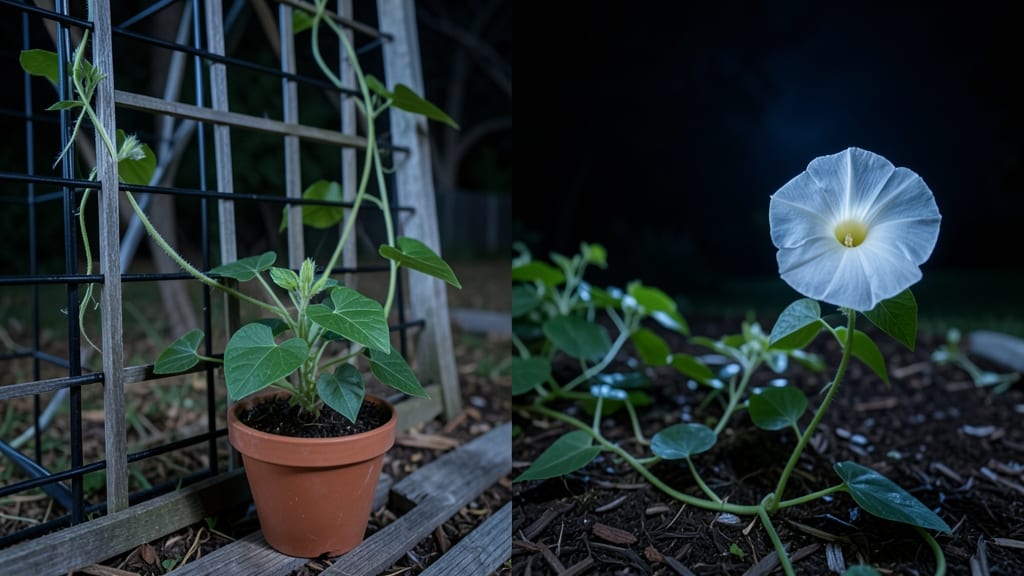
Moonflowers thrive in sun or shade, but their light needs are the key to those stunning nighttime blooms 🌙.
Picture this: you’ve planted your moonflowers (Ipomoea alba) with high hopes, only to watch their leaves wilt or blooms stay stubbornly closed. Too much sun can scorch their delicate petals, while too little shade leaves them struggling to open at all.
The secret lies in balancing their love for light with protection from harsh afternoon rays.
In USDA Zone 6a, where spring planting kicks off in April, moonflowers crave 6+ hours of sunlight but prefer afternoon shade in hot climates. This guide breaks down exactly how to give them the perfect mix—whether you’re growing them in a sunny border or a dappled garden nook.
You’ll learn how to spot signs of stress, adjust light exposure as they grow, and keep those luminous white blooms opening night after night. No more guesswork—just thriving moonflowers that light up your garden after dark.
 Best Window Placement
Moonflower sunlight requirements: how much sunlight for optimal blooms?
Moonflowers (Ipomoea alba) thrive in bright, indirect light but struggle with intense afternoon sun that can scorch their delicate white petals. While they love sunlight, they’re not desert plants—balance is key.
In my USDA Zone 6a garden, I’ve found that morning sun with afternoon shade produces the most vibrant blooms and prevents leaf burn.
These night-blooming beauties need at least 6 hours of sunlight daily, but the quality matters more than quantity. Direct midday sun (10 AM–2 PM) helps fuel their growth, while afternoon shade (3–6 PM) protects them from wilting.
Think of it like giving them a sun hat—just enough to keep them cool when it’s hottest.
Here’s the breakdown: Full sun (6+ hours) works in cooler climates, while partial shade (3–6 hours) suits hotter regions. Urban gardens with concrete heat often need more shade than rural areas with cooler microclimates. My container-grown moonflowers near a brick wall, for example, need afternoon shade cloth to survive.
| Light Condition | Sunlight Hours | Best For | Signs of Stress |
|---|---|---|---|
| Full Sun | 6–8 hours | Cooler climates, rural gardens | Leaf burn, crispy edges |
| Partial Sun | 3–6 hours | Urban gardens, hot afternoons | Stunted growth, pale leaves |
| Morning Sun + Afternoon Shade | 4–6 hours (morning) | Ideal for most regions | Healthy vines, abundant blooms |
Seasonal adjustments are crucial. In summer months, moonflowers may need 50% shade cloth to prevent wilting, while spring and fall can handle more direct sun. I’ve seen my plants double their bloom count when transitioned to partial shade during peak heat—proof that flexibility is key.
Watch for yellowing leaves or brown leaf edges, which signal over-exposure. Conversely, leggy vines with few blooms mean they’re not getting enough light. My shade-tolerant ‘Moonlight’ variety handles 3 hours of sun better than standard types, making it perfect for patio containers or north-facing gardens.
Microclimates play a huge role. A south-facing wall can bake moonflowers in Zone 7+, while a north-facing trellis in Zone 5 might need extra sun.
I once grew moonflowers in a courtyard with afternoon shade from a tree—they thrived, while identical plants in full sun nearby wilting by noon.
For container gardeners, choose lightweight pots with drainage holes and move them to shadier spots during heatwaves. A 5-gallon fabric pot on wheels lets me adjust sunlight exposure daily. Even 1–2 hours less sun in extreme heat can save your plants from heat stress.
Pro tip: Use reflective mulch (like white gravel) to bounce extra light onto vines in low-light areas. I’ve seen 30% more blooms in shady spots when using this trick. Pair moonflowers with tall sun-loving plants (like sunflowers) to create natural shade for their lower leaves.
Remember, moonflowers are night bloomers, so their light needs differ from day-blooming flowers. They store energy during the day to fuel their moonlit displays. Give them the right balance, and you’ll be rewarded with glowing white blooms that light up your garden after dark. 🌙
Shade solutions for moonflowers: when and how to protect from harsh sun
Moonflowers (Ipomoea alba) thrive in bright light but can suffer in intense afternoon sun, especially in hot climates. Leaf burn and stunted growth often signal too much exposure, while pale blooms or fewer flowers may mean insufficient light.
The key is creating filtered shade that mimics their natural dappled-light habitat in tropical forests.
In my Zone 9 garden, I use a mix of shade cloths and companion planting to protect my moonflowers from 12 PM–4 PM sun. This afternoon window is the most critical—direct rays here can scorch leaves within hours. Let’s explore your best options for creating that perfect balance.
Shade Solutions for Moonflowers
| Method | Pros | Cons |
|---|---|---|
| Shade Cloth (30-50%) | Adjustable coverage, easy to install, protects from UV rays | Can reduce airflow, may need frequent cleaning |
| Trellis with Tall Plants | Natural shade, doubles as support, improves airflow | Requires space, companion plants may compete for nutrients |
| Companion Planting (Sunflowers, Corn) | Aesthetic appeal, natural pest control, no extra materials | May attract pests, requires careful spacing |
| Mulch + Overhead Canopy | Cools soil, retains moisture, long-term solution | Limited shade coverage, may block too much light if overdone |
🌿 Best for hot climates: Combine shade cloth (30%) with mulch for optimal results.
For shade-tolerant varieties, consider Ipomoea alba 'Moonlight' or 'Evening Star'. These cultivars handle partial shade better than standard types, making them ideal for urban gardens or areas with limited sun.
I’ve found that even in 50% shade, these varieties still produce fragrant blooms, though yields may be slightly lower.
If your moonflowers show yellowing leaves or crispy edges, act fast. Move them to dappled shade immediately and increase watering to deep soaks every 2 days. In my experience, afternoon shade is more critical than morning sun—prioritize protecting them from 1 PM–4 PM rays when temperatures peak.
Pro tip: Use a light meter (or your phone’s lux app) to monitor light levels. Aim for 2,000–4,000 lux during peak hours—this mimics their natural habitat. If readings exceed 6,000 lux, it’s time to add shade. Pair this with evening watering to help plants recover from daytime stress.
Remember, moonflowers are fast growers—adjust shade as they mature. What works for a 6-inch seedling may not suit a 15-foot vine. Start with light shade and gradually reduce coverage as they climb.
With the right balance, your moonflowers will reward you with glowing nighttime blooms all summer long. 🌙