
Advice
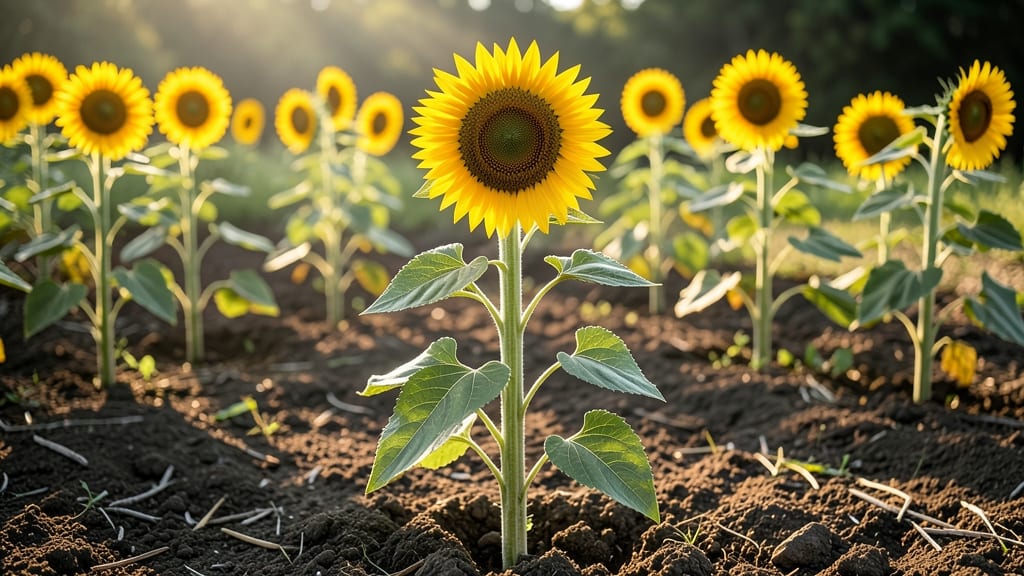
Sunflower days to maturity determine whether you’ll end up with a 6-foot giant or a 1-foot dwarf—and that choice can make or break your garden’s summer drama.
If you’ve ever wondered why some sunflowers tower over your garden while others barely reach knee height, the answer lies in their days to maturity—and choosing the right variety for your growing season.
Most sunflowers take between 50 and 120 days to reach peak bloom, but dwarf varieties can mature in as little as 45 days, while giants may need up to 150 days—and that’s before accounting for your local climate.
In this guide, I’ll break down the exact timelines for popular varieties, how to adjust for your region, and the one mistake that delays maturity more than any other.
Sunflower varieties ranked by days to maturity and peak bloom height
Choosing the right sunflower variety depends on two key factors: days to maturity and peak bloom height. Some varieties bloom in just 50 days while reaching only 3 feet tall, while others take 120 days to grow into 15-foot giants.
Understanding these ranges helps you plan for frost-free windows and garden space. Let’s break down the best options for U.S. hardiness zones 3-10.
For gardeners in cooler climates (zones 3-5), early-maturing varieties with 60-80 days to bloom are ideal. In warmer zones (6-10), you can grow both fast-blooming dwarfs and tall, late-season giants.
The chart below ranks varieties by maturity timeline and height potential, with planting windows tailored to your zone.
🌱
If you’re in zone 3 or 4, prioritize early-maturing varieties like Teddy Bear or Moulin Rouge to avoid early frost. These dwarf sunflowers bloom in 50-60 days and reach 3-4 feet, making them perfect for container gardens or small spaces.
Plant them in late April for a summer-long display.
For longer growing seasons (zones 6-10), you can experiment with tall varieties like Russian Giant or Mammoth. These giant sunflowers take 90-120 days to mature and can reach 12-16 feet, but they require sturdy stakes or trellises to support their weight.
Plant them in late May or June to ensure they bloom before frost.
Mid-season varieties like Autumn Beauty and <
How to calculate your sunflower’s exact maturity timeline based on variety
Understanding your sunflower’s days to maturity isn’t just about checking the seed packet—it’s about matching that timeline to your local climate. Every variety, from dwarf sunflowers (like 'Teddy Bear') to giant varieties (like 'Mammoth'), has a unique range.
For example, a 60-day dwarf won’t need the same planting window as a 120-day giant. Start by noting the minimum and maximum days listed on your seed packet, then adjust for your last frost date.
Your local frost-free growing season is the real deadline. If your area has 120 frost-free days and you’re growing a 90-day variety, you’ve got flexibility—but plant too early, and you’ll risk bolting before maturity.
Use your USDA hardiness zone as a starting point, then fine-tune with microclimate factors like urban heat islands or wind exposure. For instance, Zone 5 might have 100 frost-free days, but a south-facing slope could add 2-3 extra weeks of warmth.
- Step 1: Note your variety’s maturity range (e.g., 60–90 days).
- Step 2: Subtract your last frost date from your first frost date to find your frost-free window.
- Step 3: Adjust for soil temperature: Sunflowers need 50°F+ soil to germinate. Use a soil thermometer if unsure.
- Step 4: Add 10–14 days if planting in cooler microclimates (e.g., shaded areas).
- Step 5: Plant 30–60 days before your target maturity date to account for germination time.
Don’t overlook soil temperature—it’s a game-changer. Sunflower seeds won’t sprout below 50°F soil, even if air temps are higher. In Zone 3–4, wait until mid-May to avoid cold-soil delays. Pro tip: Use black plastic mulch to warm soil faster if you’re eager to plant early.
For container growing, soil heats up quicker, so you can plant 2–3 weeks earlier than in-ground.
Regional microclimates can shift your timeline by weeks. A south-facing wall might add 10–14 days of warmth, while a windy hilltop could delay maturity by 7–10 days. Observe your garden’s hotspots and cool pockets—sunflowers near pavement or dark mulch may mature 5–7 days faster than those in open soil.
If you’re unsure, err on the side of earlier planting for shorter varieties and later planting for giants.
Track your progress with a growth journal. Mark the day you plant, note when sprouts emerge (7–14 days for most varieties), and log the first true leaves (another 7–10 days).
For giant sunflowers, expect 60–90 days to bud, with full bloom at 90–120 days. Dwarf varieties often bloom in 50–70 days, making them ideal for short-season gardens.
Finally, account for unpredictable weather. A late spring frost or drought can stall growth by 2–4 weeks. If your sunflowers seem slow, check for overcrowding (thin to 12–18 inches apart) and ensure they’re getting 1–2 inches of water weekly.
With these adjustments, you’ll nail your sunflower’s exact maturity timeline—no guesswork, just golden blooms on schedule. 🌻