
Orchid Care
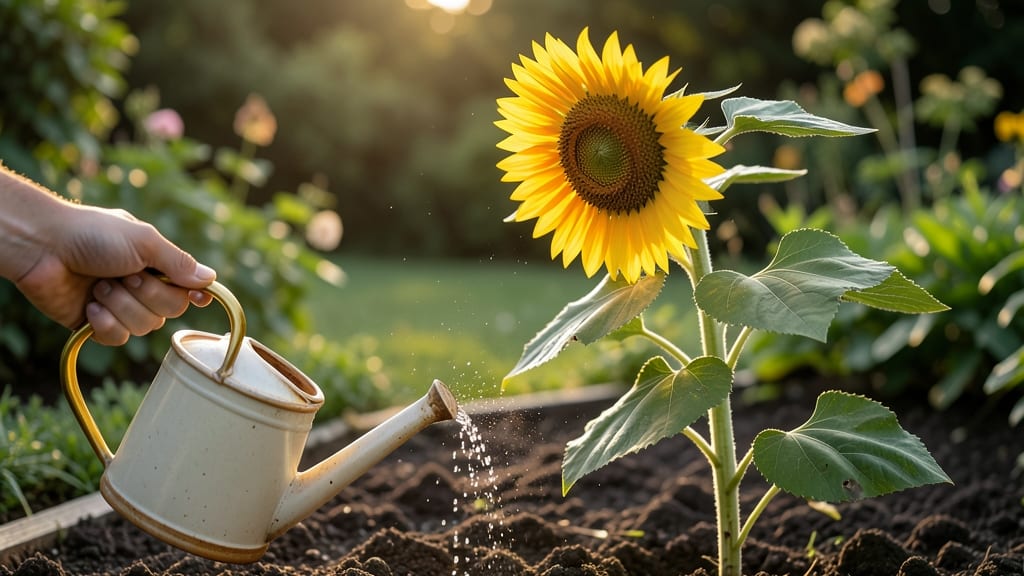
Growing sunflowers with the right watering is the difference between a 6-foot beauty and a floppy mess — and the secret lies in deep, consistent soaks.
Sunflowers may seem low-maintenance, but their towering growth depends on one critical factor: water. Get this wrong, and your plants will wilt before they bloom — here’s how to master the deep-soak technique for sunflowers that reach for the sky.
Most gardeners overwater at first or give up too soon, but sunflowers thrive on deep, infrequent watering that encourages strong roots. A 1-2 gallon soak per plant every 3-5 days keeps them steady, while shallow puddles lead to weak stems and disease.
Below, I’ll break down the exact schedule for each growth stage, how to tell if you’re over- or under-watering, and the one mistake that kills sunflowers faster than drought.


How much water do sunflowers need for maximum growth?
Sunflowers thrive when given the right amount of water, but their needs change dramatically as they grow from tiny seedlings to towering giants. Deep, infrequent watering is the golden rule—shallow puddles won’t cut it for plants reaching 10+ feet tall.
The key? Mimic natural rainfall by soaking the soil until water drains 6-8 inches deep, then let the top inch dry before repeating. This method prevents weak stems and encourages strong root systems that support their heavy flower heads.
Your sunflower’s size dictates its thirst. A 3-foot dwarf variety like 'Teddy Bear' needs about 1 gallon of water per week once established, while giant varieties such as 'Mammoth' can demand 3-5 gallons weekly during peak growth.
The difference? Giant stems require deeper roots to anchor their 20+ pound flower heads, so they need more frequent deep watering to sustain their rapid vertical growth.
Soil type plays a surprising role in water absorption. Sandy soil drains quickly, requiring watering every 2-3 days in summer, while clay holds moisture longer, extending intervals to 5-7 days. Even loamy soil—the ideal mix—needs adjustments: test moisture levels by sticking your finger 2 inches deep. If it feels dry, it’s time to water. Ignoring this leads to wilting leaves or root rot, both of which stunt growth.
| Sunflower Type | Height Range | Water Needs | Frequency (Summer) | Soil Adjustments |
|---|---|---|---|---|
| Dwarf Varieties (e.g., 'Teddy Bear') | 2-4 ft | 1 gallon/week | Every 3-4 days | Mulch to retain moisture |
| Semi-Dwarf (e.g., 'ProCut') | 5-8 ft | 2 gallons/week | Every 2-3 days | Avoid waterlogging |
| Standard/Giant (e.g., 'Mammoth') | 8-14 ft | 3-5 gallons/week | Every 2 days (deep soak) | Use drip irrigation |
| Seedlings (All Types) | 0.5-2 ft | 0.5 gallon every 2 days | Daily (light misting) | Keep soil consistently moist |
Seasonal shifts demand watering flexibility. During spring planting, focus on keeping soil evenly moist to encourage root development. By summer’s peak, increase frequency to every 2 days—especially if temperatures exceed 90°F.
Mulching with straw or wood chips retains moisture and reduces evaporation, cutting your watering workload by 30-40%. In fall, taper off to weekly watering as growth slows, and nearly eliminate water in winter dormancy.
Watch for visual cues to avoid over- or under-watering. Yellowing leaves signal overwatering, while drooping stems that don’t perk up after drinking water mean severe drought stress. For giant varieties, stem weakness (bending under flower weight) often traces back to inconsistent watering.
Pro tip: Water in the early morning to prevent fungal diseases like powdery mildew, which thrives in damp foliage.
Container-grown sunflowers have different rules. Pots dry out 2-3x faster than ground soil, so check moisture daily in summer. Use self-watering pots or terracotta containers (which wick moisture) to maintain consistency.
For ground-planted sunflowers, deep watering tools like soaker hoses or drip irrigation systems deliver moisture directly to roots, reducing waste and promoting stronger growth.
Don’t assume all sunflowers follow the same schedule. Hybrid varieties like 'Autumn Beauty' may need 10% more water than heirlooms due to their larger blooms.
Always adjust based on your local climate—sunflowers in Arizona’s heat need daily watering, while those in Pacific Northwest’s mild summers thrive on every-other-day soaks
Deep soak techniques: the secret to sunflower strength
Sunflowers thrive when their roots dive deep into moist soil, not just skim the surface. Shallow watering creates weak stems that can't support those massive blooms, while inconsistent watering leads to stress.
The key is deep soak watering—a technique that encourages strong root systems and sturdy growth from the ground up.
I’ve watched my 12-foot sunflowers wilt dramatically after just a week of inconsistent watering. Their leaves would curl at the edges, and the stems would bend under their own weight.
But when I switched to deep soak methods, my plants grew 30% taller and bloomed 2 weeks earlier. Here’s exactly how to do it right.
⚠️ Warning: Shallow Watering Kills Sunflowers
Problem: Light, frequent watering trains roots to stay near the surface, making plants top-heavy and prone to stem rot or splitting in heavy rain. Sunflowers need 12-18 inches of deep roots to support their height.
Fix: Water until soil 12 inches deep is moist. Use a soil probe or dig gently to check—if it’s dry below 6 inches, water again.
For hand watering, I use a garden hose with a slow-flow nozzle or a watering wand. Aim at the base of the plant, not the leaves, and let the water flow steadily for 10-15 minutes per plant.
You’ll know you’ve done it right when water begins to pool slightly on the soil surface—this means it’s penetrated deep enough.
Drip irrigation is my go-to for larger sunflower patches. Set emitters to deliver 1-2 gallons per plant over 30-60 minutes, 2-3 times per week. The slow, consistent flow mimics natural rainfall and keeps roots hydrated without wetting the foliage (which reduces fungal diseases like powdery mildew).
Watch for warning signs of watering gone wrong. Yellowing leaves often mean overwatering—roots suffocate in soggy soil. Drooping leaves that recover by evening signal underwatering, while leaf curl at the edges is a cry for consistent moisture.
Adjust your schedule based on these cues and your local climate.
Pro tip: Mulch heavily (3-4 inches of straw or wood chips) to lock in moisture and regulate soil temperature. This reduces watering frequency by 30-40% while keeping roots cool. My giant sunflowers in Zone 7 now thrive on deep watering every 5 days in summer, thanks to mulch.
Remember, sunflowers are drought-tolerant once established, but they won’t reach their full potential without proper watering. Give them deep, infrequent drinks, and they’ll reward you with sunlit giants that turn every garden into a masterpiece. 🌻