
Flowers
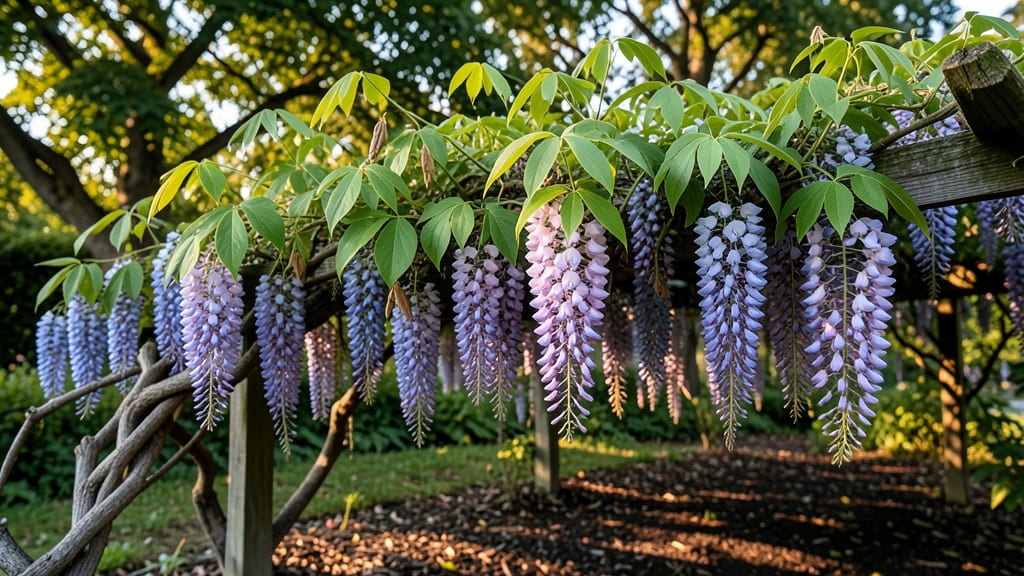
Wisteria flowers bloom in late spring to early summer 🌸, but the exact timing depends on your variety and climate zone—missing the window could mean waiting another year for those fragrant cascades.
Picture this: your trellis heavy with lavender-blue clusters, filling the air with a sweet, intoxicating scent. Yet many gardeners miss the bloom entirely because they don’t know their local wisteria’s schedule—or how to nudge it along.
Below, I’ll break down the precise months for 10+ varieties, how your USDA zone shifts those dates by 4-6 weeks, and the simple tricks to coax blooms earlier (or delay them for a longer show).
For example, Wisteria sinensis (Chinese wisteria) typically bursts into bloom in May in Zone 6a, while Wisteria floribunda (Japanese wisteria) might wait until June—unless you live in Florida, where some varieties start as early as February.
Pruning at the wrong time? You could push those blooms back by months. I’ll show you the exact pruning windows that keep your wisteria on schedule.
Ready to transform your garden into a springtime perfume factory? You’ll leave here knowing not just when your wisteria blooms, but how to control it—so you’re never left staring at bare branches when the neighbors’ trellises are overflowing.
Wisteria bloom times by variety: month-by-month breakdown
Wisteria’s dramatic spring blooms are one of gardening’s most anticipated events—but timing varies dramatically by variety. Japanese wisteria often blooms earlier than Chinese wisteria, while American wisteria typically flowers later. Understanding these patterns helps you plan trellises, companion plants, and even fragrance timing for your garden’s peak moments.
Most wisteria varieties bloom between late April and early June, but some early bloomers like 'Prolific' can start as early as March in warm climates. Late bloomers like 'Amethyst Falls' may extend the show until July.
The key is recognizing leaf emergence and bud formation—both critical clues for predicting bloom windows.
Below is a variety-by-variety breakdown of bloom periods, including peak fragrance windows and leaf color cues to help you anticipate each stage. Whether you’re planning a fragrance garden or timing pruning, this guide ensures you’ll never miss a wisteria’s spectacular display.
Pro Tip: Wisteria blooms on old wood, so prune after flowering to preserve next year’s buds. Over-pruning can delay blooms by 1-2 years.
| Variety | Primary Bloom Months | Peak Fragrance | Leaf Color Cue | Notes |
|---|---|---|---|---|
| Wisteria floribunda 'Amethyst Falls' | June–July | Late June | Deep green, glossy | Late-season bloomer; heaviest fragrance at dusk. |
| Wisteria sinensis 'Prolific' | March–April | Early April | Light green, fuzzy buds | Early bloomer; frost-sensitive—protect in cold zones. |
| Wisteria floribunda 'Shiro Kapitan' | April–May | Mid-April | Bright green, waxy leaves | Most fragrant Japanese wisteria; white flowers. |
| Wisteria frutescens (American) | May–June | Late May | Blue-green, matte | Lavender-blue flowers; drought-tolerant. |
| Wisteria sinensis 'Longissima' | April–May | Early May | Dark green, elongated | Longest flower racemes (up to 20 inches). |
| Wisteria floribunda 'Royal Purple' | May–June | Mid-May | Purple-tinged leaves | Deep purple blooms; slow-growing. |
| Wisteria floribunda 'Alba' |
How climate zones shift wisteria bloom dates by 4-6 weeksWisteria’s bloom timing shifts dramatically across USDA zones 5-9, with some varieties flowering in January in Florida and others waiting until June in Minnesota. These shifts happen because cold snaps, frost dates, and growing degree days all influence when buds break dormancy. Understanding your zone’s frost-risk window is key to protecting delicate blooms. In Zone 9 (Florida, Southern California), wisteria often blooms as early as January-February because mild winters allow buds to swell sooner. Meanwhile, in Zone 5 (Minnesota, Upstate New York), blooms typically arrive in late May-June after the last frost. This 4-6 week difference means gardeners in colder zones must plan for later-season displays or use pruning tricks to encourage earlier flowers. 🌱 Key factor: Wisteria needs 1,000-1,500 chill hours (below 45°F) to set buds properly. Zones 6-7 (Midwest, Northeast) usually hit this threshold by March-April, triggering blooms in May-June. Zones 8-9 often miss sufficient chilling, which is why some varieties bloom erratically unless you provide artificial dormancy. If you live in Zones 5-6, plan for late-spring blooms and protect new growth with frost cloth if temperatures dip below 28°F. In Zones 7-9, you’ll enjoy earlier flowers but may need to prune aggressively to control vigorous growth. For example, 'Amethyst Falls' blooms 2-3 weeks earlier than standard varieties in the same zone due to its compact growth habit. Pro tip: Use local weather data to track growing degree days (GDD). Wisteria typically needs 800-1,000 GDD after dormancy to bloom. Tools like the NOAA Climate Data website can help you predict your exact bloom window. For Zone 5 gardeners, this often means waiting until |