
Flowers
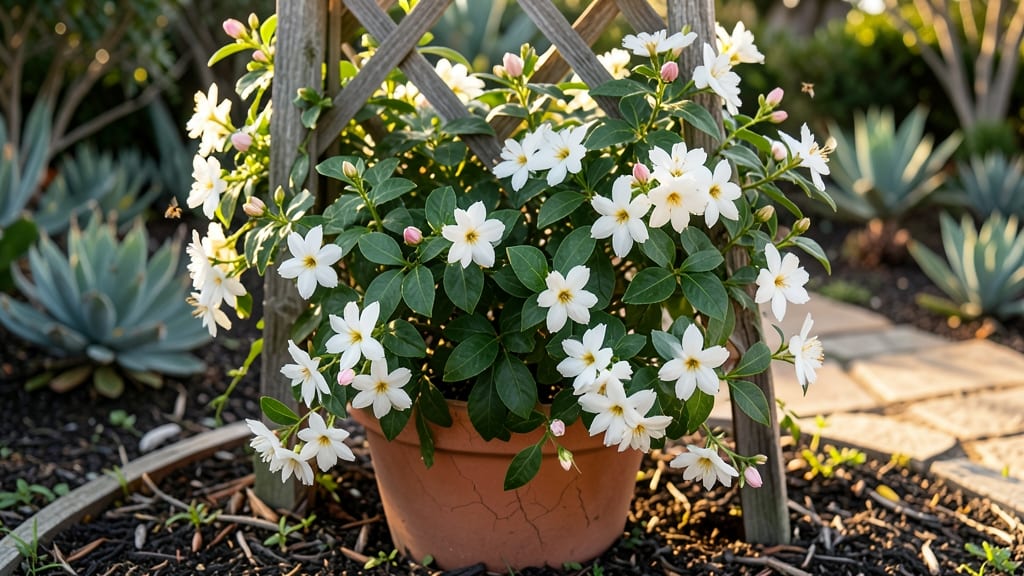
Jasmine flowers typically bloom in late spring through early summer 🌸, but the exact timing depends on your climate zone and the variety you’re growing.
Picture this: you’ve just planted your jasmine vine, dreaming of fragrant blooms by summer, only to find it sitting there—no buds, no scent, just green leaves. That’s because jasmine’s flowering schedule is as much about care as it is about climate.
Some varieties, like the classic Jasminum officinale, burst into bloom in May or June, while others, such as Jasminum sambac, may flower as early as April in warmer zones.
If you’re in USDA Zone 6a or cooler, your jasmine might wait until late June or even July to reward you with those intoxicating white flowers. But with the right pruning, sunlight, and a little extra love, you can coax blooms earlier—or even stretch them into fall.
Think of it as a fragrance calendar you get to set.
In this guide, I’ll break down the exact months jasmine flowers in your region, how to adjust care for earlier or later blooms, and the common mistakes that keep your plant from putting on a show. Ready to turn your garden into a jasmine-filled paradise?
Jasmine flowering months by USDA climate zones: a seasonal breakdown
Jasmine's fragrant blooms are a garden highlight, but their timing varies dramatically by USDA zone and variety. In Zone 7, for example, Jasminum officinale typically bursts into bloom in May-June, while coastal areas may see earlier flowers due to milder winters.
Understanding these patterns helps you plan pruning and enjoy fragrance year-round, especially with winter-blooming varieties like Jasminum sambac.
Microclimates play a huge role—coastal regions in Zones 9-11 often experience year-round blooming thanks to warmer winters, while inland areas may see dormant periods in colder months. The key is matching your jasmine variety to your local climate and adjusting care routines accordingly to extend the blooming season.
Below is a zone-by-zone breakdown of when to expect jasmine flowers, including exceptional bloomers like Arabian jasmine (Jasminum sambac) that defy seasonal norms with winter fragrance. Use this as your garden planning guide to time pruning, fertilization, and even harvesting jasmine tea from your own plants.
In Zone 7, your Jasminum officinale will reward you with late spring blooms (May-June) if planted in well-draining soil with morning sunlight. The key to extending these blooms is light pruning after the first flush—remove 1/3 of old growth in early spring to encourage new fragrant stems.
Coastal gardeners in Zone 7b often see blooms as early as April due to warmer microclimates near the ocean.
Moving to Zones 9-11, the Arabian jasmine (Jasminum sambac) becomes the star performer, offering year-round fragrance with peak blooms in winter months (January-March). This variety thrives in humid coastal areas where temperatures rarely
How to predict and extend jasmine blooming with pruning and care
Jasmine's fragrant blooms often appear in late spring to early summer, but with the right techniques, you can shift timing to match your preferences. The key lies in understanding your jasmine's type—whether it's evergreen (like Jasminum officinale) or deciduous (like Jasminum sambac).
Both respond differently to pruning and care, so let's unlock their full potential.
For spring bloomers, prune in late winter (just before buds swell) to encourage new growth and earlier flowers. If you want fall blooms, delay pruning until early summer—this trick works especially well for Arabian jasmine, which can flower year-round in warm climates.
The secret? Timing cuts to align with your plant's natural growth cycle.
🌿 Step-by-Step Guide to Extend Jasmine Blooms
-
Step 1: Identify Your Jasmine Type
Evergreen (e.g., J. officinale): Blooms spring-fall. Deciduous (e.g., J. sambac): Blooms spring-summer. -
Step 2: Prune for Timing
Spring blooms: Prune in late winter. Fall blooms: Prune in early summer. -
Step 3: Boost Sunlight
Move to 6+ hours of sun (morning light ideal). Avoid harsh afternoon sun in hot climates. -
Step 4: Fertilize Strategically
Use phosphorus-rich fertilizer (e.g., 10-10-10) in early spring for buds. -
Step 5: Water Deeply
Water deeply 2-3x/week in summer. Reduce to weekly in fall/winter.
Sunlight is another critical trigger for jasmine blooms. Most varieties thrive with 4-6 hours of morning sun, but Arabian jasmine (a winter bloomer) needs full sun to flower in cooler months.
If your plant isn’t blooming, check its light exposure—too little sun delays buds, while too much can stress deciduous varieties in summer.
Fertilizer plays a surprising role in bloom timing. A phosphorus spike (the middle number in NPK) in early spring signals jasmine to produce flowers. Use a balanced 10-10-10 fertilizer every 4-6 weeks during growing season, but skip feeding in fall/winter to let the plant rest.
Over-fertilizing can lead to lush foliage but fewer blooms.
Watering schedules also influence bloom cycles. Jasmine vines need consistent moisture but hate soggy roots. In summer, water deeply every 2-3 days to encourage blooming, while reducing frequency in fall helps trigger winter flowers for varieties like Arabian jasmine. Always water in the morning to prevent fungal issues.
With these techniques, you can extend jasmine blooms by 2-3 months, filling your garden with fragrance from spring through fall. The key is observation—watch your plant’s growth patterns and adjust care accordingly. Happy gardening! 🌸