
Flowers
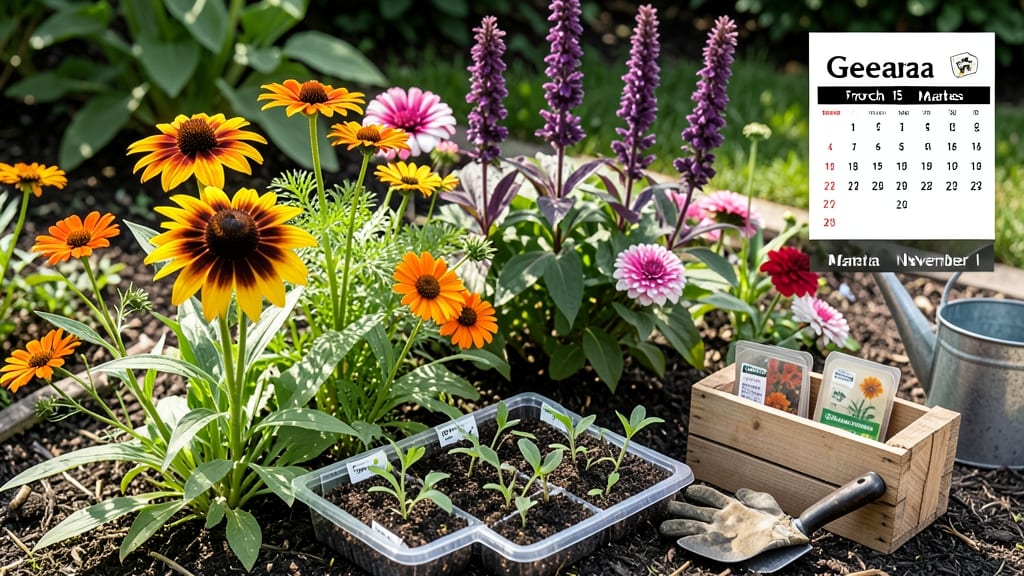
Planting flowers in Georgia at the right time ensures vibrant blooms all year, from azaleas in spring to marigolds in fall.
But here’s the catch: Georgia’s climate shifts dramatically from the coastal plains to the mountains, and a miscalculation of just a few weeks can mean the difference between a showstopping garden and a sad, wilted mess.
Whether you’re in Zone 7a or Zone 9a, timing matters—especially for frost-sensitive annuals like impatiens or hardy perennials like black-eyed Susans. Below, I break down the exact windows for spring, summer, and fall planting, plus how to adjust for microclimates.
You’ll learn when to start seeds indoors, the best transplant dates for each zone, and how to stretch your blooming season with simple tricks like mulching and staggered planting.
Georgia planting zones: when to start flowers by USDA Zone
Georgia spans USDA Zones 7a to 8b, creating a unique challenge for gardeners. The Coastal Plain (Zone 8a-8b) enjoys milder winters, while the Piedmont (Zone 7b-8a) and Mountains (Zone 7a) face earlier frosts.
Understanding these zones helps you plant annuals, perennials, and bulbs at the perfect time for vibrant blooms year-round.
For cold-hardy annuals like pansies and sweet alyssum, I recommend starting seeds indoors 6-8 weeks before your last frost date.
In Zone 7a (mountains), that’s typically by February 15, while Zone 8b (coast) can wait until March 1. Frost-sensitive varieties, such as impatiens and marigolds, should only go outside after the last frost—usually mid-March in the mountains and late February on the coast.
Perennials like black-eyed Susans and coneflowers thrive when planted in early spring (March-April) or early fall (September-October). These hardy plants establish roots before winter, giving them a head start for next year’s blooms.
In Zone 7a, I’ve found that planting perennials in late September ensures they survive the first frost and root deeply before dormancy.
For bulbs like tulips and daffodils, timing is critical. Plant them in fall (October-November) to allow roots to establish before winter. In Zone 8b, where winters are milder, you can even plant bulbs as late as December.
However, in Zone 7a, aim for early October to avoid frost damage to emerging shoots.
Fall planting is ideal for cool-season annuals like pansies and snapdragons. In Zone 8a and 8b, I start these in September for vibrant winter color.
For Zone 7a and 7b, wait until mid-September to avoid early frosts. Heat-loving annuals, such as zinnias and marigolds, should go in the ground after the last frost—typically mid-April in the mountains and late March on the coast.
Native Georgia flowers like azaleas and camellias have specific needs. Azaleas prefer acidic soil and should be planted in early spring (March-April) or fall (September-October). Camellias, on the other hand, thrive in Zone 7b and above and can be planted year-round, though early spring is best for root establishment.
Microclimates add another layer of complexity. A south-facing slope in Zone 7a may warm up faster than a north-facing garden, allowing you to plant frost-sensitive flowers 2-3 weeks earlier. Similarly, urban areas with heat islands can extend the growing season by 10-14 days compared to rural zones
Best flowers to plant in Georgia by season (with exact months)
Georgia’s long growing season and varied microclimates let you enjoy flowers year-round, but timing is everything. Spring-bloomers like azaleas need cool soil, while summer heat-lovers such as zinnias thrive when planted after last frost.
Below, I’ll break down the exact months for planting annuals, perennials, and bulbs—plus when to start seeds indoors for a head start.
For Zone 7a-8b, most annuals go in the ground 4-6 weeks before last frost (typically mid-February to early April), while tender perennials wait until after April 15.
Bulbs like tulips and daffodils get planted in fall (October-November) for spring blooms. Let’s dive into the seasonal schedule to maximize your garden’s potential.
For summer-blooming flowers, I recommend starting seeds indoors in March for varieties like geraniums or petunias. These need 8-10 weeks of warmth before transplanting outdoors in late April or May.
If you’re in Zone 8’s hotter regions, opt for heat-tolerant annuals like zinnias or sunflowers, which handle Georgia’s 90°F+ summers with ease.
Don’t overlook fall planting! Many perennials, like chrysanthemums and asters, thrive when planted in August or September. This gives them time to establish roots before winter. For bulbs like tulips, plant them in October or November—this ensures they’ll bloom beautifully in March or April.
Pro tip: Use mulch after planting to lock in moisture and regulate soil temperature. For container gardens, choose compact varieties like bacopa or lobelia, which tolerate Georgia’s humidity and thrive in partial shade. With this schedule, your garden will burst with color from spring through fall!
🌸