
Plants
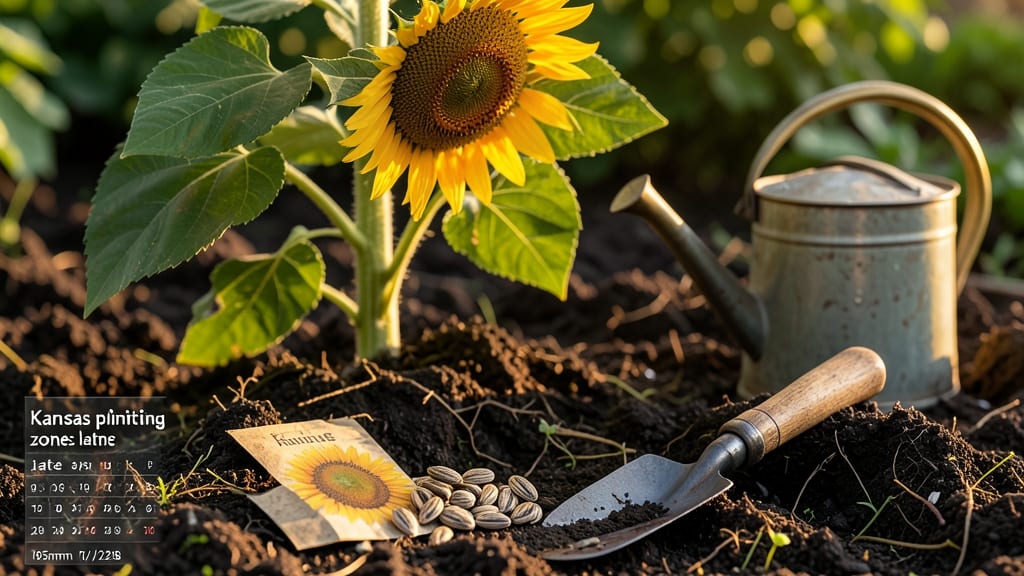
Planting sunflower seeds in Kansas after the last frost date — typically mid-April to mid-June — ensures strong, healthy growth and vibrant blooms 🌻.
Sunflowers bring vibrant color and wildlife to Kansas gardens—but planting them at the wrong time means stunted growth or frost damage. Timing is everything, and Kansas’ diverse climate zones demand precision.
In USDA zones 5b-7a, the average last frost date shifts from early April in southern Kansas to late April in the northern regions. Direct-sown seeds thrive when soil temperatures reach 55°F, a threshold that varies by 1-2 weeks across the state.
Below, I break down the exact planting windows by zone, soil prep tips to speed germination, and how to adjust for late springs or early summer heatwaves that can stress young plants.
Kansas sunflower planting dates by hardiness Zone (USDA 5-7)
Kansas’ diverse climate means your sunflower planting dates should align with your USDA hardiness zone—whether you're in Zone 5a, Zone 6a, or Zone 7a.
Getting the timing right ensures your sunflowers thrive and avoid frost damage, especially since Kansas can swing from freezing nights to 90°F days in a matter of weeks.
For most Kansas gardeners, the ideal planting window runs from mid-April to mid-June, but exact dates depend on your zone’s average last frost date. In Zone 5a, you’ll want to wait until early May, while Zone 7a gardeners can start as early as late March.
Transplants, if used, need even more precision—planting too early risks stunted growth, while late planting cuts back harvest time.
Below is a zone-by-zone breakdown of frost-free dates, soil temperature thresholds, and the best planting windows for both direct sowing and transplanting. I’ve also included soil temperature benchmarks, since sunflower seeds need 55°F+ soil to germinate reliably.
🌱
| Zone | Avg. Last Frost | Soil Temp. for Germination | Direct Sow Window | Transplant Window | Notes |
|---|---|---|---|---|---|
| 5a (Northeast KS) | April 25–May 5 | 55°F+ (13°C+) | May 1–June 15 | April 20–May 10 (with row covers) | Slow start; use black plastic mulch to warm soil. |
| 6a (Central KS) | April 10–April 20 | 55°F+ (13°C+) | April 15–June 1 | April 5–May 5 | Best for giant varieties like 'Mammoth Russian'. |
| 7a (Southwest KS) | March 25–April 10 | 55°F+ (13°C+) | March 30–May 15 | March 15–April 15 | Longer growing season; try late-summer replanting. |
In Zone 5a, where frosts linger into early May, I recommend direct sowing after May 1 to avoid cold soil. Use row covers if transplanting earlier, but remove them once true leaves appear to prevent overheating.
For Zone 6a, you’ve got a 6-week window for direct sowing, perfect for staggered harvests of dwarf and tall varieties.
Gardeners in Zone 7a can push the envelope with late-summer replanting (August) for a fall harvest, but choose heat-tolerant varieties like 'Autumn Beauty' to beat the first frost, which typically hits around October 15.
Always check your local Kansas State University Extension for microclimate adjustments—some areas in Zone 5a near rivers may frost later than inland spots.
For transplants, start seeds indoors 4–6 weeks before your zone’s last frost. Harden off seedlings for 7–10 days before setting them out, and plant them 1 inch deeper than their container level to encourage stability in Kansas’ windy conditions.
Transplants need consistent moisture for the first 2 weeks to establish roots.
If you’re direct sowing, plant seeds 1 inch deep and 6 inches apart, then thin seedlings to 12–24 inches apart (depending on variety) once they’re 3–4 inches tall. This spacing ensures full sun exposure and reduces competition.
In Zone 5a, I’ve found that black plastic mulch speeds up soil warming by 2–3 weeks, giving you an earlier start.
One common mistake is planting too early in Zone 5a and watching seedlings rot in cold, wet soil. Always wait until soil temperatures hit 55°F+—use a soil therm
Best sunflower varieties for Kansas and their planting strategies
Kansas’ hot summers and variable frost dates make selecting the right sunflower varieties critical for success. Whether you want dwarf sunflowers for containers or giant varieties for cut flowers, each type thrives with specific planting adjustments. I’ve tested these top-performing options in Kansas gardens to ensure reliable growth.
For container gardening, ‘Teddy Bear’ and ‘Moulin Rouge’ sunflowers excel—their compact size (1-3 ft) makes them perfect for patios or small spaces. These dwarf varieties also tolerate heat stress better than taller types, ideal for Kansas’ 90°F+ summers. Plant them 2-3 weeks after last frost for best results.
If you’re growing sunflowers for cut flowers, ‘Russian Giant’ and ‘Mammoth’ varieties reach 10-14 feet tall and produce stunning blooms. These heat-tolerant giants need deep, fertile soil and sturdy stakes to prevent toppling in Kansas’ windy conditions.
Sow seeds directly in the garden after soil warms to 55°F+, typically by mid-April in Zone 7 or late April in Zone 5.
For late-summer blooms, ‘Autumn Beauty’ sunflowers are my top pick. Their multi-colored petals attract birds and pollinators and thrive when planted in late May or June. This heat-tolerant variety handles Kansas’ dry spells better than most, making it a low-maintenance choice for extended-season gardens.
To maximize success, adjust planting depth and spacing based on your Kansas climate zone. In Zone 5, sow seeds 1 inch deep and thin seedlings to 18-24 inches apart for taller varieties.
In Zone 7, you can push planting to mid-June for fall harvests, but use mulch to retain soil moisture during hot afternoons.
Remember, direct sowing is best for sunflowers—they hate transplanting. If you’re growing container varieties, use well-draining potting mix and 5-gallon pots for stability. With the right variety and timing, your Kansas garden will burst with sunflowers from summer to fall.