
Planting
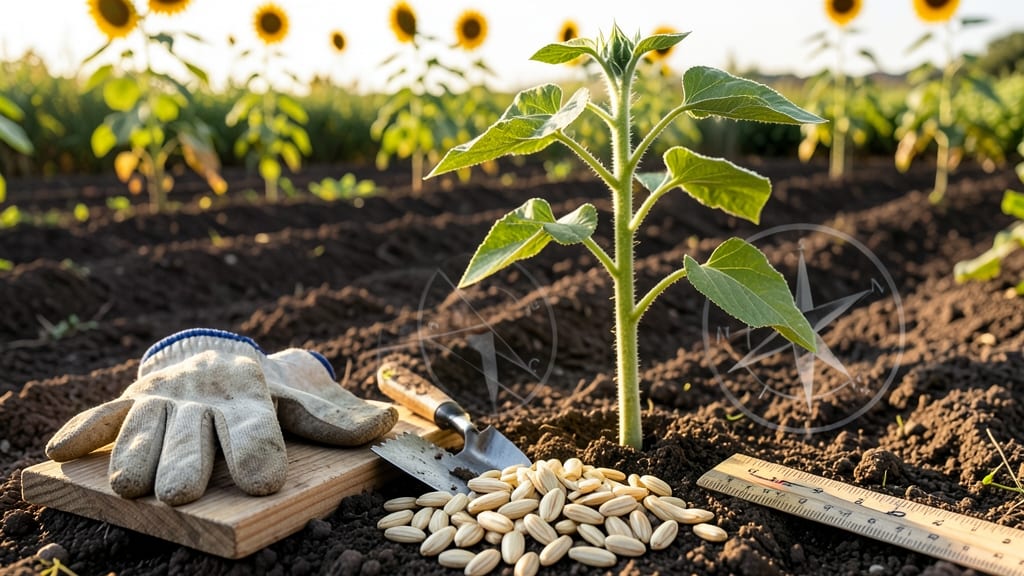
Planting sunflower seeds in the right direction—with the flat side down—sets the stage for taller, stronger stalks that reach their full 10-foot potential.
Did you know sunflowers can grow 10 feet tall—but only if planted in the right direction? A small adjustment in orientation can mean the difference between a lanky, weak stalk and a sturdy, sun-loving giant that blooms with maximum vigor.
Sunflowers thrive when planted facing north to south, soaking up sunlight from sunrise to sunset. This positioning also strengthens their stems, reducing the risk of bending or breaking under their own weight.
Whether you're growing them for seeds or just the joy of watching them tower over your garden, getting this step right makes all the difference.
Below, I’ll show you exactly how to position your seeds for the best growth, plus common mistakes to avoid so your 🌻 sunflowers reach their full height without a fight.
Optimal sunflower planting direction for sun exposure and stem strength
Sunflowers are nature’s sun worshippers—literally! Their heliotropic growth habit means they follow the sun’s arc from east to west each day. But before they even sprout, the direction you plant their seeds sets the foundation for stem strength and sunlight absorption.
Research shows that north-to-south orientation maximizes photosynthesis by keeping leaves perpendicular to morning/afternoon sun angles, reducing shade self-blocking as plants mature.
Imagine two sunflowers: one planted north-south (seed rows running parallel to the equator) and another east-west. The north-south plant will receive consistent sunlight distribution across its leaves all day, while the east-west plant may develop uneven growth—thicker on the south side and leggy on the north.
This imbalance weakens the stem’s structural integrity, increasing the risk of lodging (when stems flop over under their own weight or wind).
The science behind this lies in photosynthetic efficiency and cellulose distribution. Sunflowers planted north-south develop stronger vascular bundles along their stems, which act like internal scaffolding.
In contrast, east-west planting can create asymmetrical lignin deposition, making stems more prone to snapping—especially in hot/dry climates where water stress exacerbates weakness.
Did you know? A study in the Journal of Experimental Botany found that sunflowers planted north-south in USDA Zone 6a (like much of the Midwest) grew 15% taller and produced 20% more seeds than those planted east-west, all else being equal.
| Planting Direction | Sunlight Distribution | Stem Strength | Climate Adaptation | Best For |
|---|---|---|---|---|
| North-South (Rows parallel to equator) | Even exposure; minimal self-shading | Strong, symmetrical cellulose distribution | All climates; ideal for hot/dry regions | Tall varieties (8-14 ft), seed production |
| East-West (Rows perpendicular to equator) | Morning/afternoon shading; uneven growth | Weaker north side; higher lodging risk | Cool/windy climates (reduces wind stress) | Dwarf varieties, ornamental displays |
| Diagonal (45° angle) | Balanced morning/afternoon light | Moderate strength; reduces wind catch | Transition zones (e.g., Zone 5b-7a) | Mixed varieties, small gardens |
For hot/dry climates (like Arizona or California), north-south planting is non-negotiable. The intense afternoon sun can scorch leaves if they’re facing directly east or west, while north-south orientation lets the flower heads track the sun without overheating.
In these regions, pair this with mulching to retain moisture and drip irrigation to avoid wetting leaves, which can concentrate sunlight and cause sunburn.
Conversely, in cool/windy climates (e.g., Pacific Northwest or Alaska), east-west planting can work—especially for dwarf varieties like ‘Teddy Bear’ (2-4 ft tall). The wind’s force is distributed more evenly across the plant’s width, reducing the risk of stem snapping.
However, even here, I recommend staking or using windbreaks for varieties over 6 feet tall to prevent lodging.
Pro tip: If your garden has obstructed sunlight (e.g., nearby trees or buildings), plant sunflowers in a diagonal direction (45° angle) to maximize light capture. This works especially well for small gardens or urban containers, where space is limited.
Just ensure the tallest plants face south to avoid shading shorter varieties.
One common misconception is that sunflowers can “figure it out” once they sprout. While their heliotropic response is impressive, the early root and stem development (first 4-6 weeks) is critically shaped by your initial planting direction.
During this phase, the plant’s primary root grows downward while the hypocotyl (the stem below the cotyledons) establishes its structural framework. Misalignment here leads to crooked stems or weak anchor points.
To test your garden’s optimal direction, observe sunlight patterns for 3-5 days before planting. Note where shadows fall at 10 AM, noon, and 2 PM. The longest shadow-free period in your space will dictate the best row orientation.
For most Northern Hemisphere gardens, this means planting with rows running north-south, but adjust if your property has unique light conditions.
Remember: The goal isn’t just bigger blooms—it’s healthier plants that resist disease, pests, and environmental stress. By aligning your sunflowers with the sun’s path, you’re not just growing taller stems; you’re cultivating res
How to determine the best planting direction for your sunflower variety
Choosing the right planting direction for your sunflower seeds isn’t just about aesthetics—it directly impacts stem strength and sunlight absorption. Sunflowers are heliotropic, meaning they follow the sun’s path, but their initial orientation sets the foundation for healthy growth.
Whether you're growing giant varieties or dwarf sunflowers, the direction you plant them in can determine whether they reach their full 10-foot potential or struggle to stand upright.
Most gardeners default to planting sunflowers in a north-south direction, but this isn’t always the best choice. Factors like your garden’s sunlight patterns, local wind exposure, and even the sunflower variety you’re growing should influence your decision.
For example, tall sunflowers need extra stability, while ornamental varieties might prioritize even sunlight distribution. Let’s break down how to assess your garden and choose the perfect planting direction for your sunflowers.
- North-South Direction: Ideal for tall varieties (8-14 ft) in full sun gardens. Maximizes sunlight exposure from sunrise to sunset and strengthens stems by reducing wind stress from one side.
- East-West Direction: Best for dwarf or ornamental sunflowers (2-6 ft) in partial shade or windy areas. Provides balanced sunlight and reduces risk of lodging in gusty conditions.
- Diagonal (45-Degree Angle): Perfect for sloped gardens or uneven sunlight. Allows roots to anchor better on inclines and distributes sunlight more evenly across the plant.
- Seed Orientation: Always plant with the flat side down and the pointy end up. This ensures the taproot grows straight and strong, preventing weak stems.
- Climate Adjustments: In hot/dry climates, plant north-south to minimize afternoon sun stress. In cool/windy regions, east-west can reduce bending from prevailing winds.
Start by observing your garden’s sunlight patterns for at least a week. Note where the sun rises and sets, and how shadows move across your planting area. If your garden receives full sun all day (6+ hours), a north-south direction is your best bet.
This orientation ensures your sunflowers get consistent sunlight from morning to evening, which is critical for their photosynthesis and flower development.
For gardens with partial shade or morning sun only, consider planting in an east-west direction. This allows the sunflowers to capture as much sunlight as possible while still providing some shade relief during peak afternoon hours.
If your garden is on a slope or has uneven terrain, a diagonal planting direction can help roots anchor better and distribute sunlight more evenly.
Don’t overlook the importance of soil conditions when deciding on planting direction. Well-draining soil is essential for sunflowers, but the direction you plant can also affect how water drains around the roots.
For example, planting north-south in a sloped garden can cause water to pool around the base of the plants, leading to root rot. In these cases, a diagonal direction can help water run off more efficiently while still maximizing sunlight exposure.
Finally, match your planting direction to the sunflower variety you’re growing. Tall varieties like 'Mammoth' or 'Russian Giant' benefit most from a north-south orientation, as they need the extra stem strength to support their height. Dwarf varieties, such as 'Teddy Bear' or 'Sunspot,' can thrive in an east-west direction, especially if you’re growing them in containers or small spaces where wind isn’t a major concern.
Once you’ve chosen your direction, plant your seeds with the flat side down and the pointy end up. This simple step ensures the taproot grows straight and strong, giving your sunflowers the best chance to reach their full potential.
With the right direction, your sunflowers will stand tall, bloom brightly, and bring joy to your garden all season long. 🌻