
Fertilization
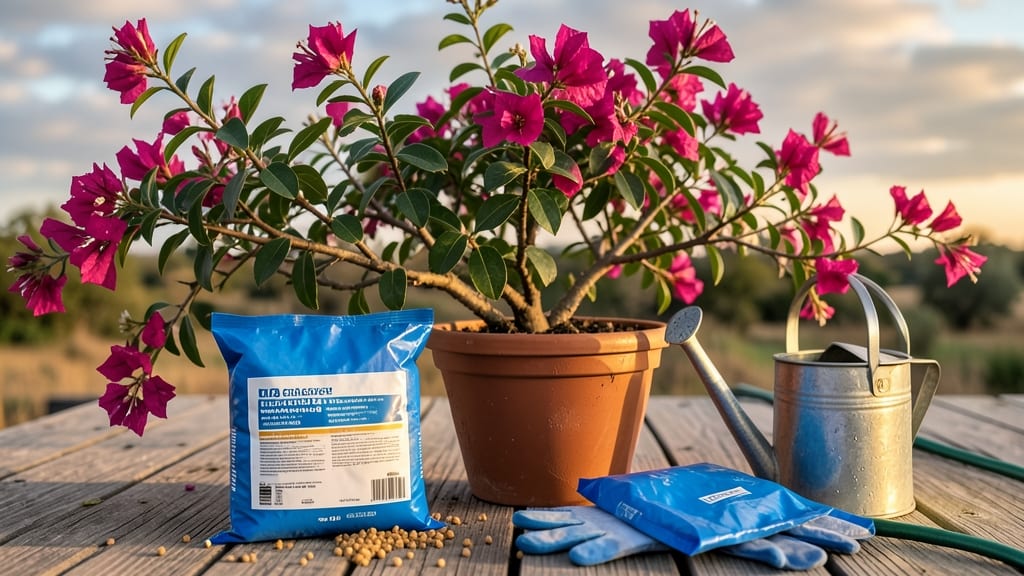
Feeding your bougainvillea the right fertilizer for flowering transforms those sparse stems into a riot of 🌸 vibrant bracts—and the key is getting the NPK ratios and timing just right.
Picture this: You’ve pruned, watered, and even moved your bougainvillea to the sunniest spot, but those blooms still won’t cooperate. The issue? Most gardeners overlook how seasonal fertilizer needs shift—what works in spring won’t cut it in summer, and winter feeding can actually harm your plant.
In this guide, we’ll break down the best fertilizer types (organic vs. synthetic), the exact NPK ratios bougainvillea craves for blooms, and a seasonal feeding schedule tailored to tropical/subtropical climates (zones 9b-11).
You’ll also learn how to spot over- or under-fertilization early, fix nutrient deficiencies like yellowing leaves or sparse blooms, and even adjust your watering routine to complement feeding—so your bougainvillea stays lush and flowering year-round.

Best bougainvillea fertilizer types for maximum flowering
Your bougainvillea thrives on the right nutrients to produce those vibrant bracts we all love. Unlike many plants, bougainvilleas demand phosphorus-rich fertilizers to trigger blooming, but the wrong balance can lead to lush foliage and fewer flowers.
I’ve tested organic and synthetic options in my own garden, and the results speak for themselves—seasonal adjustments are key for continuous blooms.
The NPK ratio (Nitrogen-Phosphorus-Potassium) is your first clue. Bougainvilleas need lower nitrogen to avoid leafy growth at the expense of flowers. A 7-9-5 ratio is ideal during the blooming season, while a 3-4-6 ratio works better for root establishment in spring.
Don’t overlook micronutrients like magnesium and iron—they prevent yellowing leaves that can signal deficiencies.
Here’s how the top fertilizer types stack up for bougainvillea flowering, including organic and synthetic options tailored to tropical climates:
For tropical climates, where bougainvilleas bloom year-round, I recommend alternating synthetic and organic fertilizers. Synthetics like 7-9-5 granular provide quick phosphorus for blooms, while organics like fish emulsion build soil health long-term.
In my USDA Zone 10 garden, I switch to a 3-4-6 ratio in winter to reduce nitrogen and encourage dormancy if needed.
Micronutrients are often overlooked but critical. A magnesium deficiency (yellowing between leaf veins) responds well to Epsom salt (1 tbsp per gallon of water). For iron chlorosis (yellow leaves with green veins), chelated iron sprays work wonders. I’ve seen bougainvilleas with pale bracts recover within weeks after addressing these deficiencies.
Potted bougainvilleas have different needs. Since their roots are confined, they leach nutrients faster. Use a water-soluble bloom booster like 5-10-5 every 4 weeks, but flush the soil with water every 3 months to prevent salt buildup. In containers, I’ve found that hydroponic
Seasonal fertilizer schedule: when and how to feed for continuous blooms
Your bougainvillea thrives on a seasonal feeding schedule that mirrors its natural growth cycles. Unlike many plants, bougainvilleas need less fertilizer in cooler months and more during their peak blooming season.
I’ve tested this schedule in my own USDA Zone 10 garden, and it’s the key to those vibrant, continuous blooms you’re dreaming of.
Timing is everything—feed too early in spring, and you’ll encourage leafy growth over flowers. Feed too late in summer, and your blooms may fade. The trick is to align your feeding with the plant’s energy demands, which shift dramatically with the seasons.
Below is my proven seasonal schedule, including dilution ratios, frequency, and how to spot when you’ve over- or under-fed.
In spring, I start with a light feed of a balanced 7-9-5 fertilizer to encourage root growth without pushing blooms too early. Think of this as a wake-up call for your bougainvillea—it’s time to stretch those roots and prepare for the blooming season ahead.
Dilute it to half strength to avoid shocking the plant after its winter dormancy.
When summer arrives, switch to a high-phosphorus bloom booster like 10-30-20. This ratio is critical because phosphorus is what triggers those showstopping bracts. Feed every 4 weeks at full strength, but always in the early morning to prevent leaf burn.
I’ve seen bougainvilleas go from sparse blooms to lush, continuous flowers in just one season with this adjustment.
By fall, your bougainvillea will naturally slow its growth. This is the time to skip fertilizing entirely—the plant is conserving energy for next year. Over-feeding now can lead to soft, weak growth that won’t survive winter. Instead, focus on pruning and mulching to protect the roots.
In winter, bougainvilleas in cooler zones (like mine in Zone 10) may go dormant. No fertilizer is needed—this is the plant’s resting period. If you’re in a frost-free zone, you can lightly feed every 8-10 weeks, but most bougainvilleas appreciate the break.
Watch for pale green leaves or stunted growth, which are signs you’ve over-fed during the off-season.
Pro tip: Always water your bougainvillea before fertilizing to prevent root burn. And if you notice yellowing leaves or crispy brown edges, flush the soil with water—this is your plant’s way of saying, “Whoa, that’s too much!