
Orchid Care
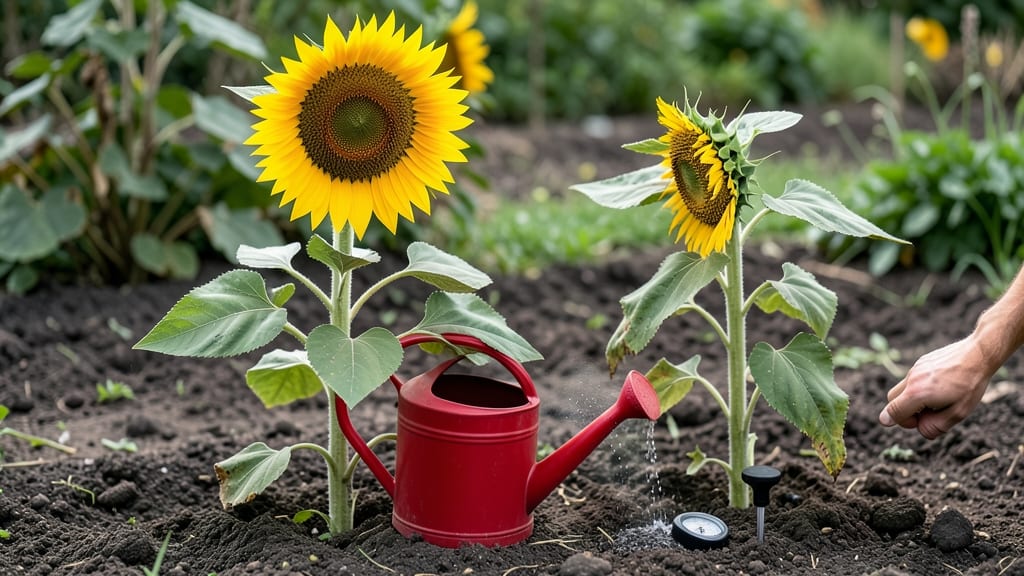
Do sunflowers actually require a lot of water? The answer might surprise you—they thrive with moderate water, not the heavy soaking many gardeners assume, to grow those towering 🌻 stems you love.
Picture this: your sunflowers are wilting by noon, or worse, their stems snap under the weight of blooms because you watered too much. The key is deep, infrequent soaks that keep roots happy without turning the soil into a swamp.
Young seedlings need consistent moisture, but mature plants in USDA Zone 6a can handle drought-like conditions once established—just don’t let them dry out completely. Below, I’ll break down the exact watering schedule by growth stage, plus how to spot over- or under-watering before it’s too late.
You’ll learn how to balance moisture for stronger stems, which varieties thrive with less water, and when to cut back as summer heats up. No guesswork, just science-backed tips to keep your sunflowers reaching for the sky.


Sunflower water needs by growth stage: how much is too much?
Sunflowers aren’t the high-maintenance divas you might think—they actually prefer consistent moisture but despise soggy soil. The key lies in their growth stages, where water needs shift dramatically. Too little water stunts growth, while too much weakens those iconic stems, causing them to flop like overcooked noodles.
Let’s break down the science-backed watering schedule to keep your sunflowers standing tall and proud.
When seedlings first sprout, their tiny roots need gentle, frequent moisture to establish. Overwatering here risks damping off, while underwatering stalls germination. As they grow, their thirst increases—but not as much as you’d expect. Mature sunflowers can handle brief dry spells, thanks to their deep taproots.
The trick is balancing hydration with soil health to prevent fungal diseases and stem rot.
Here’s the stage-by-stage watering guide you need to avoid common pitfalls and grow sunflowers that reach their full potential:
During the germination stage, I keep my soil consistently moist (like a wrung-out sponge) to encourage sprouting. Use a fine mist or drip irrigation to avoid displacing seeds.
Once seedlings emerge, switch to shallow watering—just enough to keep the top inch of soil damp. Overwatering now can lead to fungal diseases like powdery mildew, which thrives in damp, shady conditions.
As sunflowers enter vegetative growth (2-6 weeks), their roots dive deeper, and you’ll notice larger leaves unfurling daily. This is when you should deep-water—aim for 1-2 inches of moisture per session.
Check soil moisture by sticking your finger 2-3 inches down; if it feels dry, it’s time to water. Yellowing leaves or wilting in the heat of the day are clear signs your plants need a drink.
The flowering stage (6-10 weeks) is critical—this is when sunflowers demand the most water to support their massive blooms. Bud drop (flowers falling off before opening) is a red flag for underwatering or inconsistent moisture.
I water deeply every 5-7 days, ensuring moisture reaches 8+ inches down. Morning watering is best to prevent fungal issues and give foliage time to dry. Overwatering here weakens stems, causing them to flop dramatically—a gardener’s worst nightmare.
When sunflowers shift to seed development (10-12 weeks), their water needs diminish slightly, but consistency is still key. Overwatering now can lead to seed mold or cracked seed heads, while underwatering reduces yield.
I reduce frequency to every 7-10 days but keep an eye on soil moisture. Drought stress at this stage won’t kill your plants, but it’ll shrink those iconic sunflower seeds you’re hoping to harvest.
To test soil moisture like a pro, I use the finger test: Push your index finger 2-3 inches deep. If it feels dry, water thoroughly.
For a data-driven approach, invest in a soil moisture meter—these tools save time and prevent guesswork. Visual cues like crisp leaves, upright stems, and vibrant blooms confirm you’re nailing the watering balance. Wilted leaves that don’t recover or yellowing at the base signal it’s time to adjust your schedule.
Pro tip: M
Common watering mistakes that kill sunflowers (and how to fix them)
Sunflowers may look sturdy, but their towering stems are surprisingly fragile when watered incorrectly. The most common mistake? Overwatering young plants, which causes stem rot and weak growth.
Even mature sunflowers suffer from inconsistent moisture, leading to fungal diseases like powdery mildew. Let’s fix these issues before your sunflowers wilt—or worse, collapse.
Another frequent error is underwatering during drought, which stresses plants and reduces flower production. Sunflowers need deep, infrequent watering rather than shallow daily sprinkles. The key is balancing moisture so roots grow strong while avoiding soggy soil. Let’s troubleshoot these problems step by step.
⚠️ callout warning ⚠️
Sunflowers hate wet feet. Signs of overwatering include:
- Yellowing leaves (especially lower ones)
- Mushy, blackened stems at the base
- Slow or stunted growth despite moist soil
Fix it: Let soil dry 2-3 inches deep between waterings. Improve drainage by adding sand or perlite to clay-heavy soil.
For underwatered sunflowers, look for crispy leaf edges and wilting that recovers after watering. These plants often develop thin, weak stems that can’t support their heavy blooms.
To recover, water deeply until moisture reaches 12-18 inches down—about 1-2 gallons per plant. Mulch heavily to retain moisture and reduce evaporation.
Inconsistent watering—like daily light showers followed by drought—creates stress cracks in stems. Sunflowers need 1-2 inches of water weekly during active growth (spring/summer). Use a soaker hose or drip irrigation to deliver water slowly at the soil level, avoiding leaf wetness that invites mildew.
If your sunflowers already show signs of stem rot or fungal issues, act fast. Prune away infected leaves with sterilized shears and apply a copper fungicide or baking soda spray (1 tsp baking soda + 1 quart water).
Reduce watering immediately and improve airflow around plants by spacing them 12-24 inches apart.
Pro tip: Morning watering is best—it gives leaves time to dry before evening humidity sets in. Avoid watering at night, which traps moisture and promotes fungal growth. With these fixes, your sunflowers will grow straight and strong, reaching their full potential without flopping over.