
Shrubs
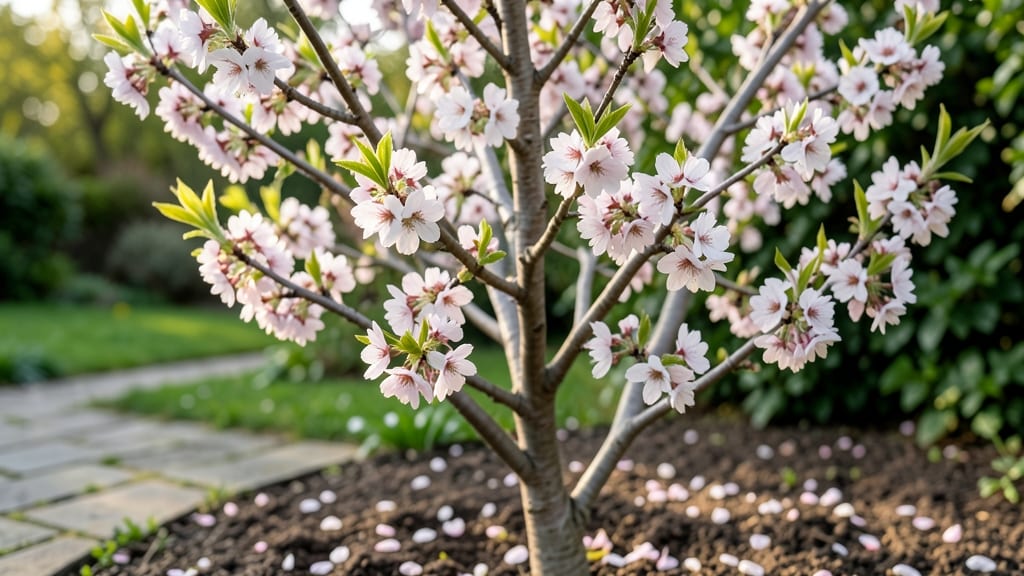
A flowering almond tree’s size can reach 10 to 20 feet tall if left unchecked, but with the right approach, you can shape it into a manageable, blooming beauty for your garden 🌸.
If your flowering almond tree is sprawling beyond its intended space, you’re not alone—many gardeners struggle with controlling its size without sacrificing those stunning spring blooms.
The good news? This shrub’s growth habits are predictable, and with strategic pruning, soil adjustments, and smart spacing, you can keep it compact while maximizing its fragrant flowers.
In this guide, I’ll break down how to manage its height, when to prune for the best shape, and even how to choose a dwarf variety if you prefer a smaller, more contained look.


How flowering almond tree size varies by variety and pruning techniques
The size of your flowering almond tree depends heavily on the variety you choose and how aggressively you prune it. Some varieties naturally stay compact, while others can reach 20 feet tall if left unchecked.
Understanding these differences helps you plan your garden layout and maintain a tree that fits your space without sacrificing those show-stopping spring blooms.
For example, Prunus triloba (the common flowering almond) typically grows 10-20 feet tall with a 10-15 foot spread, while Prunus glandulosa (the dwarf variety) maxes out at 5-8 feet tall.
The right pruning techniques can further shape these dimensions to your liking, whether you want a tall, narrow specimen or a low, bushy shrub.
When selecting a flowering almond variety, consider your garden’s available space and your pruning goals. Dwarf varieties like Prunus glandulosa are perfect for small yards or containers, while standard types thrive as focal points in larger landscapes.
Even with dwarf varieties, pruning techniques can further refine their shape and encourage denser blooms.
Pruning plays a critical role in controlling size. Thinning cuts remove entire branches to reduce overall spread, while heading cuts trim back the tips of branches to encourage bushier growth.
For a compact flowering almond, focus on removing water sprouts (vigorous vertical shoots) and shaping the canopy to open it up for better airflow and bloom visibility.
Timing matters too. The best time to prune is late winter or early spring, just before new growth begins. This allows you to shape the tree without interfering with the current year’s blooms.
Avoid heavy pruning after flowering, as this can reduce next year’s flower production. Instead, do light cleanup pruning in summer to remove dead or diseased branches.
If you’re working with a mature flowering almond that’s outgrown its space, don’t panic. Gradual pruning over 2-3 years can safely reduce its size while maintaining its health. Start by removing up to 25% of the canopy in the first year, then 10-15% annually thereafter.
Always use sterilized pruning tools to prevent disease spread, and seal larger cuts with pruning sealant to protect the tree.
For container-grown flowering almonds, root restriction naturally limits size. Choose a dwarf variety and repot every 2-3 years to refresh the soil. Prune roots gently during repotting to encourage a denser root ball and slower top growth.
Step-by-step guide to pruning for a compact flowering almond tree
A flowering almond tree (Prunus triloba) can reach 10-20 feet tall if left unchecked, but with the right pruning techniques, you can keep it compact while maintaining its abundant spring blooms.
The secret is timing—prune at the right seasons and focus on shaping rather than just cutting back. This guide breaks down a seasonal pruning schedule to encourage bushier growth and control height without sacrificing flowers.
Before you begin, gather your tools: sharp bypass pruners, loppers for thicker branches, gloves, and disinfectant to prevent disease spread. Safety first—wear eye protection and avoid pruning during wet weather. Start by removing any dead, diseased, or crossing branches first, as these can hinder growth and attract pests.
Prune in February before buds swell. Remove up to 25% of the canopy to open the center for airflow. Focus on vertical growth—cut back 1/3 of the tallest branches to redirect energy to lateral branches. Use the thinning cut method to remove entire branches at the base.
Prune immediately after flowering (April) to shape the tree. Remove spent flower clusters and weak, inward-growing branches. Avoid heavy pruning now—focus on light shaping to maintain bloom potential. Use heading cuts to encourage bushier growth on lateral branches.
If your tree is still growing too tall, do a light pruning in July. Remove only the tips of overgrown branches to slow vertical growth. Avoid heavy cuts—this can stress the tree and reduce next year’s blooms. Water deeply after pruning to help recovery.
❌ Pruning in fall—this encourages new growth that won’t harden off before winter. ❌ Over-pruning—never remove more than 25% of the canopy in one season. ❌ Leaving stubs—always cut just above a bud or branch collar for clean healing.
To encourage a bushier, more compact shape, prioritize lateral branches over vertical ones. When pruning, always cut just above a bud facing outward to promote growth in the direction you want.
For example, if your tree is leaning, make cuts on the heavier side to balance it. Mulch around the base after pruning to retain moisture and reduce stress on the tree.
Monitor your tree’s response after each pruning session. If you notice fewer blooms the following spring, you may have pruned too aggressively. Adjust your approach—focus on shaping rather than reducing size in future sessions.
With patience, your flowering almond will stay compact while still putting on a spectacular spring show.
Remember, pruning is an ongoing process. Revisit your tree every season to maintain its shape and health. Over time, you’ll develop a rhythm that keeps your flowering almond manageable and blooming beautifully year after year.