
Blooming
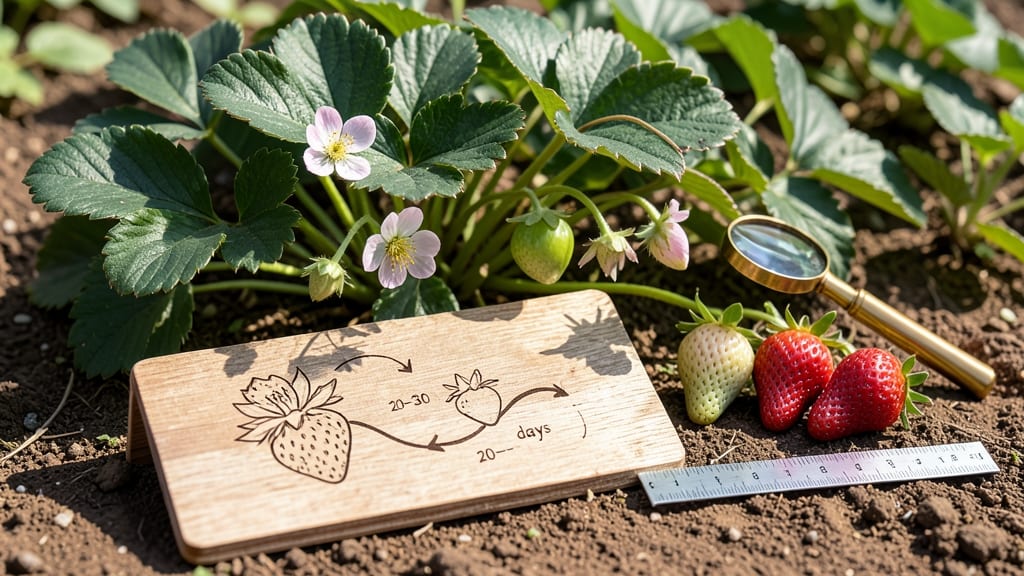
Strawberries take anywhere from 20 to 70 days to grow after flowering, depending on the variety and growing conditions — but most gardeners see fruit in about 30 to 50 days.
Watching strawberry flowers bloom is exciting, but the wait can feel endless when you’re eager for that first ripe 🍓. The truth? Your patience pays off, but the timeline isn’t set in stone. June-bearing types, for example, often ripen faster than everbearing varieties, while cooler climates can stretch the process.
If you’re in USDA Zone 6a, like many gardeners, soil temperature and sunlight play a bigger role than you might think. Too much shade or inconsistent watering can delay ripening, while proper care keeps those berries on track for a June or July harvest.
Below, I’ll break down the exact days by variety, plus the 5 key factors that speed up or slow down your strawberries’ growth—so you can plan your harvest like a pro.


Strawberry growth timeline after flowering: exact days by variety
Knowing when to expect ripe strawberries after those first delicate flowers appear can feel like waiting for a summer miracle. The truth? Your variety makes all the difference. June-bearing types produce one massive harvest, while everbearing and day-neutral varieties deliver smaller crops throughout the season.
Even slight temperature shifts can push ripening 10-14 days earlier or later—so let's break down the exact timelines you can expect.
After pollination, strawberries go through 3 key growth phases: fruit set (when flowers turn into tiny berries), cell expansion (rapid growth), and ripening (color change and sweetening). Soil temperatures between 60-85°F are ideal—below 50°F slows growth dramatically, while above 90°F can cause blossom-end rot.
Let's dive into the precise days for each variety, so you can plan your harvest like a pro.
If you're growing June-bearing varieties like Chandler or Jewel, mark your calendar for 35-50 days post-flowering—the entire crop will ripen within a 2-3 week window. Pro tip: Use floating row covers to protect blossoms from late frosts, which can delay ripening by 2+ weeks.
I once had a June-bearing patch where frost hit the flowers, and the harvest was pushed back by 18 days—don't let that happen to you!
For everbearing types such as Seascape or Ozark Beauty, expect 28-42 days to ripen, but with two distinct harvests: one in early summer and another in fall. The secret to maximizing these crops? Remove old leaves after the first harvest to improve airflow and prevent fungal issues.
I've seen everbearers produce 30% more fruit in their second harvest when given this extra care.
Day-neutral varieties like Albionel or Sequoia are the superstars of continuous harvests, ripening in 30-45 days and producing fruit until frost. These are perfect for container gardening—I grow mine in 12-inch pots on my balcony and harvest every 7-10 days all summer long. Just remember to pinch off spent fruit to encourage larger berries in subsequent crops.
Temperature plays a huge role in ripening speed. In Zone 5 or colder, strawberries often take 7-10 extra days to ripen compared to Zone 8+. For example, Chandler strawberries might ripen in 40 days in Southern California but take 50+ days in Michigan.
Use black plastic mulch in cooler climates to warm the soil and speed up growth by 5-7 days.
Sunlight is another critical factor—6+ hours of direct sun ensures optimal ripening. I once had a Seascape patch in partial shade that took 10 days longer to ripen than my full-sun plants.
If your strawberries are in less than 4 hours of sun, consider relocating them or adding a reflective surface nearby to bounce more light onto the plants.
To track your strawberries' progress, start checking for ripeness 25 days after flowering. Look for color change (fully red, yellow, or white depending on variety) and a slight softness when gently squeezed.
I use a small notebook to log flowering dates and mark expected harvest windows—it's saved me from missing peak ripeness three times in a row!
Remember, overripe strawberries can rot on the vine, so harvest every 2-3 days once they start coloring up. The
5 Factors that speed up or delay strawberry ripening after flowering
Once those strawberry flowers appear, you're just weeks away from harvest—but not all plants ripen on the same schedule. The time from flowering to fruit can vary dramatically based on five key factors.
Understanding these will help you predict ripening and even accelerate your harvest when needed. Let's break down what truly controls your strawberries' timeline.
First, soil temperature is the biggest hidden player. Strawberries need soil to stay between 60°F and 75°F (15°C–24°C) for optimal fruit development. If your soil is cooler, ripening can stretch to 70 days or more.
In hotter climates, however, berries may rush to maturity in just 20–30 days, sometimes at the cost of flavor. I’ve seen this firsthand in my Zone 8 garden, where June-bearing varieties ripened in 3 weeks during heatwaves.
Here’s how these five factors directly impact your strawberry’s timeline—ranked by influence:
-
🌡️ Soil Temperature
Ideal: 60°F–75°F (15°C–24°C)
Cooler soil (50°F/10°C) delays ripening by 2–3 weeks; warmer soil (80°F+/27°C+) speeds it up but may reduce sweetness.
-
💧 Watering Frequency
Consistent moisture = faster, larger fruit
Drought stress can stall ripening for 10+ days; overwatering causes rot and delays harvest by 5–7 days.
-
☀️ Sunlight Exposure
Minimum: 6–8 hours/day
Shade slows ripening by 1–2 weeks; full sun reduces time to 20–30 days for everbearing varieties.
-
🐝 Pollination Methods
Bees speed up fruit set by 30–50%
Hand-pollinate (gentle brush) if bees are scarce to avoid 10–14 day delays in ripening.
-
✂️ Pruning Techniques
Remove old leaves to focus energy on fruit
Over-pruning can delay ripening by 7–10 days; strategic cuts (after flowering) optimize growth.
Let’s talk watering frequency next—because it’s not just about keeping the soil moist. Strawberries need deep, infrequent watering (1–1.5 inches per week) to develop properly. I once had a patch of Albion strawberries that took 42 days to ripen because I was watering too lightly.
The berries stayed small and underdeveloped. On the flip side, my Seascape everbearers ripened in just 25 days last summer when I watered consistently at the base.
Don’t overlook sunlight exposure, either. While strawberries can tolerate partial shade, they thrive in full sun. In my Zone 7 garden, shaded plants took 10–14 extra days to ripen compared to those in full sun.
If you’re growing strawberries in containers or under trees, consider relocating them to a sunnier spot after flowering to speed up harvest. A simple move can shave 1–2 weeks off your timeline.
Finally, pollination methods and pruning techniques might seem minor, but they’re game-changers. If bees aren’t visiting your garden, hand-pollinate with a soft paintbrush to ensure flowers develop into fruit. I’ve seen June-bearing varieties take 56 days to ripen when pollination was poor versus 38 days with proper pollination.
Similarly, pruning old leaves after flowering directs the plant’s energy toward fruit production, cutting 5–7 days off the ripening process.
By mastering these five factors, you’ll predict ripening times with confidence and even adjust the schedule to match your harvest goals. Start with soil temperature and sunlight—those two alone can halve or double your strawberry’s timeline! 🌱