
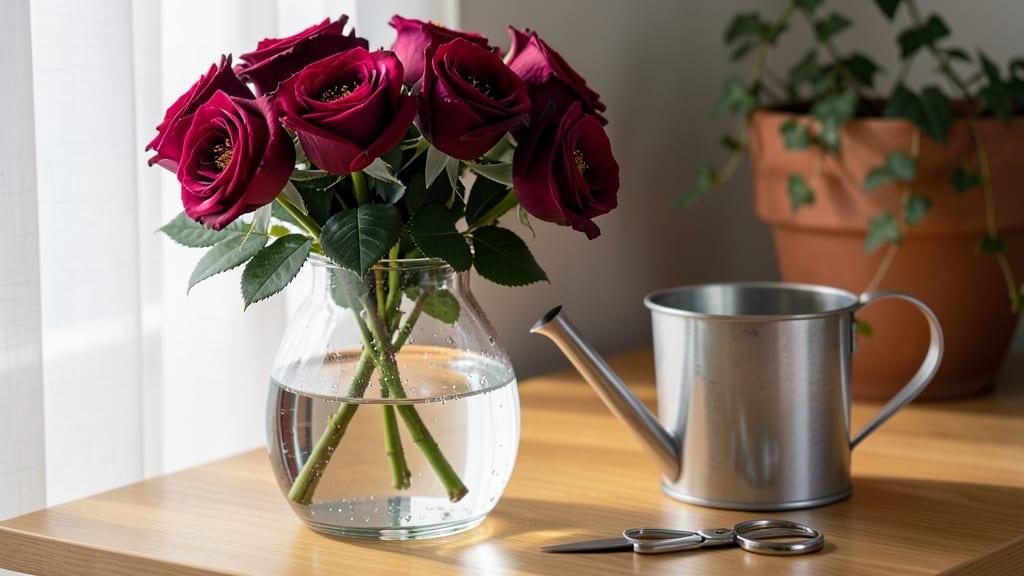
How Much Water in Vase for Flowers: Exact Ratios by Stem Count for Longer Life

Flowers

How Much Water in Vase for Flowers: Exact Ratios by Stem Count for Longer Life

Watering cut flowers in a vase isn't just about filling it up—the right amount of water keeps stems hydrated without drowning them, and that’s how you get days of freshness instead of wilting bouquets.

Cut flowers wilt faster than they should—but the right water-to-stem ratio can extend their vase life by days. Whether you're arranging roses, lilies, or wildflowers, the science behind hydration is simpler than you think.

Too little water and stems dry out; too much and bacteria blooms, cutting life short. I’ll break down the exact measurements by stem count, plus how to adjust for humidity, vase size, and even the type of flowers you’re working with.

By the end, you’ll know not just how much to use, but when to refresh it, how to trim stems for better absorption, and why changing the water every two days makes all the difference.

🌻
🚿
💧
Frequency
Every 2-3 days
🥛
Amount
1-2 Cups (250-500ml)
🌅
Best Time
Morning

Exact water-to-stem ratios for different flower types by stem count

Every bouquet has its own hydration needs, and getting the water-to-stem ratio right is the secret to keeping flowers fresh for 7-14 days instead of just a few. The key?

Understanding that thirsty blooms like roses need more water than succulents, and that stem count directly impacts how much to pour. For example, a 5-stem arrangement of hydrangeas needs far less water than a 20-stem mix of sunflowers and dahlias.

Flower stems act like straws, competing for water in the vase. The more stems you add, the faster the water depletes—especially in high-humidity conditions where evaporation slows.

But here’s the science: each stem requires about 1/4 cup of water daily for optimal hydration, though heavy drinkers like peonies or alstroemeria may need double that. Seasonal adjustments are critical too—summer heat demands more frequent refills, while winter air can dry stems faster than you’d expect.

Don’t assume all flowers play by the same rules. Delicate blooms like orchids or snapdragons prefer shallow vases with minimal water to prevent rot, while hardy stems like carnations or chrysanthemums thrive in deeper vessels.

The vase material matters too: glass retains moisture longer than ceramic, and plastic can trap bacteria. For the best results, always use lukewarm water and refresh it every 2-3 days, regardless of stem count.

Here’s where the magic happens—your stem-count guide to perfect hydration, tailored to the most popular flowers. Adjust for your climate, but these ratios are your starting point for vase life that lasts.

Water-to-Stem Ratios by Flower Type

Flower Type 5 Stems 10 Stems 15 Stems 20+ Stems Notes
Roses 1 cup 2 cups 3 cups 4-5 cups High water needs; trim stems daily
Tulips 3/4 cup 1.5 cups 2 cups 3 cups Add 1 tsp sugar to water
Sunflowers 1 cup 2.5 cups 3.5 cups 5 cups Heavy drinkers; use deep vase
Succulents (e.g., Echeveria) 1/4 cup 1/2 cup 3/4 cup 1 cup max Minimal water; change weekly
Peonies 1 cup 2.5 cups 4 cups 6 cups

5 Common mistakes that drain water too fast (and how to fix them)

Even with the perfect water-to-stem ratio, your flowers can still lose hydration faster than expected. Hidden issues like bacterial buildup or improper vase materials silently rob your blooms of moisture. These sneaky mistakes often go unnoticed until your bouquet wilts prematurely.

Understanding them is the first step to keeping your flowers fresh for days—not hours. Let's uncover the most common culprits and how to fix them.

One of the biggest water-wasters is bacterial growth in your vase. When stems sit in stagnant water, bacteria multiply and clog the stem openings. This blockage prevents flowers from drinking, causing them to droop even when water is present.

The fix? Refresh your vase water every 2-3 days, and add a flower food packet to slow bacterial growth. It's a simple habit that can add days to your bouquet's life.

Another silent water-drainer is using the wrong vase material. Glass vases may look elegant, but they don't always hold moisture well. Porous materials like ceramic or unglazed clay can absorb water, leaving less for your flowers.

For long-lasting hydration, opt for glass or plastic vases with a narrow neck to minimize evaporation. If you love ceramic, choose glazed pieces to prevent water absorption.

⚠️ Warning: These Mistakes Kill Your Flowers Faster

Dirty water = bacterial blockages that starve stems. Wrong vase shape = rapid evaporation. Untrimmed stems = air pockets blocking water uptake. Fix these, and your flowers will last 3-5 days longer!

Don't overlook stem blockages caused by air bubbles or debris. When stems aren't properly trimmed at an angle, air gets trapped inside, preventing water from traveling up to the petals. Always recut stems at a 45-degree angle before placing them in water.

This simple step opens up the stem's pathways, allowing flowers to drink efficiently. Do this every time you change the water for maximum hydration.

Overcrowding in your vase is another common mistake. Too many stems competing for water can actually reduce each flower's access to hydration. Aim for a loose arrangement with stems spaced apart. This ensures every bloom gets enough water without competition. For large bouquets, consider using multiple smaller vases instead of one overfilled container.

Finally, environmental factors like direct sunlight or heat sources can accelerate water loss. Place your vase away from windowsills, radiators, or air vents. These areas create a drying effect that pulls moisture from your flowers faster than the stems can absorb it.

A cool, shaded spot will help maintain optimal hydration levels and keep your bouquet looking fresh longer.

By addressing these five common mistakes, you'll transform your vase setup from a water-wasting trap into a hydration powerhouse. Your flowers will thank you with vibrant petals and lasting beauty—no fancy tools or expensive products required. Happy arranging! 🌷

★★★★★4.8(5 reviews)
Categories Flowers