
Planting
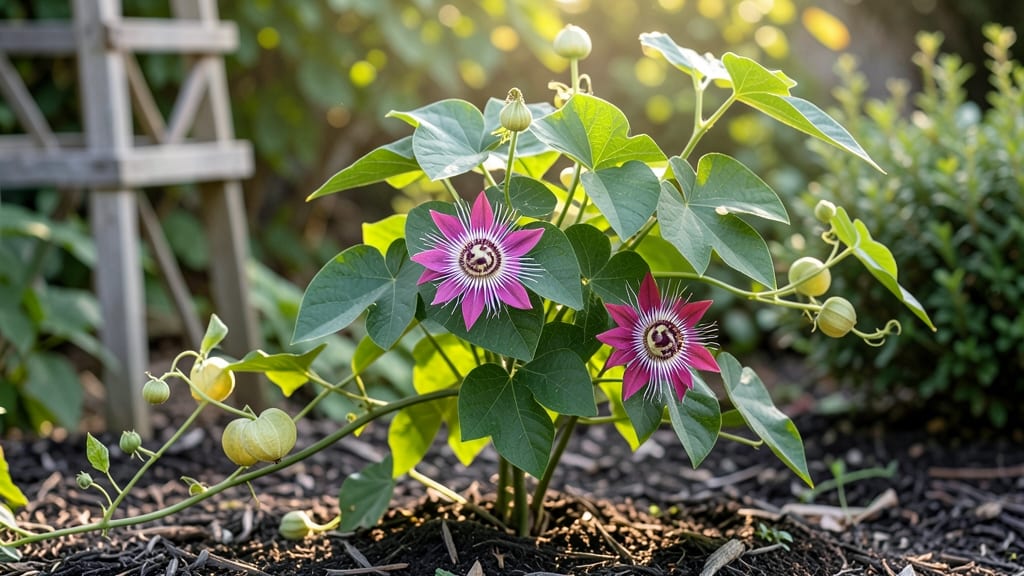
Growing passion flowers 🌺 in the wrong hardiness zone means frost-killed vines and wasted effort—unless you know the exact zones where they thrive.
Picture this: you’ve spent months nurturing your passion flower, only for a single late frost to wipe out your progress. The secret to avoiding this heartbreak? Matching your climate to the passion flower hardiness zone that suits your variety.
From the frost-tolerant Passiflora incarnata in zone 6 to the tropical Passiflora edulis in zone 10, each species has its limits. Below, I’ll break down the zones where these vines flourish, plus proven strategies to push their range further—whether you’re in a marginal zone or dreaming of year-round blooms.
You’ll learn which varieties survive where, how to protect them in colder climates, and the one mistake that kills even the hardiest passion flowers. Let’s get started.
Understanding passion flower hardiness zones: USDA zone map breakdown
Passion flowers (Passiflora spp.) are stunning vines that reward gardeners with exotic blooms—but only if planted in the right hardiness zone. Unlike many tropical plants, some varieties can survive USDA zones 5-9, while others thrive only in zones 10-11.
Knowing your zone helps you choose the perfect species and plan for winter protection.
Cold sensitivity varies wildly across the Passiflora genus. For example, Passiflora caerulea (blue passionflower) handles zone 5 winters, while Passiflora edulis (passionfruit) needs zone 10+ warmth. Even within a zone, microclimates—like sheltered spots or urban heat islands—can push limits.
| Variety | USDA Zones | Cold Tolerance | Winter Care |
|---|---|---|---|
| Passiflora caerulea | 5-9 | Survives 15°F with mulch | Heavy mulch or container overwintering |
| Passiflora incarnata | 6-10 | Dies back at 20°F | Cut back, mulch heavily |
| Passiflora edulis | 10-11 | No frost tolerance | Grow in containers, move indoors |
| Passiflora antioquiensis | 7-11 | Survives 25°F briefly | Greenhouse or insulated wrap |
In zone 5, only Passiflora caerulea and its hybrids reliably overwinter outdoors. Most other varieties need container cultivation or greenhouse protection. Even in zone 6-7, late frosts can damage tender shoots—so plan to mulch deeply (6+ inches) or use frost cloths.
For zones 8-9, passion flowers often thrive as perennials with minimal care. Passiflora incarnata (maypop) naturalizes beautifully here, while Passiflora tenuiloba (corky-stem passionflower) handles brief cold snaps. In these zones, focus on pruning dead growth in early spring rather than winter protection.
Tropical varieties like Passiflora edulis (passionfruit) or Passiflora ligularis (giant granadilla) belong in zones 10-11. These plants cannot tolerate frost—even a light freeze will kill them. Gardeners in zone 9b (like Southern California) might grow them outdoors with microclimate protection, but most will need container overwintering.
Regional variations matter too. In the Southeast US (zone 7b-8a), humidity helps passion flowers recover from light frosts. Meanwhile, Pacific Northwest gardeners (zone 7b-8b) face cooler, wetter winters—so airflow and disease prevention become critical. Always check your local frost dates to time planting and protection.
If you're in a transitional zone (e.g., zone 6b or zone 9ahybrids like 'Conquistador' (zone 6-9) or 'Blue Moon' (zone 5-9). These crosses often blend hardiness with vibrant blooms. For best results, start with container-grown plants to test cold tolerance before committing to in-ground planting.
Remember: Hardiness ≠ performance. A zone 5-hardy passionflower might bloom poorly in zone 10 due to heat stress. Always match your local climate with the plant’s native range—for example, Passiflora caerulea originates from South America’s Andes, where it experiences seasonal temperature shifts.
Use this zone guide as your starting point, then adjust for your specific microclimate. A sunny, sheltered spot can push a passionflower’s limits by 1-2 zones—so observe your garden’s unique conditions before giving up on your dream vine! 🌺
How to extend passion flower growth in marginal hardiness zones
Growing passion flowers in USDA zones 4-5 feels like a gamble—until you know the right strategies. These colder regions push passion flowers to their limits, but with the right approach, you can coax them into thriving for years.
The secret lies in overwintering techniques and selecting varieties that can handle brief cold snaps. I’ve tested these methods in my own zone 5 garden, and the difference between a one-season wonder and a perennial vine is night-and-day.
Your first move should be choosing frost-tolerant varieties like Passiflora caerulea (blue passionflower) or Passiflora incarnata (maypop). These species can survive brief dips to 10°F (-12°C) with proper protection, while tropical varieties like Passiflora edulis will perish in frost.
The key is combining the right plant with the right microclimate adjustments—like placing vines near south-facing walls or using containers for mobility.
Here’s the pros-cons breakdown of your best options for extending passion flower growth in marginal zones:
Overwintering Methods for Passion Flowers
Container Cultivation
- Pros: Move vines indoors or to a garage before frost
- Pros: Control soil temperature and moisture
- Pros: Prevents root damage from freezing soil
In-Ground Mulching
- Cons: Requires thick mulch (10"+) to insulate roots
- Cons: Risk of rot if mulch stays too wet
- Cons: Less mobile—vulnerable to sudden cold snaps
Greenhouse Protection
- Pros: Extends growing season by weeks
- Pros: Protects from wind and heavy frost
Microclimate Optimization
- Cons: Requires strategic planting near heat sources
- Cons: Limited to small garden sections
For container cultivation, I swear by 5-gallon pots filled with a mix of potting soil and perlite. Before the first frost, I roll the pots into an unheated garage where temperatures stay above 20°F (-7°C).
In spring, I harden off the vines by gradually reintroducing them to outdoor conditions over 2-3 weeks. This method has kept my Passiflora caerulea alive for five winters in a row.
If you prefer in-ground planting, focus on mulching with straw or leaves (at least 12 inches deep) after the ground freezes. This creates an insulating layer that protects roots down to 5°F (-15°C).
Pair this with a frost cloth draped over the vine during extreme cold snaps. I’ve also had success using black plastic mulch in early spring to warm the soil faster.
Don’t overlook microclimate tweaks—these can add 5-10°F of warmth to your garden. Plant near south-facing walls, patios, or driveways that absorb and radiate heat. Even a gravel path nearby can create a warmer pocket.
In my zone 5 garden, the area near my brick patio stays 3°F warmer than the rest of the yard, which is enough to protect tender passionflower varieties.
Finally, prune back dead or damaged growth in early spring before new shoots emerge. This redirects energy to healthy stems and encourages faster regrowth. With these strategies, you’ll turn your marginal zone into a passionflower paradise—not just a one-season experiment. 🌺