
Plants
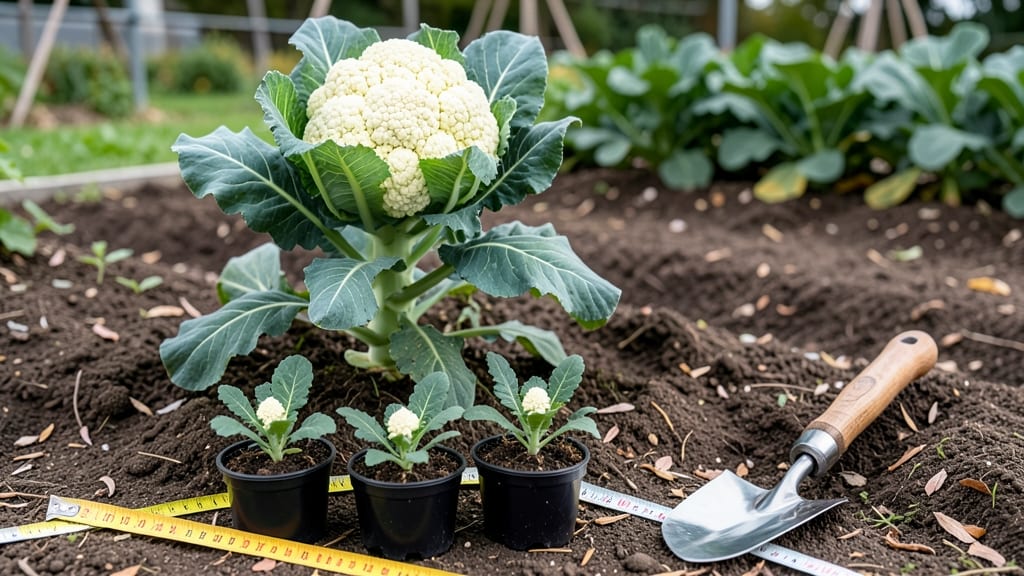
To space cauliflower plants correctly is the key to harvesting those perfect, dense heads you’ve been dreaming of 🥬 — and skipping this step can mean small, bitter curds or even no harvest at all.
Picture this: You’ve spent weeks nurturing your seedlings, only to watch them bolt or split open before they’re ready. That’s the frustration of overcrowding, and it’s avoidable with the right distance between plants.
The good news? Getting this right isn’t complicated — it’s just about knowing the rules for your variety and soil.
Why does spacing matter so much? Airflow prevents disease, soil nutrients aren’t competed over, and the plants have room to grow into those bushy heads you’re after. Whether you’re working with compact Romanesco or large green curds, the right spacing keeps everything in balance.
In this guide, I’ll break down the exact distances for transplants and direct-seeded plants, how to adjust for your garden layout, and what to do if you’ve already planted too close. By the end, you’ll know exactly how to arrange your cauliflower for a high-yield season.
Ideal cauliflower spacing by variety: transplants vs. direct-seeded plants
Proper cauliflower spacing is the foundation of a successful harvest. Whether you're growing green curd, Romanesco, or purple varieties, the distance between plants determines head size, airflow, and disease resistance.
I’ve learned from years of trials that even 1 inch too close can stunt your crop—so let’s get this right from the start.
Cauliflower plants fall into two main planting categories: transplants (young plants started indoors) and direct-seeded (planted straight into the garden). Each method requires slightly different spacing to account for early growth stages. For example, transplants need more room immediately, while direct-seeded plants can be thinned as they grow.
Here’s the key rule: Bigger varieties like ‘Snowball Y Improved’ need 24–36 inches apart, while compact types such as ‘Purple of Sicily’ thrive with just 12–18 inches.
Row spacing also matters—24–36 inches between rows ensures easy access for weeding and harvesting. Let’s break it down by variety and method.
| Variety Type | Planting Method | Plant-to-Plant Spacing | Row Spacing | Mature Size | Notes |
|---|---|---|---|---|---|
| Green Curd (Standard) | Transplants | 24–30 inches | 30–36 inches | 18–24 inches tall | Needs ample space for large heads |
| Green Curd (Compact) | Transplants | 18–24 inches | 24–30 inches | 12–18 inches tall | Great for small gardens |
| Romanesco | Transplants | 24–30 inches | 30–36 inches | 20–24 inches tall | Fractal heads need airflow |
| Purple Cauliflower | Direct-Seeded | 12–18 inches | 24 inches | 12–16 inches tall | Thin seedlings to 12 inches |
| Orange Cauliflower | Transplants | 18–24 inches | 24–30 inches | 14–18 inches tall | Heat-tolerant, compact heads |
For direct-seeded cauliflower, start with seeds ¼ inch deep and 1 inch apart. Once seedlings reach 2–3 inches tall, thin them to the recommended spacing. I’ve found that thinning early reduces transplant shock and gives roots room to expand.
If you’re growing transplants, space them at maturity right away. Avoid the temptation to squeeze them closer—crowded plants develop smaller heads and are more prone to disease like clubroot. I once planted ‘Snowball’ transplants 12 inches apart and ended up with half-sized heads.
Row spacing is equally critical. 30–36 inches between rows allows for easy weeding and prevents soil-borne diseases from
How overcrowding and under-spacing ruin cauliflower yields (and how to fix it)
If your cauliflower plants are producing small, loose heads or struggling to mature, the issue might be spacing mistakes you’re overlooking. Too little room between plants leads to competition for nutrients, stunted growth, and even disease spread from poor airflow.
I’ve seen firsthand how overcrowded cauliflower patches yield puny curds or bolt prematurely—here’s how to fix it.
One of the biggest mistakes gardeners make is treating all cauliflower varieties the same. Dwarf varieties like ‘Snowball Y’ can handle tighter spacing, while large-headed types like ‘Romanesco’ need room to develop.
Ignoring these differences often results in stunted growth or plants that never form proper heads. Let’s break down the common pitfalls and solutions.
⚠️ Spacing Mistakes That Kill Yields
- Planting too close (e.g., 12 inches apart for large varieties) → Small, misshapen heads and bolting.
- Ignoring row spacing (e.g., 24-inch rows for standard types) → Poor airflow and fungal diseases like clubroot.
- Skipping thinning after germination → Weak, leggy plants that compete for sunlight.
Fix these issues by adjusting spacing based on variety size and using companion plants to maximize space efficiency.
Let’s start with plant-to-plant spacing. For most standard cauliflower varieties, aim for 18-24 inches apart in rows spaced 24-36 inches.
This gives roots room to spread and heads space to develop without crowding. Dwarf varieties can tolerate 12-18 inches apart, but even they need proper row spacing to prevent disease pressure.
Thinning is another critical step many gardeners skip. Once seedlings reach 2-3 inches tall, thin to the recommended spacing. Use sharp scissors to avoid damaging roots, and harvest the thinnings for baby greens—it’s a zero-waste win!
If you’re growing in containers, limit to 1-2 plants per 12-inch pot to avoid root competition.
To maximize space, pair cauliflower with companion plants like onions, lettuce, or spinach, which thrive in its shade. Avoid planting near tomatoes or brassicas, which can compete for nutrients or attract pests.
In small gardens, try succession planting: Harvest early varieties and replant the space with a second crop.
Finally, monitor your plants for signs of stress like yellowing leaves or stunted growth, which often signal overcrowding. Adjust spacing or thin immediately to give plants room to recover. With the right spacing, you’ll go from frustrating failures to bountiful harvests in no time.