
Fertilization
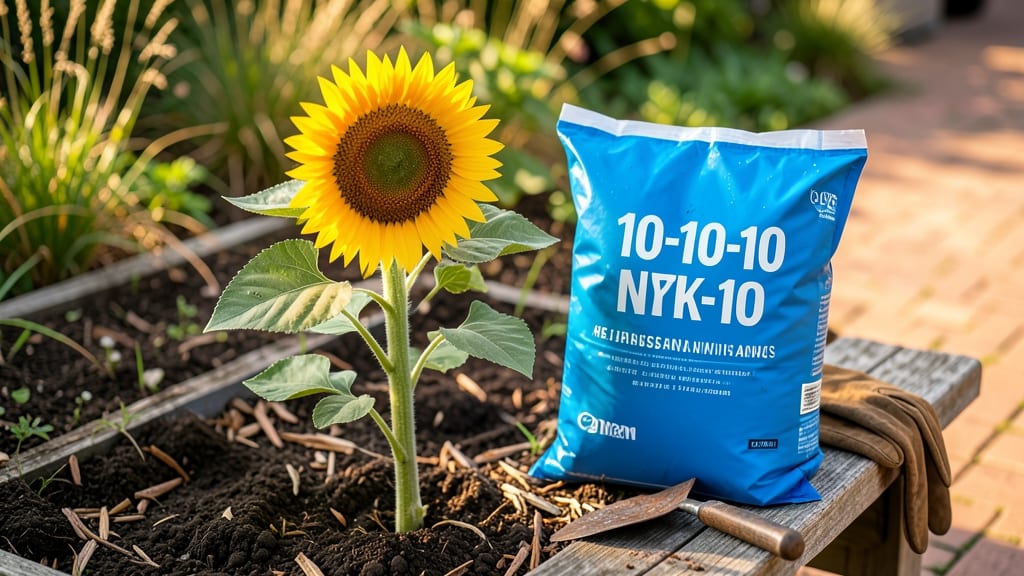
A 10-10-10 fertilizer for sunflowers 🌻 is the balanced boost your towering plants need to reach their full height potential—but timing and technique are everything.
Picture this: you’ve planted your sunflower seeds in April, and by July, you’re dreaming of 12-foot giants—but without the right fertilizer schedule, you might end up with leggy, weak stems instead.
The key lies in when and how you feed them, not just the type of fertilizer you use.
Most gardeners overlook the three critical growth stages where 10-10-10 makes the biggest difference: early root development, rapid stem growth, and flowering. Skip one, and you’ll miss out on that maximum height you’re after.
In this guide, I’ll walk you through the exact application schedule, how much to use, and when to stop—so you can grow sunflowers that outshine the rest of the garden without burning their roots.

How to use 10-10-10 fertilizer for sunflower height growth
Sunflowers are nature's skyscrapers, and 10-10-10 fertilizer is the foundation that helps them reach their towering potential. This balanced fertilizer provides equal parts nitrogen, phosphorus, and potassium, which are essential for stem strength, root development, and flower blooming.
But applying it correctly is just as important as choosing the right product—too much too soon can burn delicate roots, while too little leaves your sunflowers stunted and weak.
Before you even think about fertilizer, your sunflowers need well-prepared soil. Sunflowers thrive in loose, well-draining soil with a pH between 6.0 and 7.5. If your soil is heavy clay or compacted, mix in 2-3 inches of compost or aged manure before planting.
This improves aeration and gives your plants a nutrient boost right from the start. Test your soil first—many garden centers offer affordable kits to check pH and nutrient levels.
Step-by-Step Guide to Applying 10-10-10 Fertilizer for Sunflowers
-
1
Pre-Planting Soil Boost (Optional)
Mix 1 tbsp 10-10-10 per square foot into the top 6 inches of soil 1-2 weeks before planting. This gives roots a head start without overwhelming young seedlings. -
2
At Planting Time
Apply 1 tbsp 10-10-10 per plant when you sow seeds or transplant seedlings. Gently scratch it into the soil around the base, keeping it 2 inches away from stems to prevent root burn. -
3
Early Growth Stage (4-6 Weeks After Germination)
When seedlings have 2-4 true leaves and are 6-12 inches tall, apply 1 tbsp 10-10-10 per plant. Water thoroughly before and after to help nutrients absorb safely. -
4
Flowering Stage (6-8 Weeks After Planting)
Once buds form and flower stalks emerge, feed again with 1 tbsp 10-10-10 per plant. This supports stem elongation and bloom development. Avoid fertilizing once flowers fully open. -
5
Post-Flowering (Optional for Seed Production)
If growing sunflowers for seeds, apply a final light feeding (½ tbsp per plant) once flowers wilt. This encourages seed maturation without promoting excessive foliage growth. -
6
Watering Protocol
Always water deeply before and after applying fertilizer. This helps dissolve nutrients and prevents root burn. Aim for 1-2 gallons per plant in the morning to avoid evening moisture on leaves.
One of the biggest mistakes gardeners make is over-fertilizing sunflowers, especially when they're young. Too much nitrogen early on can lead to leafy growth at the expense of height, while excessive phosphorus can cause stunted stems.
Stick to the 1 tbsp per plant rule and space applications 4-6 weeks apart during the growing season. If your sunflowers are already tall and sturdy by mid-summer, you can skip the second feeding entirely.
For container-grown sunflowers, reduce the amount by half—½ tbsp per plant—since pots have limited soil volume. Container plants also need more frequent watering to flush out excess salts from fertilizer.
If you notice crispy leaf edges or yellowing between veins, flush the soil with water immediately to reduce salt buildup.
Timing your fertilizer applications with the sunflower's growth cycle is key. The first feeding at planting sets the stage for strong roots, while the mid-season boost during flowering ensures your plants have the energy to reach their maximum height.
Remember, sunflowers are fast growers, so they'll outpace many other plants in your garden—give them the nutrients they need early to avoid playing catch-up later.
If you're growing sunflowers for cut flowers or seed production, pay extra attention to the flowering stage. This is when your plants need the most support to develop large, sturdy stems and high-quality blooms.
A light feeding here can make the difference between a sunflower that flops over and one that stands proudly in your vase or seed collection.
Pro tip: Mix your 10-10-10 fertilizer with a slow-release organic option, like composted manure or worm castings, for a balanced approach. This combo provides immediate nutrients while also improving soil health long-term. Your sunflowers will thank you with taller stems and brighter blooms all season long.
Sunflowers grow in dramatic stages, and each phase demands a different approach to 10-10-10 fertilizer. Applying it at the wrong time can stunt growth or even harm your plants. The key is understanding how sunflowers shift their nutrient needs from seedling to flowering to bolting—and when to feed them for maximum height. Let’s break down the perfect timing for each critical stage. First, 10-10-10 fertilizer provides balanced nitrogen (N), phosphorus (P), and potassium (K), which sunflowers crave at different times. Too much nitrogen early can delay flowering, while too little phosphorus can weaken roots. The trick is to match the fertilizer to the plant’s current growth phase, not just dump it all at once. Let’s explore the science behind each stage. 🌱 Summary Table: Best Times to Apply 10-10-10 Fertilizer for Sunflowers
Best times to apply 10-10-10 fertilizer for sunflowers
Growth Stage
When to Apply
Amount
Purpose
Seedling (0-4 weeks)
At planting + 2 weeks later
½ tbsp per plant
Encourages root and stem growth
Vegetative (4-8 weeks)
Every 4 weeks
1 tbsp per plant
Supports leaf and stalk development
Flowering (8-12 weeks)
Once buds form
½ tbsp per plant
Boosts bloom size and seed production
Bolting (12+ weeks)
None
—
Plant focuses on seed development
The seedling stage (0-4 weeks) is all about establishing a strong foundation. Apply half the recommended dose of 10-10-10 fertilizer at planting, then again when the first true leaves appear.
This gives young sunflowers the nitrogen they need for leaf growth without overwhelming their delicate roots. Think of it as a gentle wake-up call to spur early vigor.
Once your sunflowers hit the vegetative stage (4-8 weeks), they’re ready for a full dose of 10-10-10 fertilizer every 4 weeks. This is when they’re building their iconic tall stalks and broad leaves.
The balanced nutrients help them grow faster and stronger, but avoid overdoing it—more than 1 tbsp per plant can lead to weak stems prone to lodging (falling over).
When flower buds start forming (around 8-12 weeks), switch to a lighter touch. Apply just half the dose of 10-10-10 to support bloom development without encouraging excessive foliage.
This is the stage where sunflowers shift their energy from growth to reproduction, and too much nitrogen can delay or reduce flowering. Timing here is everything!
Finally, once your sunflowers enter the bolting stage (12+ weeks), it’s time to stop fertilizing entirely. At this point, the plant is focused on producing seeds, not growing taller.
Adding fertilizer now can lead to bitter-tasting seeds or even stunt their development. Instead, let nature take its course and enjoy the stunning sunflower blooms you’ve cultivated.
Pro tip: Always apply 10-10-10 fertilizer in the morning to give the roots time to absorb nutrients before the heat of the day. Water thoroughly after application to prevent root burn, and avoid fertilizing if rain is forecasted within 24 hours.
Your sunflowers will thank you with taller stalks and bigger blooms! 🌻