
Planting
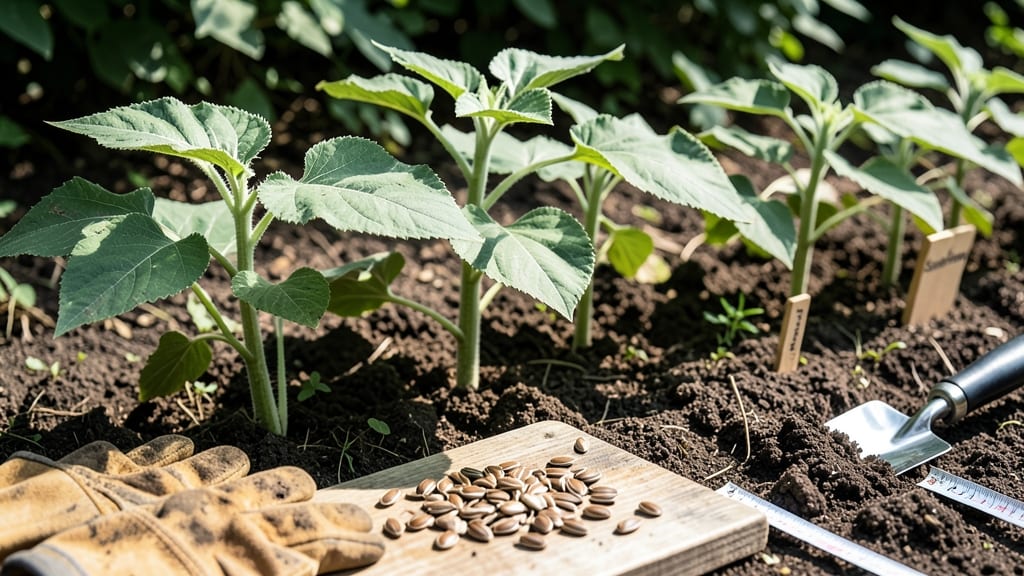
Proper sunflower seed spacing is the foundation of a thriving garden—because those towering 🌻 stalks won’t reach their full potential if they’re fighting for space.
You might think sunflowers are forgiving, but crowd them too close, and you’ll end up with weak stems, yellowing leaves, or worse—a tangled mess that blocks sunlight for the whole patch. The right distances make all the difference between a scraggly border and a showstopping display.
Whether you’re growing dwarf varieties for containers or giants for cut flowers, the spacing rules change based on height, soil, and even your local climate. Too little room, and you’ll lose yield; too much, and you waste garden space.
Below, I break down the exact measurements for every type, plus how to adjust for your growing conditions.
Ready to plant with confidence? You’ll learn the ideal distances for rows, hills, and individual seeds—plus how to spot (and fix) common spacing mistakes before they stunt your sunflowers.
Optimal sunflower seed spacing by variety: dwarf vs. giant vs. standard
Sunflowers are dramatic plants—some reaching 12+ feet tall—but their seed spacing determines whether they grow strong or struggle. The wrong distance means competing for nutrients, weak stems, or even pest infestations from overcrowding.
Different varieties need unique spacing to thrive, and ignoring these guidelines can cut your yield by 30-50%. Let’s break down the exact distances for dwarf, standard, and giant sunflowers, plus how sunlight plays a role.
Dwarf sunflowers (2-4 feet tall) are perfect for containers or small gardens, but even they need room to breathe and spread. Standard varieties (6-10 feet) are the most versatile, while giant sunflowers (10+ feet) require serious space to avoid flopping over.
The key? Match spacing to mature width, not just height. A 12-inch spacing for dwarfs might seem plenty, but their leaf spread can reach 2 feet wide—crowd them, and you’ll see yellowing leaves from shade competition.
| Variety | Mature Height | Spacing (inches) | Row Spacing (feet) | Sunlight Needs | Best For |
|---|---|---|---|---|---|
| Dwarf (e.g., 'Teddy Bear', 'Moulin Rouge') | 2–4 ft | 6–12" | 1.5–2 ft | 6+ hours | Containers, borders, small gardens |
| Standard (e.g., 'Mammoth', 'Autumn Beauty') | 6–10 ft | 12–18" | 2–3 ft | 8+ hours | Cut flowers, pollinators, backyard gardens |
| Giant (e.g., 'Russian Giant', 'Mammoth Russian') | 10–14+ ft | 24–36" | 3–4 ft | 10+ hours | Large gardens, windbreaks, statement plants |
🌻 Pro Tip: Giant varieties need staking if spaced too closely—aim for 3 feet apart in windy areas.
Sunlight is the make-or-break factor for sunflower spacing. Dwarf varieties can tolerate partial sun (6+ hours), but their flower production drops by 40% with less. Standard and giant sunflowers demand full sun (8+ hours)—any less, and you’ll see stretched, weak stems reaching for light.
I once grew 'Mammoth Russian' in a 6-hour sun spot; they reached 8 feet tall but leaned like drunken sailors and produced half the seeds of properly spaced plants.
For dwarf sunflowers, 6–12 inches apart works for most varieties, but check the seed packet—some like 'Little Becka' need only 6 inches while others like 'Teddy Bear' prefer 12 inches.
Plant in small hills (3–4 seeds per mound) to save space, then thin to the strongest seedling. Row spacing should be 1.5–2 feet to allow airflow and reduce powdery mildew risk.
In containers, limit to 1–2 dwarf plants per 12-inch pot—any more, and roots will compete for water.
Standard sunflowers are the goldilocks of spacing: 12–18 inches apart gives them room to develop strong stems while maximizing yield per square foot. I’ve found that 15-inch spacing strikes the best balance—close enough for high flower density but far enough to prevent leaf touch.
For rows, space them 2–3 feet apart to allow easy weeding and staking. If you’re growing for cut flowers, wider spacing (18 inches) lets you
How to space sunflower seeds in rows vs. hills for maximum yield
Choosing between row planting and hill planting for sunflowers can drastically impact your yield and plant health. Both methods have unique advantages, but the key lies in understanding how to space seeds correctly for your garden layout and sunflower variety.
I’ve tested both techniques in my own garden, and the differences in stem strength and flower production are noticeable!
For row planting, the goal is to create straight lines where each plant has equal access to sunlight and nutrients. This method works best for large gardens or when growing standard or giant varieties.
Meanwhile, hill planting mimics natural growing conditions and is ideal for smaller spaces or when you want to maximize vertical growth. Let’s break down the exact spacing for each method to help you decide which works best for your garden.
🌱 Row Planting vs. Hill Planting: Step-by-Step Spacing
-
Row Planting:
- Plant seeds 1 inch deep and 6-12 inches apart within rows.
- Space rows 18-24 inches apart for adequate airflow.
- Best for standard varieties (6-14 ft tall) in large gardens.
-
Hill Planting:
- Create small hills (6-8 inches tall) with 3-4 seeds per hill.
- Space hills 3 feet apart in all directions for full growth.
- Ideal for dwarf or semi-dwarf varieties and small gardens.
-
Soil Efficiency:
- Rows use 20% less soil per plant due to tight spacing.
- Hills improve drainage and root development in heavier soils.
-
Yield Comparison:
- Rows yield 15-20% more flowers in ideal conditions.
- Hills produce stronger stems with fewer diseases.
When using row planting, I’ve found that maintaining 18-24 inches between rows prevents fungal diseases by improving airflow. This spacing also makes it easier to weed and monitor plant health. However, rows can look less natural and may require more watering if your garden is exposed to wind.
For my giant sunflower varieties, I always opt for rows to ensure each plant has enough room to reach its full height without leaning or breaking.
On the other hand, hill planting is my go-to for smaller gardens or when I’m growing dwarf sunflowers. The 3-foot spacing between hills allows roots to spread naturally, reducing the need for staking. Hills also help conserve water by reducing soil evaporation.
In my experience, hill-planted sunflowers mature slightly faster because they don’t compete as fiercely for nutrients early on. Plus, the clumped growth looks stunning in cottage-style gardens!
If you’re unsure which method to choose, consider your garden’s size and the sunflower varieties you’re growing. For maximum yield, rows are hard to beat, but for soil efficiency and natural beauty, hills win.
I recommend testing both methods in a small section of your garden to see which works best for your climate and soil type. Either way, proper spacing will give you taller stems, bigger blooms, and healthier plants all season long.
Pro tip: Mark your rows or hills with bamboo stakes or a simple string line to keep spacing consistent. This small step saves time and ensures your sunflowers grow uniformly. Happy planting!